
 SA329 (82.3 ov)
 AUS
AUS BAN7/0 (4.5 ov)
 WI
WI IND-W
IND-W ZIM-W
ZIM-W GOA
GOA SC Delhi
 Milan
Milan Bologna
 Parma
Parma Udinese
 Venezia
 Inter Milan
 Genoa
Genoa Juventus
 Monza
Monza Napoli
 UAE
UAE OMA
OMA ROMA4
ROMA4 CAG2
CAG2 TOR1
TOR1 COMO3
COMO3 SAS2
SAS2 LAZ6
LAZ6 AFG177
 ZIM140 (19.1/20 ov, target 178)
 AUCK
AUCK CANT
CANT CD
CD ND
ND SIKM184
 NAGA187 & 79/5 (50 ov)
 JHK131/4 (47 ov)
 DELHI515/5d
 ODSA194
 SVCS13/0 (5 ov)
 BRODA616
 J & K6/0 (4 ov)
 CHD685/5d
 HP49/0 (14 ov)
 CGR216/8 (95 ov)
 AP231
AP231 HYD193/2 (54 ov)
 PNJB431
 KNTKA297/7 (95 ov)
 TPURA194
 ENG
ENG SL
SL DEN
DEN QAT
QAT KENYA
KENYA KUW
KUW POA
POA SPR
SPR BRB
BRB VAG
VAG PAK110
 NAM316/7
 IRE253 (44.5/50 ov, target 317)
 NZ198/3
 IND199/4 (13.2/20 ov, target 199)
 NED371/5
 JAB113 (19.3/20 ov, target 133)
 KAY132/9
 Al Khaleej
 Al Hazem
 Gamba Osaka
 Buriram
 ABH0
ABH0 ALF1
ALF1 Sevilla2
 Osasuna0
 PSG2
PSG2 Lyon0
Lyon0
Cerebras launched the CS-4 system on Wednesday, August 19, 2026, positioning it as the company’s first multi-wafer hardware for AI inference workloads. That timing didn’t come out of thin air—frontier-model adoption had already pushed teams to demand faster, more efficient execution than traditional GPU racks could deliver. The core pitch of the CS-4 is simple: stack multiple wafer processors together inside one system to boost throughput while cutting system-level overhead. But the dramatic performance numbers might come with a twist, since the chip inside isn’t a new processor design—at least not based on details from third-party analysis.
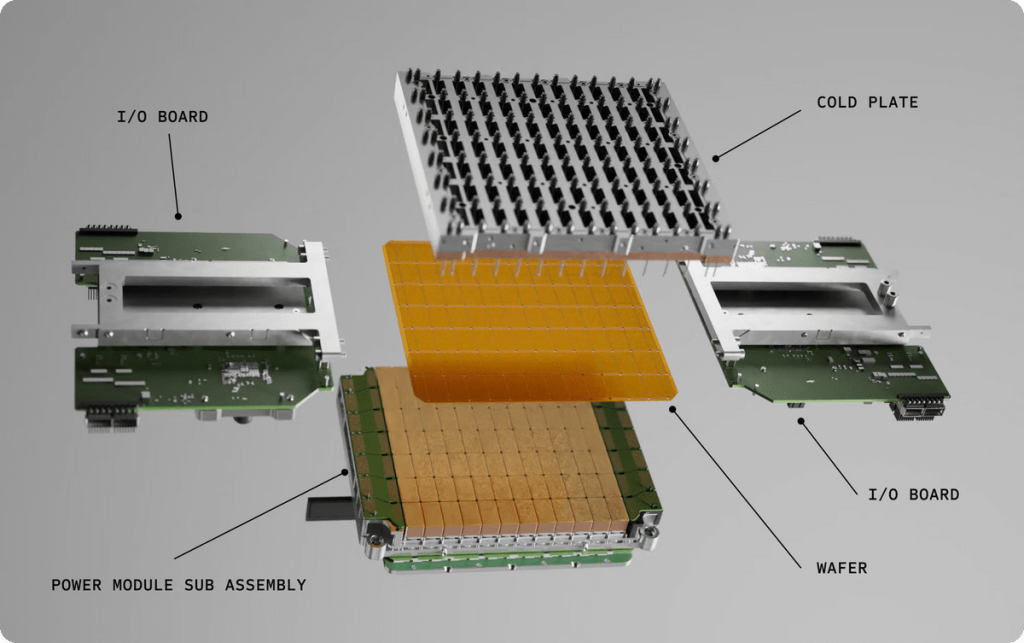
What exactly is the CS-4 system, and why is Cerebras calling it its first multi-wafer machine?
The CS-4 is Cerebras’s first multi-wafer system, meaning it brings multiple wafer processors into a single rack rather than treating a wafer as a standalone unit. This generation crams three dinner-plate-sized processors into one rack—a structural change that directly targets scaling efficiency for inference at frontier-model scale.
According to coverage by The Next Web, the CS-4 is pitched as an inference machine for frontier models and shipped this quarter. Cerebras claims the CS-4 can run frontier models up to 30 times faster than GPU-based systems. That “up to” framing is typical in chip marketing, but it signals where the company thinks the bottleneck sits: not just raw compute, but how quickly inference can be executed end-to-end in a deployed data-centre pipeline.
What are the CS-4 specs that matter for performance, bandwidth, and latency?
On paper, the CS-4 looks built for data movement and rapid switching, not just peak math. Each system carries three WSE-3 Turbo wafers, which add up to 750 petaflops of sparse FP16 compute. Memory throughput gets serious attention too—the company quotes 129.6 petabytes per second of memory bandwidth for the overall configuration.
Cerebras also says the CS-4 supports models above 50 trillion parameters, which aligns with the inference focus rather than training-only positioning. The latency improvements are framed as system-level scaling. Coverage describes wafer-to-wafer latency falling to two microseconds from five, and the CS-4 rack using half as many components as its predecessor, which can translate into less overhead, easier serviceability, and tighter power/control loops.
How does the system’s architecture try to reduce bottlenecks beyond the wafer?
A key operational bottleneck in large accelerator racks is power conversion and the physical distance between where power changes happen and where compute sits. Cerebras tackles that in the CS-4 design by moving power conversion “a hundred times closer” to the processors, according to The Next Web coverage. The company also mounts that conversion hardware in a removable “backpack” at the rear of the chassis. That physical redesign matters because power delivery and signalling distance can cap practical performance. Even if theoretical compute is strong, inefficient power pathways and longer traces can raise delays and reduce sustained ope
Is the silicon inside truly new, or is Cerebras reusing what it already had?
Not all of the CS-4 story is about brand-new silicon. The processor inside the system is not a new chip—that’s marked as unconfirmed in the verified facts you provided. The coverage also points to a third-party conclusion: the WSE-3 Turbo inside the CS-4 appears to reuse the same fundamental wafer design as the WSE-3 it replaces, with changes aimed at scaling opeIf the “not new chip” angle holds up, the upgrade is an integration and scaling play more than a die redesign.
The benefits still matter, because multi-wafer packaging, latency reductions, and system-level component count changes can materially improve real-world throughput. At the same time, critics may argue that “first multi-wafer system” should come with clearer disclosure on what genuinely changed silicon-wise.
How does the CS-4 launch fit into the broader AI hardware race, and what’s next for Cerebras?
Cerebras’s launch landed in a week when software and model execution efficiency remained headline topics, including OpenAI’s Ultrafast mode, which coverage linked to running GPT-5.6 Sol roughly 14 times faster on Cerebras silicon. That context matters because hardware vendors now compete on “end-to-end latency to user,” not just isolated throughput.
If you look at the broader AI hardware narrative, companies also keep chasing faster time-to-output and lower cost per inference, which is where wafer-scale designs want to win. Next, the company will need to translate its multi-wafer claims into consistent deployment outcomes—availability, power efficiency, and repeatable performance at scale. Buyers will compare the CS-4 against both predecessor racks and GPU systems from hyperscale environments, where operational maturity and broad tooling can offset raw speed claims. Coverage from TechCrunch and The Verge also underscores how quickly software-driven modes can reshape what “faster” means for inference systems. The CS-4’s quarter shipping target sets up a short window for early adopters to validate whether these gains hold in production workloads.
Related Articles
- BenQ Launches PD2732U Creative Pro Monitor for Integrated Digital and Print Workflows
- Kenstar's 'No Phone Hour 2.0' Proves India Is Ready to Log Off
<hr class="wp-block-separator has
FAQs
What makes the Cerebras CS-4 unique in the artificial intelligence hardware market?
The Cerebras CS-4 stands out as the company’s first multi-wafer system, designed to scale massive artificial intelligence workloads efficiently across multiple giant silicon wafers. Andrew Feldman and the engineering team built this architecture to deliver unprecedented compute density and performance for large-scale model training. Even though the core processor inside remains familiar, the multi-wafer interconnect setup allows the Cerebras system to break traditional scaling bottlenecks.
Why did Cerebras choose to use an existing processor design inside the new Cerebras CS-4 system?
Cerebras engineers decided to focus their innovation on the system-level architecture and wafer interconnection rather than redesigning the core silicon from scratch. By utilizing a proven processor, the company reduced deployment risks while still delivering a massive leap in overall cluster performance. Customers benefit because the Cerebras hardware provides reliable, cutting-edge speed without waiting for a completely new chip fabrication cycle.
Was this article helpful?
Your feedback directly improves future articles on this site.


