NGA
NGA UGA
UGA MEX-W
MEX-W ARG-W
ARG-W CRY0
CRY0 NEW1
NEW1 HUL1
HUL1 BRE0
BRE0 LIV2
LIV2 BHA0
BHA0 MAN0
MAN0 BOU2
BOU2 ATA3
ATA3 FRO3
FRO3 GEN1
GEN1 VEN0
VEN0 AUX
AUX MNS
MNS ANG
ANG LOR
LOR OLM
OLM HAC
HAC REN
REN STR
STR TOU
TOU TRY
TRY SUN
SUN LEE
LEE SCF
SCF MUN
MUN LEC
LEC JUV
JUV ATH4
ATH4 GET0
GET0 INT2
INT2 FIO1
FIO1 CHU2
CHU2 PFC3
PFC3 GMB112/9
 LES109 (19.5/20 ov, target 113)
 DEN
DEN PNG
PNG LIMWn
LIMWn NW-W
NW-W NCWmn
NCWmn FsWm
FsWm BOL137/9 (20 ov)
 TITNS137/8
 NWEST22/3 (3.1/20 ov, target 181)
 NCAPE180/3
 MIS
MIS VAG169/4 (20 ov)
 NZ-A317
 IND-A113 & 106/2 (36 ov)
 SYL280/2 (84 ov)
 KHU
KHU MYMS465/7d
 CHATT134/2 (40 ov)
 DHA521
 RAJ103/6 (26 ov)
 BRB
BRB MOW
MOW TOK
TOK SIKM
SIKM NAGA
NAGA JHK
JHK DELHI
DELHI ODSA
ODSA SVCS
SVCS CGR
CGR AP
AP BRODA
BRODA J & K
J & K MOZ110/7 (19/20 ov, target 110)
 ZMB109/9
 IND-W328/6
 ZIM-W207 (48.5/50 ov, target 329)
 PAK243/9 (47.1/50 ov, target 242)
 ENG241
 UAE244/8
 NED245/7 (43.5/50 ov, target 245)
 MON0
MON0 LILL1
LILL1 KER0
KER0 MCFC0
MCFC0 TSG0
TSG0 B040
B040 NEC2
NEC2 GRO2
GRO2 PSV1
PSV1 FEY1
FEY1 Motherwell0
 Hearts1
 Atlético1
 Deportivo0
 Lazio2
 Parma1
 Lens2
Lens2 Paris FC1
What seemed unthinkable just two weeks ago has become reality. Manchester United, languishing in mid-table obscurity under previous management, have delivered one of the most shocking results of the Premier League season by defeating Arsenal 3-2 at Emirates Stadium. The victory represents far more than three points; it symbolizes a complete psychological transformation under Michael Carrick and signals that the title race, once appearing settled, has been blown wide open.
Matheus Cunha’s stunning long-range winner encapsulated a determined and at times swaggering performance that took Arsenal apart when it mattered most. This was not merely a victory but a statement of intent from a resurgent Manchester United side that has risen from the depths of despair to challenge for Europe’s elite positions. For Arsenal, the loss represents a significant dent to title ambitions and the emergence of concerning patterns that suggest nerves may be affecting their campaign.
The Scale of Man United’s Achievement
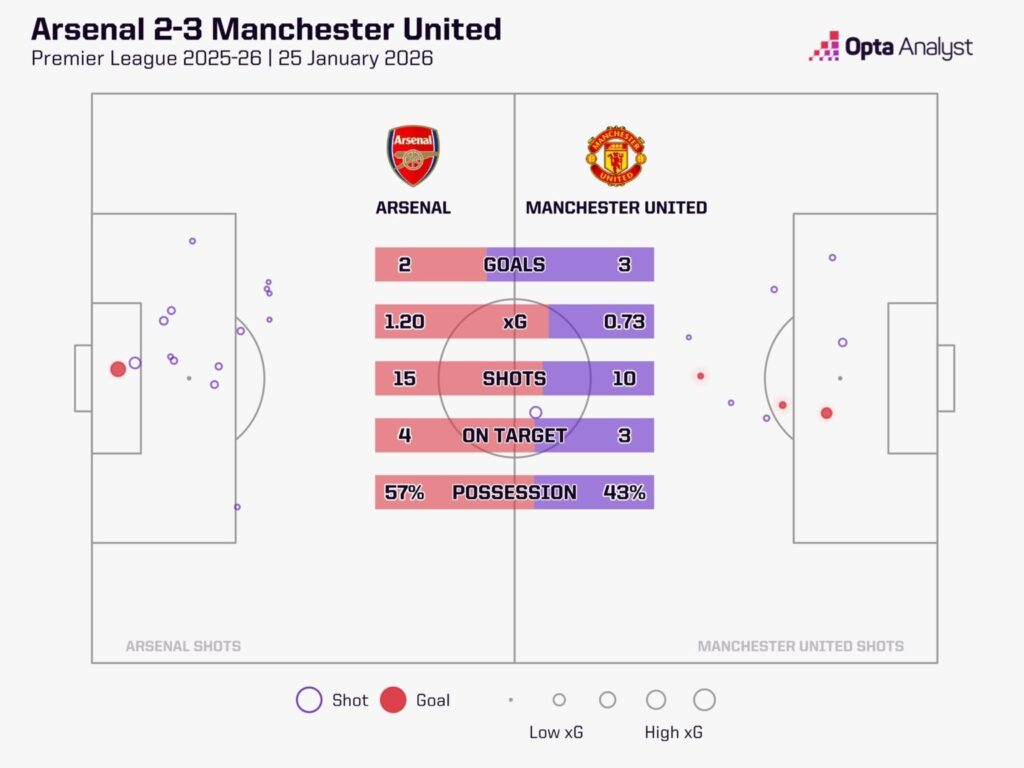
The magnitude of Manchester United’s victory cannot be overstated. This was their first win away at the league leaders since March 2021, and the first time they have scored three goals while winning at the league leaders since April 2018. More significantly, this was Manchester United’s first comeback victory at Arsenal in the Premier League since February 2005, representing a 21-year achievement milestone.
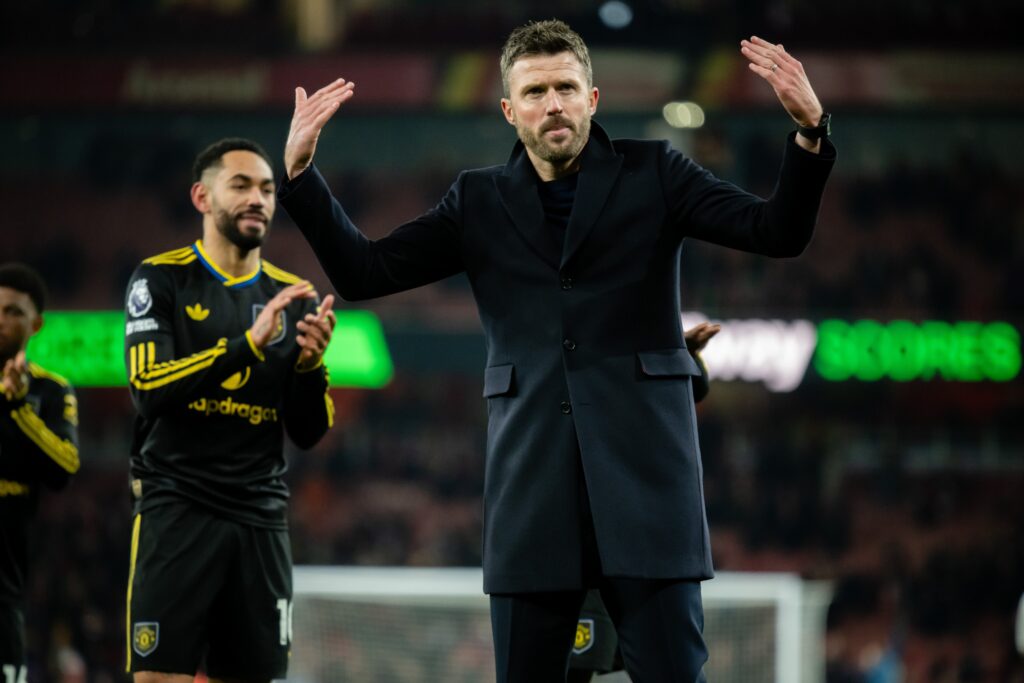
The significance of Arsenal conceding three goals cannot be overlooked. This marked the first time Arsenal have conceded three goals in a match since February 2023, a span that underlines their previously strong defensive record. Manchester United scored 38 percent of all goals Arsenal have conceded at home in 2025-26 in a single match—scoring three of the eight goals Arsenal have conceded on their own ground all season.
For perspective, consider that Manchester United were languishing in mid-table obscurity just a fortnight ago. Now, following consecutive victories over Manchester City and Arsenal, they have climbed into the Premier League’s top four for the first time since May 2023. This represents the fastest turnaround in recent Premier League history, achieved through tactical clarity and restored confidence.
| Achievement | First Time Since | Significance |
|---|---|---|
| Away win at league leaders | March 2021 | 4+ years |
| 3 goals in league win at leaders | April 2018 | 7+ years |
| Comeback win vs Arsenal | February 2005 | 21 years |
| 3 goals conceded by Arsenal | February 2023 | 12 months |
| Top four finish | May 2023 | 20+ months |
Carrick’s Tactical Mastery and United’s Structural Transformation
Michael Carrick selected an identical starting XI to the one that defeated Manchester City, and every player was significantly improved against Arsenal. After navigating a slightly shaky opening that resulted in Arsenal’s first goal, Manchester United reasserted themselves with the kind of dominance that left Emirates Stadium supporters remarkably subdued.
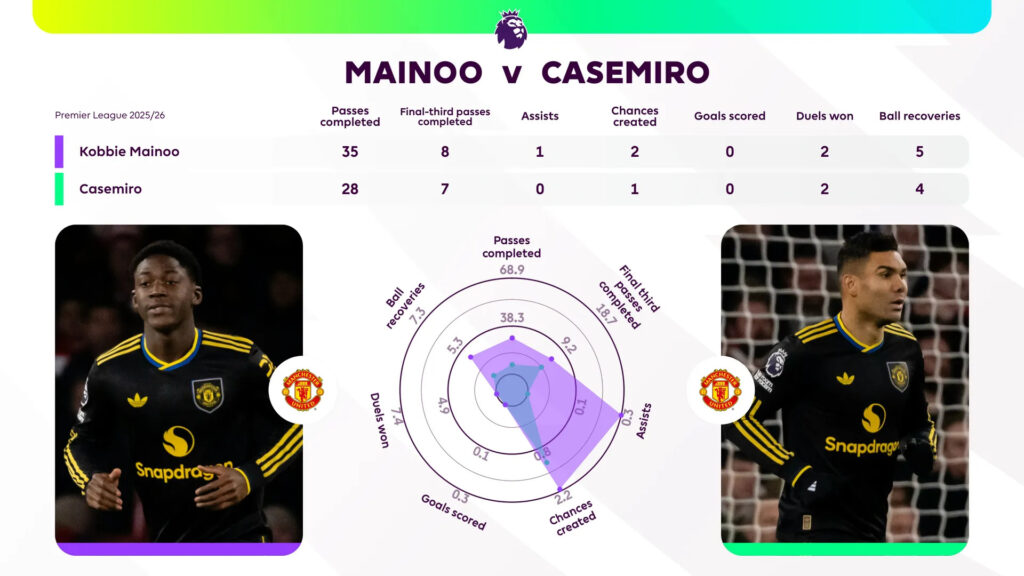
The performance was underpinned by Carrick’s tactical simplicity and structural clarity. Casemiro and Kobbie Mainoo controlled the midfield, with Casemiro excelling as a defensive destroyer in the Real Madrid-style 4-4-2 that perfectly suits his skill set. This formation represents a dramatic shift from Ruben Amorim’s possession-centric 3-4-3, which had confused both Casemiro and the team’s overall cohesion.
Mainoo emerged as the standout performer, outclassing Arsenal midfielders Declan Rice and Martin Zubimendi. His performance culminated in a crucial contribution to the winning goal, muscling into a loose ball before playing a subtle through-pass that released Matheus Cunha for his wonder-strike. For a 20-year-old midfielder previously ostracized by the previous manager, Mainoo’s resurrection exemplifies Carrick’s transformative impact.
The tactical sophistication extended beyond simple defensive organization. Carrick’s use of wingers Amad and Patrick Dorgu involved arcing runs into central areas designed to confuse opposition midfields. This complexity created numerical overloads in dangerous areas, with Dorgu’s appearance in the center of the pitch leading directly to Manchester United’s second goal. The winger found space to shoot centrally—a position that defied conventional tactical positioning but reflected Carrick’s intelligent spatial deployment.
In the final third, Bryan Mbeumo demonstrated his capabilities as a number nine in big matches, scoring the opener after Martin Zubimendi’s defensive error. While substitute Matheus Cunha ultimately claimed the plaudits with his stunning winning goal, Mbeumo’s performance established him as a credible attacking focal point for United’s system.
| Player | Performance | Impact | Key Contribution |
|---|---|---|---|
| Casemiro | Excellent | Defensive dominance | Midfield control |
| Kobbie Mainoo | Outstanding | Outclassed Rice/Zubimendi | Assist on winner |
| Bryan Mbeumo | Strong | Big-game mentality | Opening goal |
| Patrick Dorgu | Impactful | Spatial intelligence | Second goal positioning |
| Matheus Cunha | Decisive | Striking moment | Wonder-goal winner |
Arsenal’s Struggle and Emerging Concerns
Arsenal’s performance revealed troubling patterns that, if allowed to develop, could derail their title challenge. The Gunners dominated possession in the opening 30 minutes but could not breach Manchester United’s defensive organization. As the match progressed, their football became increasingly congealed, lacking the penetration and fluidity that defined their strongest performances this season.
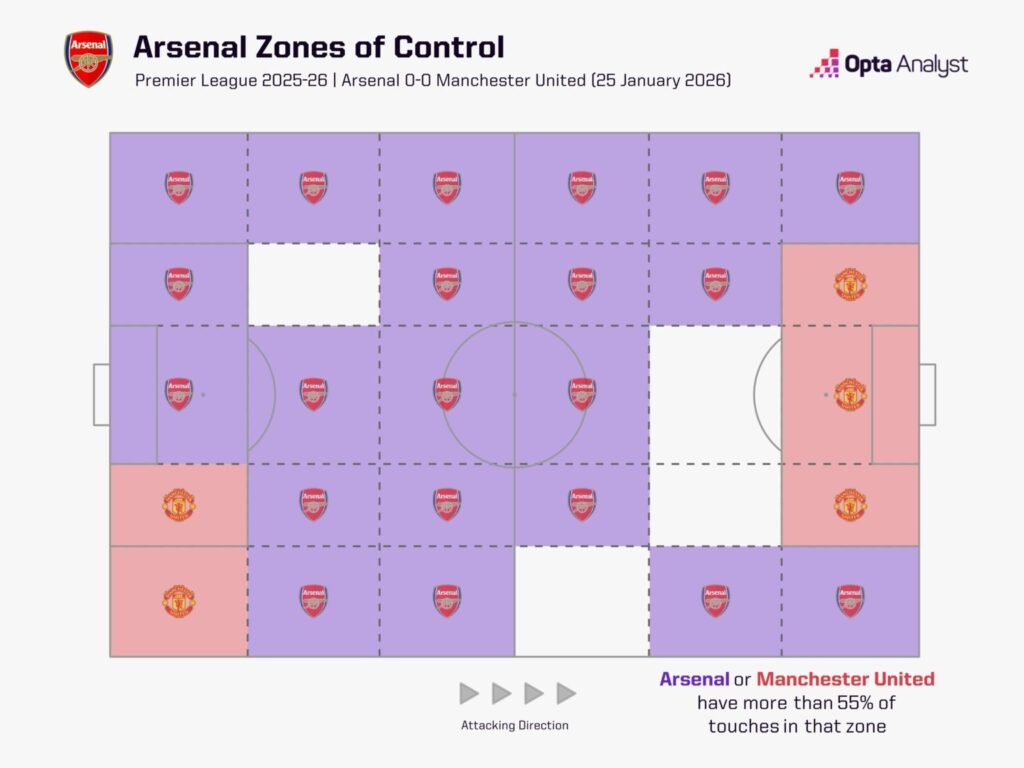
Some caution was understandable given Manchester United’s counter-attacking display against Manchester City the previous weekend, but the growing concerns among Emirates Stadium supporters reflected legitimate worries about emerging rigidity in Arsenal’s approach. The reliance on set-pieces for the equalizing goal, combined with the inability to create clear-cut chances from open play, echoed recent performances against Nottingham Forest where Arsenal drew 0-0 despite dominating possession.
Most alarmingly, Arsenal now finds itself on a three-match Premier League winless run. The losses to Manchester United and the draw with Nottingham Forest have allowed Manchester City and Aston Villa to close the gap significantly. City now sits just four points behind Arsenal following their victory over Wolverhampton Wanderers, while Aston Villa similarly reduced the deficit with their Newcastle United win.
Defensive Errors and the Pressure of Expectation
Arsenal’s defensive vulnerability became a defining theme of the Emirates encounter. The opening goal resulted from questionable defending by United’s back four, but more significantly, defensive errors have become an unwelcome pattern. Arsenal conceded from errors in two of their last four Premier League matches—a dramatic increase compared to their first 19 league matches when defensive mistakes were comparatively rare.
This pattern suggests that mounting pressure and expectation may be affecting the club’s concentration. Three consecutive seasons finishing runners-up have created anxiety that, historically, tightens limbs and leads to crucial dropped points. The fundamental concern is not tactical inadequacy but psychological vulnerability when facing determined, confident opponents.
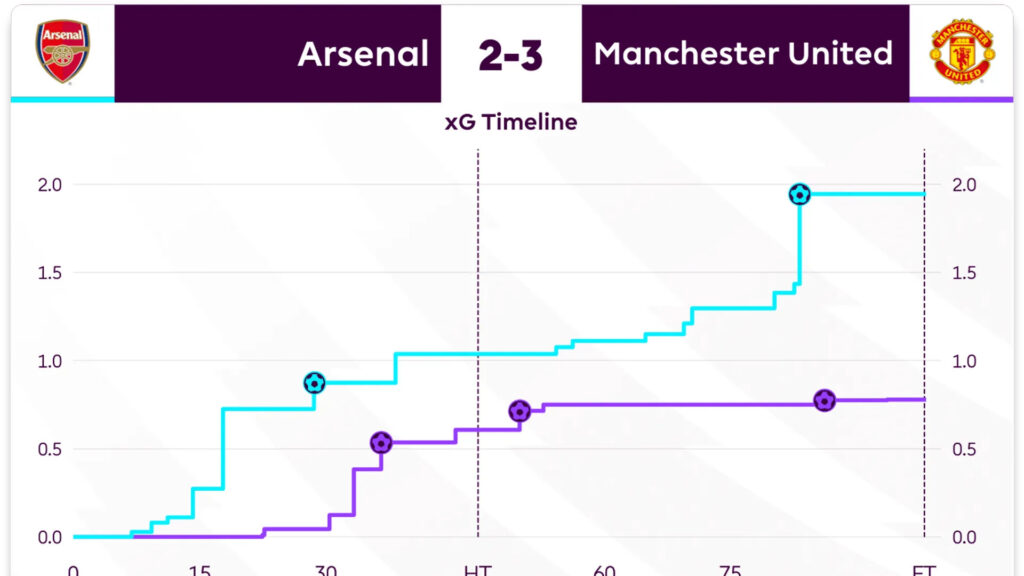
The fact that two of Arsenal’s three goals conceded came from “two incredible long-range strikes that simply cannot be accounted for” provides some mitigation, but the broader defensive fragility cannot be ignored. Arsenal’s defensive foundations, previously rock-solid, have shown cracks when facing opponents with renewed confidence and tactical clarity.
| Arsenal Issues | Details | Previous Pattern |
|---|---|---|
| Winless run | 3 PL matches | Rare occurrence |
| Defensive errors | 2 of last 4 matches | 0 in first 19 matches |
| Creation | Limited from open play | Usually strong |
| Set-piece reliance | Increased | Previously avoided |
The Title Race Blown Wide Open
The implications for the Premier League title race cannot be overstated. Manchester United’s victory, combined with Arsenal’s three-match winless run and the relative resurgence of Manchester City and Aston Villa, has transformed what appeared a one-horse race into a genuinely competitive title battle.
Arsenal still holds a four-point advantage over Manchester City, but the psychological momentum has shifted decisively. The confidence now emanating from Old Trafford, built on two consecutive victories over the season’s elite opponents, contrasts sharply with the mounting anxiety at the Emirates.
For Arsenal, the next fixture against Leeds United presents an immediate opportunity to restore momentum and reassert their title credentials. Anything less than victory could trigger uncomfortable questions, though Arsenal’s supporters must acknowledge that Manchester United deserved their victory through superior execution of a clear tactical plan.
The Confidence Factor
What connects Manchester United’s two victories over Manchester City and Arsenal is the confidence coursing through the squad. Two weeks ago, this team appeared psychologically fractured and tactically confused. Now, they stride into elite stadiums with swagger and determination, executing game-plans with precision and believing they can overcome any opponent.
Confidence fundamentally changes how players execute instructions. The same passing sequences that would have been intercepted when doubt clouded decisions now seem to find their targets with precision. The same defensive shapes that appeared vulnerable now feel impenetrable. Confidence transforms perception and performance simultaneously.
Carrick has given Manchester United structure, clarity, and—most importantly—belief. In just eight days, he has erased 18 months of accumulated frustration and despair.
Manchester United’s 3-2 victory at Emirates Stadium represents a watershed moment for both clubs. For United, it validates Carrick’s transformative approach and signals that the club’s revival is genuine rather than temporary. For Arsenal, it raises uncomfortable questions about vulnerability under pressure and suggests that the title race, far from being decided, has only just begun.
The next two months will determine whether Carrick’s revolution can be sustained and whether Arsenal can overcome the psychological hurdles that appear to be creeping back into their campaign. What is certain is that the predictability has vanished from this season’s Premier League title race, replaced by genuine uncertainty and the exhilarating possibility that any of several teams could ultimately claim the trophy.
Read More: After Man United Dismantled Man City, Can They Do It Against Arsenal?