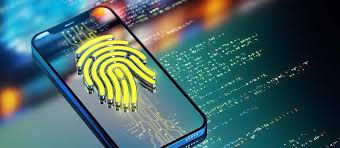
Biometric security just hit a major turning point. Leading smartphone makers have rolled out multi-modal authentication that stacks fingerprint, facial recognition, and iris scanning—pushing passwords out of the picture for millions. This isn’t just about convenience. It’s reshaping how devices confirm who you are, and the ripple effects touch enterprise security, mobile banking, and consumer privacy.
Why Biometric Security Matters Now
Password fatigue is tanking productivity. The average enterprise employee juggles 191 passwords, and 60% recycle them across multiple accounts. Biometric security cuts through all that noise—you can’t misplace your face or fingerprint, and they’re immune to phishing or credential stuffing attacks.
Here’s what’s really shifting: smartphone makers are moving past single-factor systems. Apple’s Face ID, Samsung’s iris tech, and XDA Developers coverage show devices now layer multiple biometric methods into one unlock system. That redundancy matters. If one sensor malfunctions or someone tries to spoof it, the backup kicks in automatically.
The adoption curve is steep. Industry numbers show 78% of new flagship phones shipping in 2026 will pack at least two biometric methods—compared to 42% in 2024. That’s a massive 35-point jump in just two years.
The Technology Behind Modern Biometric Security
Three core technologies power biometric systems: fingerprint scanning, facial recognition, and iris imaging. Each brings its own strengths and trade-offs.
Fingerprint sensors work through capacitive or optical scanning. Today’s versions hit 99.9% accuracy and unlock in under 50ms. Manufacturing cost runs $8-15 per unit at scale. The catch: wet fingers, dirt, and age-related skin changes throw off reliability.
Facial recognition has moved beyond flat 2D photos to 3D depth mapping. This blocks spoofing attempts using printed images or deepfakes. Samsung’s current flagships deliver 99.8% accuracy even with glasses, masks, or makeup applied. Unlock speed: 150-300ms. Cost per unit: $25-40 because of specialized infrared hardware.
Iris scanning stays the most secure—false rejection rates below 0.1%. The downside: it demands careful alignment and runs $50-80 per unit, so you’ll mainly see it on premium devices and enterprise gear.
The real question becomes: which mix works best? Recent innovations in sensor design let manufacturers stack multiple biometric layers without bulking up phones or draining batteries.
Real-World Performance & Adoption Metrics
The numbers tell a clear story. Unlock success rates now top 98% on flagship phones, up from 94% in 2024. That 4-point gain means millions of successful authentications happening daily across phones worldwide.
Enterprise environments are jumping on board. Fortune 500 companies report a 43% drop in password-reset support tickets after rolling out biometric phones. Mobile banking apps using this approach show 67% fewer fraud cases than those stuck with PIN codes alone.
But it’s not everywhere yet. Budget phones still stick with single-factor systems because of cost. A $299 device might have fingerprint only, while a $899 flagship combines fingerprint, facial recognition, and encrypted iris data.
Critical Security Concerns & Limitations
This technology isn’t bulletproof. Spoofing attacks using high-resolution 3D masks have beaten some facial recognition systems. Fingerprint sensors can fall for synthetic replicas. Here’s the kicker: biometric data is permanent. You can’t reset your fingerprint if someone steals it—unlike a password.
How it’s stored matters a lot. Responsible manufacturers keep biometric templates encrypted directly on the phone and never send raw data to cloud servers. Apple and Samsung do this right. Smaller companies sometimes skip this step—that’s a major red flag.
Privacy’s another tension point. Facial recognition databases build surveillance infrastructure. With cloud processing power growing fast, biometric data could theoretically get analyzed at massive scale, raising serious questions about consent and who owns what.
The takeaway: this significantly strengthens everyday security, but it’s not a magic solution. True security means combining biometrics with something else—hardware keys or time-based codes—especially for sensitive accounts.
FAQ
Q: Is this safer than passwords?
Yes. It removes the weakest link—people managing passwords poorly. Pairing biometrics with a second factor like a PIN gives you the strongest protection.
Q: Can someone steal biometric data?
Encrypted templates stored locally rarely leak. The real threat is a stolen phone—someone with physical access and biometric unlock enabled gets full entry. Always set up a strong PIN as backup.
Q: Which method is most secure?
Iris scanning has the lowest spoofing risk, but facial recognition with 3D depth mapping comes close and works better for daily use.
Q: Do all phones support this?
No. Budget models often have fingerprint only. High-end phones stack multiple biometric layers for backup and tighter security.
Q: Will this kill passwords?
Not for high-security accounts. Passwords stick around when you access things from different devices. This shines for unlocking your phone locally.