India’s ride-hailing market just got its most disruptive entrant yet — and it’s not a startup backed by Silicon Valley money. Bharat Taxi, launched on February 5, 2026, is a government-backed cooperative ride-hailing platform where drivers can become co-owners for just ₹500, directly challenging Ola, Uber, and Rapido.
Table of Contents
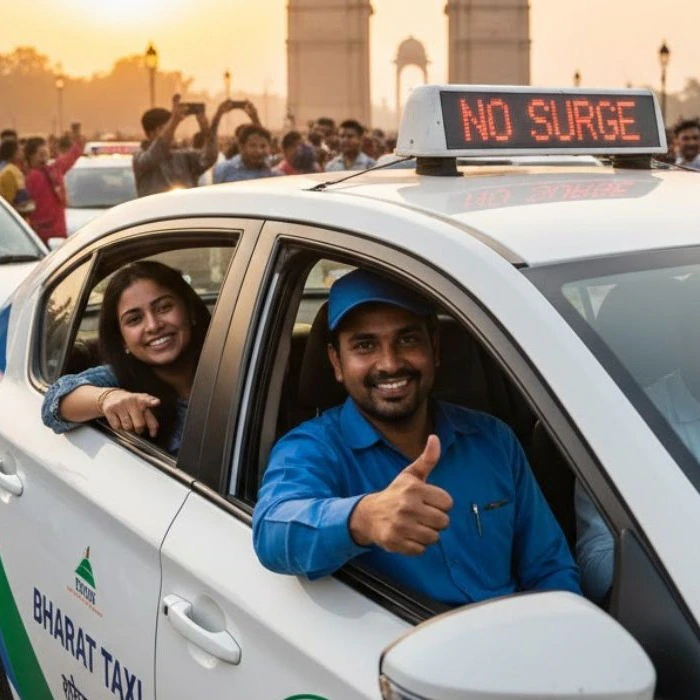
Bharat Taxi vs Ola/Uber: How the Model Compares
| Feature | Bharat Taxi | Ola / Uber |
|---|---|---|
| Commission | Zero | 25–30% |
| Driver Ownership | Yes (₹500 share) | No |
| Profit Sharing | 80% to drivers | Goes to investors |
| Surge Pricing | No | Yes |
| Minimum Base Rate | Guaranteed | Not guaranteed |
| Backed By | Amul, IFFCO, NABARD | Private investors |
| Current Cities | Delhi-NCR, Rajkot | Pan-India |
| Target Drivers | 15 crore in 2 years | — |
The Amul Playbook — Now for Mobility
Union Cooperation Minister Amit Shah drew a direct parallel: “36 lakh mothers and sisters invested just ₹50 each and built Amul, which has a turnover of ₹1,25,000 crore. In a private dairy, the profit goes to the owner. In Amul, 85% goes back to the producer.
Bharat Taxi is the same concept for mobility.” The platform allocates 80% of net profits to drivers based on kilometres travelled, while the remaining 20% is retained to build cooperative capital. Drivers, called “saarthis,” are asked to be patient for three years as the profit-sharing component stabilises — but from day one, they earn regular fares with zero commission deducted.

Loans for new vehicles will be facilitated through cooperative banks, with the taxi as collateral, and insurance offered through IFFCO Tokyo at minimum premiums.
For more context, see IFFCO’s official cooperative model overview and NABARD’s cooperative finance framework. Also check our coverage of best ride-hailing apps in India 2026 and government tech initiatives in India on TechnoSports.
FAQs
Does Bharat Taxi charge any commission from drivers?
No — it currently charges zero commission, unlike Ola and Uber’s 25–30% cut.
When will Bharat Taxi expand beyond Delhi-NCR and Rajkot?
The platform aims to reach all municipal cities across India within three years.