UDI1
 ROMA4
 TOT1
 CRY0
 BET0
 MCF0
 MUN0
 DOR0
 HIL0
 FAT0
 CLT1
 ORL0
 HEE0
 NEC0
 PSV1
 WIL0
 MIL
 INT
 TRY
 MNS
 AVL
 FUL
 BAR
 ALA
 NZ
 IND
 NAM
 IRE
 Como
 Venezia
 Mumbai City
 SC Delhi
 RAY3
 CEL0
 BOU2
 LEE0
 BRE2
 NFO0
 COV3
 SUN1
 JER
 QAT
 KENYA
 PNG
 WAR14/1 (1/20 ov, target 131)
 WPR130/8
 TAS427
 NSW174/8 (60 ov)
 NZ-A
 IND-A291/7 (88 ov)
 QLD
 VIC282/9 (84 ov)
 DHA
 BAR
 SYL218
 CHATT64/1 (15 ov)
 MYMS
 KHU280/8 (82 ov)
 RAN
 RAJ155/6 (59 ov)
 AFG
 ZIM
 NED
 OMA
 ST-W
 BH-W
 SS-W
 HH-W
 OTAGO
 CD
 BRB
 MIS
 PAK331/7 (48.3/50 ov, target 326)
 SL325/8
 UAE266/5 (49/50 ov, target 264)
 PS-W138/1 (13.3 ov)
 MR-W136/6
 AS-W185/2
 MS-W164/7 (20 ov)
 MCF1
 DEP1
 LENS1
 F910
 MON1
 LYON0
 STR0
 HAC0
 Getafe
 Sevilla
 Frosinone
 Torino
 HUL2
 IPS2
 MNC0
 BHA1

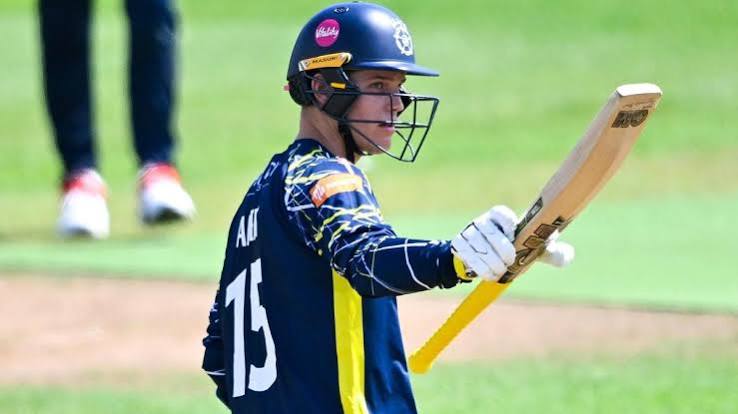
Albert’s six-hitting spree decided a Metro Bank One-Day Cup thriller at County Ground, Hove, as Hampshire turned pressure into a statement. On 12 July 2026, Toby Albert struck six sixes in six balls, and the momentum swing helped Hampshire overpower Sussex by 51 runs to keep their knockout hopes alive.
Here’s why that spell mattered—how Hampshire built their 383 for 9, what Sussex couldn’t chase, and where the contest was effectively flipped.
What exactly happened when Albert hit six sixes in six balls?
The turning point came late in the innings, when Hampshire were already set and still searching for that final burst. The match report notes Hampshire reached 200 from 189 deliveries before Albert’s acceleration changed the tempo, making his eventual dismissal a major talking point for Sussex. Then came the blitz: he smashed six sixes in six balls, a rare feat that instantly unsettled the fielding side and forced Sussex to bowl under panic rather than plans.
That kind of over-by-over disruption doesn’t just add runs—it steals the bowler’s rhythm and removes the batter-on-batter pressure that usually helps chasing teams. In limited-overs cricket, spells like this don’t merely “speed things up”; they turn dot-balls into liabilities.
How did Hampshire build 383 for 9—who carried the innings?
Hampshire’s total wasn’t one-man fireworks. It was a layered batting effort, with multiple scores putting Sussex under constant threat. Dion Mayes led the charge with 109, and Tom Orr added a huge 105—both providing the foundation needed for late acceleration.
Then Albert delivered the finishing layer: he made 86 off 37 balls, striking 5 fours and 8 sixes. The finishing pressure mattered because Sussex were always going to need quick wickets, quick boundaries, and a chase that stayed clean. Instead, his late burst ensured the game went beyond a “catch-up” chase and became a near-impossibility.
Hampshire’s 383 for 9 was the platform from which Sussex never fully recovered—every time the Eagles looked like they could contain the run rate, Albert’s brief spell demanded an immediate response.
What did Sussex do in response, and where did the chase unravel?
Sussex’s chase had a heartbeat, driven by their top scorer. Charlie Tear made 111 off 94 balls, turning the start of the reply into a credible pursuit. With that kind of strike-rate and time at the crease, he gave Sussex something to believe in—even when Hampshire’s total climbed.
But the support didn’t last long enough. Sussex also had Tom Leaning 92 and Shane Ibrahim 55, keeping the chase within striking distance for longer than Hampshire would’ve hoped. The problem was that Hampshire’s bowling still found breakthroughs at key moments, and Sussex’s chase ended at 332—falling short by 51 runs.
The turning question wasn’t whether Sussex could score; it was whether they could score without losing control. With Hampshire’s middle-to-death surge backed by Albert’s sixes, the chase always faced a steeper hill than Sussex could manage.
Which bowler mattered most, and how did selection pressure look?
The numbers point to Hampshire’s ability to take wickets when Sussex’s batting had momentum. The match summary highlights that Hampshire benefited from Sussex’s batting being broken at stages, including key contributions in the bowling figures—Jack took 4 for 58 for Sussex, but Hampshire’s innings pressure was stronger overall, culminating in a 51-run win for Hampshire.
In terms of contest dynamics, Albert’s spell didn’t just come “at the end”; it arrived after Hampshire had already built to 200 from 189 deliveries, meaning Sussex had to defend against an innings that was both structured and suddenly explosive. That combination is hard to plan for.
The broader report framed it as keeping Hampshire’s knockout hopes alive, marking their fourth victory in the competition.
What’s next for both teams after this Hampshire statement?
For Hampshire, the immediate takeaway is confidence with a capital C. A win by 51 runs after reaching 383 for 9 isn’t just about one innings—it signals their batting depth, plus the fact they can cash in when the match crosses a psychological threshold. Albert’s spell—six sixes in six balls—will be the headline, but Mayes (109) and Orr (105) are the reason the platform existed in the first place.
For Sussex, the next step is about learning how quickly a chase can swing when a set batter goes from boundaries to demolition. Tear’s 111 off 94 will feel like a fight that deserved more, especially with Leaning (92) and Ibrahim (55) adding substance. But chase math doesn’t forgive momentum loss; when Hampshire found acceleration, Sussex finished at 332, and the points won’t be coming back.
If Hampshire build again around that core—foundation first, burst second—they’ll stay dangerous in every remaining game. For Sussex, the focus will be preventing those abrupt collapses in the middle overs.
FAQs
Why was Albert’s “six sixes in six balls” such a big deal?
Because it happened after Hampshire had already reached 200 from 189 deliveries, turning a settled innings into a sudden, unmanageable target. Those sixes compress the chase timeline—what would’ve been a controlled phase becomes an emergency overs problem. That’s why his dismissal was described as a major turning point: the burst created the separation that Hampshire then defended to reach 383 for 9.
How did the Hampshire vs Sussex scoreline decide the match?
Hampshire posted 383 for 9, while Sussex were all out short at 332. That 51-run gap reflects a chase that never fully recovered after Tear’s 111 off 94 kept them alive. Even with support from Leaning (92) and Ibrahim (55), Sussex couldn’t bridge the distance once Hampshire’s late acceleration—especially Albert’s—lifted the required run rate beyond reach.
Which phase changed the momentum most in this ODI Cup game?
The clearest swing came when Hampshire’s innings reached 200 from 189 deliveries, followed by Albert’s acceleration. The report’s emphasis on that exact progression helps explain why the contest shifted: it wasn’t just that runs were scored; it was when they were scored and how quickly.
Can Sussex take anything positive despite losing by 51 runs?
Yes. Charlie Tear’s 111 (94 balls) is the kind of innings that shows Sussex can build a chase basis. Leaning’s 92 and Ibrahim’s 55 also indicate batting depth beyond one name. The frustration is about timing—when Hampshire’s spell of impact arrived, those good individual scores couldn’t prevent the final distance from widening.
Source: Example
Was this article helpful?
Your feedback directly improves future articles on this site.