City Football Group’s decision to withdraw from Mumbai City FC represents far more than a simple change of ownership at one Indian Super League club. It is the ultimate indictment of Indian football’s governance structure, a damning verdict delivered by one of the world’s most influential football organizations. When a global giant that operates successful clubs across five continents decides that India’s football ecosystem is too unstable, too uncertain, and too dysfunctional to justify continued investment, the message could not be clearer: Indian football is in crisis.
The timing magnifies the significance. In December 2025, the Indian Super League 2025-26 season has not started despite traditionally kicking off in September. There is no confirmed league calendar, no clarity on commercial arrangements, and no resolution to the governance deadlock paralyzing the All India Football Federation. Against this backdrop of administrative chaos and financial strain, CFG has communicated to the AIFF that it is pulling out due to ongoing uncertainty in Indian football.
This is not about league structures or club management anymore. It’s an indication of hopelessness with the entire system. The question now looms ominously over Indian football: when global giants exit, who will stay? We are watching the house burn while those in power protect their seats, seemingly oblivious or indifferent to the catastrophic damage being inflicted on a sport that millions of Indians desperately want to embrace.
CFG’s Investment and Success: What Made the Exit So Shocking
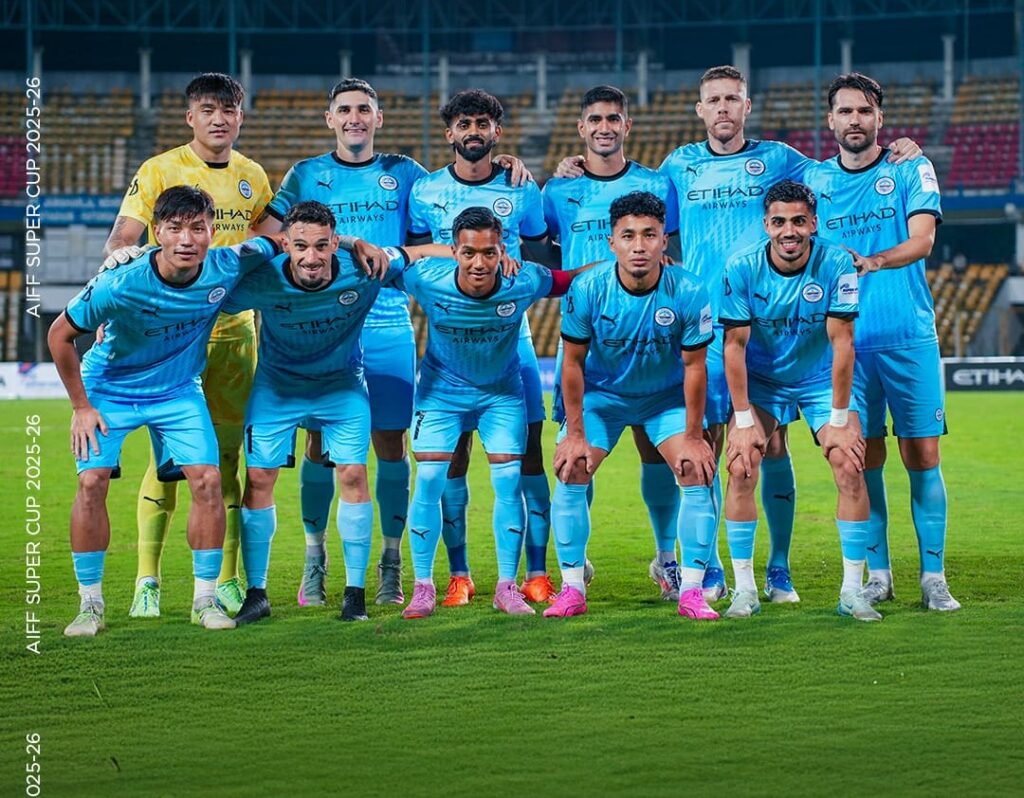
City Football Group acquired a 65% stake in Mumbai City FC in November 2019, marking one of the most significant foreign investments in Indian club football history. CFG’s arrival brought immediate credibility, professionalism, and global best practices to a club that had struggled in the ISL’s early years. The transformation was remarkable and swift.

Under CFG’s stewardship, Mumbai City became the first club in ISL history to win both the League Winners’ Shield and ISL Playoffs Trophy in a single season during 2020-21. The club reached another League Winners’ Shield in 2022-23 after an unprecedented 18-match unbeaten run. Most significantly, Mumbai City became the first Indian club to win an AFC Champions League match in April 2022—a landmark moment that validated CFG’s investment strategy.
The success extended beyond trophies. CFG brought data-driven recruitment, professional medical and fitness protocols, coaching expertise from their global network, and structured youth development pathways. They changed Mumbai City’s colors to sky blue, redesigned the crest in collaboration with fans, and elevated standards across all operational aspects. The club became a template for what Indian football could achieve with proper investment and professional management.
Yet despite all this success, despite the sporting achievements and the progress made, CFG is walking away. When an organization that has built thriving clubs in New York, Melbourne, Yokohama, Girona, and elsewhere decides that India’s football environment is too problematic to navigate, the implications transcend one club’s ownership structure. It signals to every potential investor worldwide that Indian football is not a safe or sensible place to put money.
AIFF’s Financial Crisis: The Numbers Don’t Lie
The AIFF’s precarious financial position forms a crucial backdrop to CFG’s exit. According to recent reports, the federation currently holds just ₹19.89 crore in actual usable bank balance. Despite this limited liquidity, the AIFF plans to spend ₹50.48 crore between January and May 2026—nearly matching its total claimed reserves.
Even after carrying forward a projected surplus of ₹9.44 crore, the federation faces a deficit of ₹23.11 crore by May 31, 2026. When unpaid vendor bills, receivables from clubs, and other liabilities are factored in, the actual deficit reaches ₹25.88 crore. This represents financial mismanagement on a scale that would be alarming in any organization, let alone the governing body of a sport seeking to establish professional credibility.
The financial crisis stems directly from the collapse of the commercial relationship with Football Sports Development Limited. The ₹50 crore per year deal with FSDL provided guaranteed annual income that sustained AIFF operations. Under the current AIFF regime, this agreement was allowed to lapse without timely renewal. Negotiations were delayed, disagreements festered, and a Supreme Court case further complicated matters.
Now the AIFF operates without secured league revenue, without a broadcaster for the ISL, and without a clear path to financial sustainability. Yet administrative costs continue unabated—₹7.79 crore for just five months—while the very competitions that generate revenue remain suspended. The federation burns through reserves while hoping circumstances change, a strategy that inspires zero confidence among potential investors like CFG.
| AIFF Financial Crisis Indicators | Details |
|---|---|
| Actual Bank Balance | ₹19.89 crore (only usable funds) |
| Planned Expenditure (Jan-May 2026) | ₹50.48 crore |
| Projected Deficit (May 2026) | ₹25.88 crore |
| Administrative Costs (5 months) | ₹7.79 crore |
| Lost Annual Revenue (FSDL deal) | ₹50 crore per year |
| ISL 2025-26 Status | Not started (December 2025) |
Governance Deadlock: When Rejection Becomes the Default Response
The AIFF’s approach to club proposals reveals an organization fundamentally disconnected from the realities of modern football business. Earlier in December 2025, the federation formally rejected key proposals submitted by both ISL and I-League clubs exploring club-led ownership or operational models for the league. These proposals represented months of work by clubs attempting to create sustainable structures.
Rather than engaging constructively with these proposals or offering alternative frameworks, the AIFF announced the formation of a three-member committee to “seek a resolution.” This committee approach—kicking problems into the long grass through endless consultations—has become the federation’s default response to every crisis. Committees replace decisions, meetings substitute for action, and nothing actually changes.
For clubs and investors, this pattern is exhausting and ultimately fatal to confidence. CFG operates clubs in highly regulated environments across multiple countries. They understand governance complexity and navigate it successfully elsewhere. But India’s particular combination of indecision, opacity, and resistance to structural reform proved too much even for an organization with CFG’s resources and experience.
The governance deadlock extends beyond specific proposals into fundamental questions about Indian football’s future. Who controls league operations? What are the commercial arrangements? How are revenues distributed? What role do clubs have in decision-making? On these basic structural questions, there are no clear answers despite a decade of ISL operations. This lack of clarity makes long-term business planning impossible.
The ISL That Never Started: Calendar Chaos
Nothing symbolizes the current crisis more starkly than the non-existent ISL 2025-26 season. In December 2025—three months after the traditional September kickoff—there is still no confirmed start date, no league calendar, and no clarity on when India’s top-tier football competition will commence.
The I-League and I-League 2 remain suspended as well, leaving the domestic football structure at a complete standstill. Players sit idle, clubs hemorrhage money on wages without revenue, sponsors lose visibility they’ve paid for, and fans drift away through sheer uncertainty and frustration.
For CFG, this calendar chaos represents an impossible situation. The organization operates within defined seasons across multiple continents, coordinating player transfers, coaching assignments, and development pathways between clubs. Mumbai City’s indefinite suspension makes it impossible to integrate the club into CFG’s global operations. Players cannot be loaned between clubs without knowing when competitions run. Coaches and staff cannot be assigned without clarity on timelines.
The uncertainty also destroys financial planning. Without knowing when the season starts, how many matches will be played, what broadcast arrangements exist, or what commercial revenues might materialize, CFG cannot produce the business projections that justify continued investment. In business terms, investing in an entity with no confirmed operational calendar and no revenue visibility is simply untenable.
Impact on Indian Football: The Domino Effect
CFG’s exit creates immediate consequences and longer-term implications that threaten to accelerate Indian football’s decline into irrelevance.
Investor Confidence Collapses
When the world’s most sophisticated football ownership group walks away, every other potential investor takes notice. If CFG—with unlimited resources, global expertise, and proven success building clubs—cannot make Indian football work, why would anyone else try? The exit validates every skeptic who warned against investing in India’s football ecosystem.

Existing investors in other ISL clubs now face uncomfortable questions from their boards and shareholders. If CFG is leaving, should we follow? The risk of a cascade of exits becomes very real, particularly for clubs backed by corporate entities answerable to shareholders who can point to CFG’s departure as justification for their own withdrawal.
Player Development Suffers
CFG’s professional approach to player development, sports science, nutrition, recovery, and training set new standards in India. Their departure removes a crucial development pathway that benefited not just Mumbai City players but Indian football broadly through elevated standards and best-practice sharing.
Young Indian players who might have joined Mumbai City hoping to access CFG’s global network now lose that opportunity. The pathway from ISL to clubs in Melbourne, New York, or Europe becomes significantly narrower. India’s already limited player development infrastructure loses one of its few genuinely world-class operations.
Commercial Appeal Diminishes
Sponsors and broadcasters assess the ISL’s commercial value based partly on the credibility and professionalism of participating clubs. CFG’s presence elevated the entire league’s profile internationally. Their exit damages the ISL’s global perception and makes it harder to attract premium sponsors or negotiate favorable broadcast deals.
The timing is particularly damaging given the AIFF’s search for ISL commercial partners. CFG’s departure provides potential broadcasters and sponsors additional leverage to demand lower rights fees or more favorable terms, citing reduced league quality and increased risk.
Youth Development Pathways Close
Mumbai City’s youth academy under CFG operated to international standards, identifying and developing young Indian talent through proven methodologies. The club’s U-18 and U-15 teams competed in youth leagues while receiving coaching from CFG-trained staff using global best practices.
Ranbir Kapoor and Bimal Parekh—who will resume full ownership after CFG’s exit—are well-intentioned owners, but they lack CFG’s resources, expertise, and global infrastructure. Mumbai City’s youth development will inevitably decline from the standards CFG established, denying opportunities to countless young players who might have benefited from world-class coaching and development.
Who’s Really Responsible? Protecting Seats While the House Burns
The finger-pointing has already begun. AIFF officials blame clubs for unrealistic demands. Clubs blame the federation for incompetence and autocracy. State associations blame both for ignoring grassroots development. Everyone blames everyone else while the sport collapses around them.
But responsibility ultimately rests with those holding power within Indian football’s governance structure. The AIFF’s current leadership allowed the FSDL relationship to deteriorate without securing alternatives. They’ve presided over the complete suspension of domestic competitions in December with no restart plan. They’ve rejected club proposals without offering viable alternatives. They’ve burned through financial reserves while maintaining expensive administrative structures.
The pattern suggests an organization more concerned with protecting institutional power and individual positions than actually developing football. Committee meetings substitute for decisions, consultations replace action, and the status quo persists regardless of consequences. Those in power protect their seats while the house burns, seemingly content to preside over Indian football’s slow-motion collapse as long as they retain their positions.
What Happens to Mumbai City FC?
Once CFG’s exit completes, Mumbai City returns to full ownership under Bollywood actor Ranbir Kapoor and businessman Bimal Parekh, who originally established the club in 2014 before selling majority control to CFG in 2019. Sources confirm operations will continue under their ownership.
Kapoor and Parekh bring passion and financial resources to club ownership. They’ve demonstrated commitment to Mumbai City through nearly a decade of involvement. However, they cannot replicate what CFG provided—global expertise, international player networks, cutting-edge data analytics, sports science infrastructure, and the credibility that comes from being part of an organization operating successful clubs worldwide.
Mumbai City will survive, but it will likely revert toward being a more typical ISL club: well-run within Indian standards but lacking the international excellence that distinguished it under CFG. The gap between Mumbai City and elite Asian clubs will widen. The ambition of competing regularly in the AFC Champions League will likely recede. Indian football loses its closest approximation to a genuinely world-class professional club.
Can Indian Football Recover?
The answer depends entirely on whether those in power recognize the severity of the crisis and demonstrate willingness to implement genuine structural reforms. Half-measures and committee meetings will not suffice. Indian football needs:
Clear Commercial Framework: Resolve the broadcast and commercial rights situation immediately. Clubs and investors need clarity on revenue structures, rights distribution, and operational timelines. The current uncertainty is unsustainable.
Genuine Club Involvement: Grant clubs meaningful roles in league governance and decision-making. The AIFF cannot unilaterally run professional football leagues while ignoring stakeholder input. Modern football requires collaboration between federations and clubs.
Financial Transparency: The AIFF must demonstrate financial sustainability through transparent budgeting, audited accounts, and realistic spending plans. The current approach of burning reserves while projecting massive deficits destroys credibility.
Professional Administration: Football administration requires expertise, not political appointees protecting fiefdoms. The AIFF needs professional management focused on football development rather than institutional preservation.
Without these reforms, CFG’s exit will be remembered as the beginning of the end—the moment when Indian football’s pretensions to professional status were definitively exposed as unsustainable fantasy. More investors will follow CFG out the door. The ISL will decline into irrelevance. Indian football will remain trapped in dysfunction while neighbors like Thailand, Vietnam, and even Bangladesh surge past.
City Football Group’s exit from Mumbai City FC is the ultimate indictment of Indian football’s governance and the AIFF’s leadership. When one of the world’s most successful football organizations decides that India’s ecosystem is too unstable, too uncertain, and too dysfunctional to justify continued investment, the verdict on Indian football’s current trajectory is unambiguous: we are failing.
This is no longer about tactical disagreements over league structures or commercial arrangements. It’s about fundamental hopelessness with an entire system that seems incapable of providing the basic stability and professionalism that any investor or partner has the right to expect. The question “when global giants exit, who will stay?” hangs ominously over Indian football, with no reassuring answers visible.
We are watching the house burn. The ISL hasn’t started despite being December. The AIFF faces a ₹25.88 crore deficit while maintaining expensive administrative structures. Domestic competitions remain suspended with no restart plan. And through all this chaos, those in power protect their seats, seemingly content to preside over decline as long as they retain institutional control.
Indian football stands at a crossroads. One path leads toward genuine structural reform, financial sustainability, and professional governance that might yet attract investors and rebuild credibility. The other leads toward continued dysfunction, accelerating decline, and ultimate irrelevance. The choice belongs to those currently holding power within the AIFF and Indian football’s governance structures.
CFG’s exit should serve as a wake-up call. But wake-up calls only matter if someone is willing to wake up, acknowledge reality, and take the painful steps necessary to reverse course. Based on the evidence of the past year, there’s little reason for optimism. The house continues burning while those who could stop the fire protect their seats instead.
Read More: 9 Football Legends Kylian Mbappe Has Already Outscored at the Age of 27