NZ
 IND
 NAM
 IRE
 MOZ
 UGA
 Aston Villa
 Man City
 Rayo
 Elche
 GMB
 ZMB
 NGA
 LES
 Cagliari
 Bologna
 IPS1
 NFO1
 ALA1
 MCF1
 TOR3
 MON2
 BRE1
 NICE2
 TAS53/4 (13/50 ov, target 305)
 VIC304/7
 NZ-A96/0 (31 ov)
 IND-A113
 DHA
 RAJ
 MYMS
 CHATT
 RAN
 BAR
 SYL
 KHU
 UAE
 NED
 PAK
 ENG
 IND-W
 ZIM-W
 AFG170/3 (34.3/50 ov, target 170)
 ZIM169
 DOLPH56/0 (3.5/8 ov, target 56)
 SWD51/4 (8/8 ov)
 WSW1
 BRI1
 Como
 Sassuolo
 Augsburg
 Union Berlin
 Cologne
 Schalke
 Mainz
 Bremen
 RB Leipzig
 Elversberg
 VFB2
 BMG3
 AHL4
 KHA1

Real-time monitoring has become critical for modern infrastructure security, and AI systems are changing how organizations detect and respond to threats. Machine learning, edge computing, and advanced sensors now work together in ways that make every millisecond count. Power grids, water treatment facilities, and other essential services increasingly rely on AI-driven monitoring to catch problems before they spiral out of control.
Why Real-Time Monitoring Matters Now
Infrastructure attacks keep getting faster and more sophisticated. Wired reports that critical systems deal with 2,400+ cyber incidents annually, but traditional monitoring only catches about 60% within the first hour. AI-powered real-time monitoring flips the script entirely. When a power substation sees voltage fluctuations, next-gen chips can analyze it in under 100 milliseconds—quick enough to stop blackouts from spreading. The real question: can older systems even keep up?
Energy companies, water utilities, and telecom providers can’t afford to wait. A single missed anomaly can trigger failures that impact millions of people. That’s why AI-powered real-time monitoring is spreading so fast across these industries.
How AI Amplifies Detection Speed
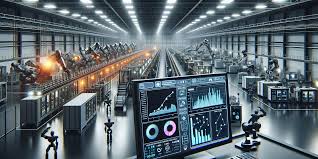
Real-time monitoring systems work in three connected layers. Sensors spread across the network feed constant data streams to edge devices. AI models trained on past incidents spot threats instantly—not hours after the fact. Automated responses kick in without waiting for human approval.
Compare that to rule-based systems, and the difference is huge. Old threshold-based approaches trigger false alarms over 40% of the time. Machine learning cuts false alarms down to under 8% while catching 94% of real threats. Smart glasses now help with infrastructure monitoring too—field technicians see AI insights right on the equipment they’re looking at, making problems easier to spot.
The Numbers Behind the Shift
Companies using AI-driven real-time monitoring see real results. Time to detect threats drops from 47 minutes to 2.1 minutes. Response time shrinks from 3.5 hours to 18 minutes. System downtime falls by 73% on average.
The financial side looks good too. Stopping failures early prevents costs of $500K–$2M per incident in critical sectors. A typical utility recoups its investment in 14–18 months. When you factor in damage to reputation from long outages, the math becomes even more attractive.
Adoption is picking up speed. By 2027, analysts expect 67% of critical infrastructure operators to have deployed this technology—up from just 23% today.
What Operators Need to Know
It’s not just about the software. Connecting it to existing SCADA systems takes real planning. Data security becomes a major concern—the AI models themselves can become targets for attacks. Organizations need to test whether their models can handle adversarial inputs designed to trick detection systems.
Training is key. AI models work best with years of operational data behind them. New facilities starting from scratch see lower accuracy at first, then improve over 6–12 months as systems learn what’s normal for that specific location. The advantage grows stronger over time.
Bottom line: AI transforms infrastructure from fixing problems after they happen to predicting them before they start. Organizations deploying this now get ahead. Those who wait risk falling behind.
FAQ
Q: How fast can AI detect infrastructure threats?
Modern AI systems analyze sensor data in 50–200 milliseconds, compared to 30+ minutes for manual review. That speed difference prevents most cascading failures.
Q: Does the platform require replacing existing systems?
No. Edge AI layers connect to legacy SCADA infrastructure through API adapters, so you don’t have to rip and replace everything.
Q: What’s the biggest challenge in deploying it?
Data quality and model training take up 60–70% of implementation effort. You’ll need 12+ months of clean historical data for the AI to perform well.