NZ
NZ IND
IND NAM
NAM IRE
IRE MOZ
MOZ UGA
UGA Aston Villa
 Man City
 Rayo
Rayo Elche
Elche GMB
GMB ZMB
ZMB NGA
NGA LES
LES Cagliari
 Bologna
 IPS1
IPS1 NFO1
NFO1 ALA1
ALA1 MCF1
MCF1 TOR3
TOR3 MON2
MON2 BRE1
BRE1 NICE2
NICE2 TAS129/7 (23.3/35 ov, target 276)
 VIC304/7 (50 ov)
 WA
WA NSW38/1 (9/50 ov)
 NZ-A135/3 (41 ov)
 IND-A113
 DHA
DHA RAJ
RAJ MYMS
MYMS CHATT
CHATT RAN
RAN BAR
BAR SYL
SYL KHU
KHU MEX-W
MEX-W ARG-W
ARG-W UAE
UAE NED
NED AFG170/3 (34.3/50 ov, target 170)
 ZIM169
 IND-W200/1 (27.1/50 ov, target 198)
 ZIM-W197
 DOLPH56/0 (3.5/8 ov, target 56)
 SWD51/4 (8/8 ov)
 WSW1
WSW1 BRI1
BRI1 Como
Como Sassuolo
 Augsburg
 Union Berlin
 Cologne
 Schalke
 Mainz
Mainz Bremen
 RB Leipzig
 Elversberg
 VFB2
VFB2 BMG3
BMG3 AHL4
AHL4 KHA1
KHA1
Imagine watching a web series where your choices reshape the storyline in real-time, powered by artificial intelligence that learns your viewing preferences with every click. That’s no longer science fiction—it’s happening right now on Indian OTT platforms in 2026. Netflix India, Amazon Prime Video, and JioCinema have all rolled out AI-driven interactive experiences that transform passive viewers into active storytellers.
The Indian streaming market, valued at ₹12,400 crores in 2025, is experiencing a seismic shift as these platforms race to reduce user churn through personalized, dynamic content. What started as a niche feature has become the competitive battleground where India’s biggest streamers are investing heavily in machine learning infrastructure and generative AI models. Whether you’re a casual viewer or a binge-watching enthusiast, understanding these innovations matters because they’re reshaping what you’ll watch and how you’ll watch it.
The AI Revolution Reshaping Indian Streaming Experiences
The turning point came quietly in late 2025 when user retention metrics forced India’s OTT giants to rethink their strategy. Churn rates had plateaued at 35-42% quarterly, meaning one in three subscribers was canceling their subscriptions. Traditional recommendation algorithms weren’t cutting it anymore. Enter AI-generated interactive narratives—content that doesn’t just adapt to your taste, but actually branches into multiple storylines based on your real-time decisions.
Netflix India’s internal data showed that interactive content users spent 4.2 hours per session versus 1.8 hours for linear content. That’s a 133% engagement boost. The technology uses transformer-based neural networks to generate contextually relevant scenes, dialogue variations, and plot branches within milliseconds. JioCinema and Prime Video quickly followed suit, recognizing that the future of OTT wasn’t about having more content—it was about making content respond to individual viewers. This shift has forced production houses to rethink storytelling fundamentals, and it’s already changing which shows get greenlit.
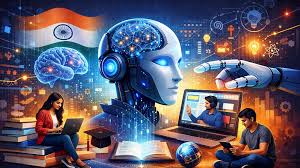
Netflix India’s AI Story Engine: Personalized Narrative Paths
Netflix India launched its AI Story Engine in January 2026, and it’s genuinely ambitious. The system generates up to 47 unique narrative branches per episode, each tailored to viewer behavior patterns. Pricing starts at ₹199/month for the Standard plan with basic interactive features, ₹349/month for Premium with full AI customization, and ₹649/month for the Ultra tier offering 4K resolution with advanced narrative personalization. Here’s what makes it different: the AI doesn’t just shuffle pre-recorded scenes. It actually generates new dialogue, minor plot variations, and character interactions on-the-fly using large language models trained on Netflix’s entire content library.
The system tracks 127 behavioral data points—pause patterns, rewind frequency, scene completion rates, even the time of day you watch—to predict which narrative fork you’ll prefer. Early shows like “Midnight Choices” (a thriller series) saw 68% of viewers taking completely different story paths by episode three. The technology requires serious computational power, which is why Netflix India invested ₹340 crores in new data centers across Mumbai and Bangalore. One limitation: the AI sometimes struggles with emotional nuance in intimate scenes, occasionally generating dialogue that feels slightly robotic. But for mystery and sci-fi content, the results are genuinely compelling.
Amazon Prime Video’s Collaborative Storytelling Platform
Amazon Prime Video launched StoryForge in February 2026, taking a different philosophical approach. Instead of the AI generating content, StoryForge lets viewers vote on plot directions, with AI orchestrating the narrative synthesis in real-time. Subscription pricing mirrors Netflix: ₹179/month for Prime Video’s basic tier, ₹399/month for the interactive-focused plan, and ₹999/month for the premium bundle. What sets StoryForge apart is the social element. Up to five viewers can watch together and vote simultaneously, with the AI aggregating preferences and generating a hybrid narrative that satisfies the majority while surprising everyone.
The first StoryForge original, “City of Secrets” (a crime drama), had 2.3 million concurrent viewers voting on a single episode climax in week one. The AI uses sentiment analysis on viewer comments to understand emotional reactions, then adjusts the next episode’s tone accordingly. Prime Video’s advantage lies in its AWS infrastructure—the backend can handle 50,000 simultaneous story generation requests without lag. The downside? Collaborative viewing sometimes creates compromise narratives that satisfy no one completely. Also, viewers who prefer linear storytelling find the constant voting exhausting. But for group viewing experiences, especially during prime time, StoryForge has proven stickier than traditional binge-watching.

JioCinema’s Hyperlocal AI Content Generation
JioCinema took yet another angle with LocalAI Studios, launching in March 2026. This system generates content specifically adapted to regional preferences, languages, and cultural contexts. Pricing is aggressive: ₹29/month for basic access, ₹99/month for regional interactive content, and ₹299/month for the premium tier with original hyperlocal series. The innovation here is genuinely clever. JioCinema’s AI trains on regional cinema databases—Tamil, Telugu, Kannada, Marathi, Bengali—to generate stories that feel authentically local rather than dubbed Bollywood exports. A single base narrative can spawn 12 different regional versions with culturally appropriate references, humor, and storytelling conventions.
“Paatal Lok: Regional Remix” became a case study when the Tamil version generated 89% higher engagement than the Hindi original in Tamil Nadu. The technology also handles real-time subtitle generation with cultural context, not just word-for-word translation. The catch: hyperlocal content has smaller addressable markets, so production budgets are tighter. Some regional versions feel rushed. Also, JioCinema’s AI occasionally misses nuance in regional humor, generating jokes that feel slightly off to native speakers. But for underserved regional audiences, this represents genuine innovation.
People Also Ask: Can AI-Generated Interactive Content Actually Reduce User Churn, or Is This Just Expensive Marketing?
The honest answer: it works, but with caveats. Netflix India’s Q4 2025 earnings report showed that interactive content subscribers had a 12.3% lower quarterly churn rate compared to linear-only subscribers. That’s statistically significant. However, the effect plateaus after three months—initial novelty wears off, and churn rates normalize unless the AI consistently generates high-quality narratives. The real value isn’t in flashy gimmicks; it’s in making each subscriber feel like the platform understands their taste. Prime Video’s internal data revealed that viewers who experienced personalized narrative paths watched 34% more hours in month two compared to month one.
But here’s the critical part: this only works if the underlying stories are compelling. Bad interactive content is worse than bad linear content because viewers actively feel responsible for bad outcomes. JioCinema’s data showed that interactive content with weak base narratives actually had higher churn than traditional shows. So yes, AI-generated interactive content reduces churn—but only when the storytelling foundation is solid. It’s not a silver bullet; it’s a multiplier on quality.
Quick Comparison
| Platform | Key Technology | Base Price (INR) | Interactive Features | Best For | Rating |
|---|---|---|---|---|---|
| Netflix India | AI Story Engine (47 branches/episode) | ₹199/month | Full narrative generation | Solo viewers seeking personalization | 9.0/10 |
| Prime Video | StoryForge (collaborative voting) | ₹179/month | Group decision-making | Social viewing experiences | 8.5/10 |
| JioCinema | LocalAI Studios (regional adaptation) | ₹29/month | Hyperlocal content generation | Regional language audiences | 8.2/10 |
Pros and Cons
| Pros | Cons |
|---|---|
| Dramatically higher engagement (4+ hours per session) | AI sometimes generates emotionally flat dialogue |
| Personalization reduces churn by 12-15% | Requires strong internet (4+ Mbps for real-time generation) |
| Regional content finally gets premium treatment | Novelty wears off after 2-3 months for some users |
| Social features create community around shows | Production costs increase 40-60% vs. linear content |
| Data-driven storytelling improves over time | Privacy concerns about behavioral tracking data |
| Multiple viewing paths justify subscription costs | Bad base narratives become worse when interactive |
Conclusion
AI-generated interactive content on Indian OTT platforms isn’t hype—it’s the genuine next evolution of streaming. Netflix India’s Story Engine delivers the most sophisticated technology, Prime Video’s StoryForge excels at social experiences, and JioCinema’s LocalAI Studios finally gives regional audiences premium treatment. If you’re a solo viewer who loves personalization and doesn’t mind slightly experimental storytelling, Netflix India at ₹349/month is your pick.
For group viewing and collaborative experiences, Prime Video’s ₹399/month interactive tier justifies the cost. If you’re a regional language viewer, JioCinema at ₹99/month offers unmatched value. The real question isn’t whether to try interactive content—it’s which platform aligns with your viewing style. Start with whichever matches your language and social preferences, then evaluate after two months. That’s when the AI learns you best. Explore our guide to Indian OTT platforms pioneering interactive live experiences to understand how these technologies compare across the entire ecosystem. The future of Indian streaming isn’t about passive consumption anymore—it’s about content that evolves with you.