

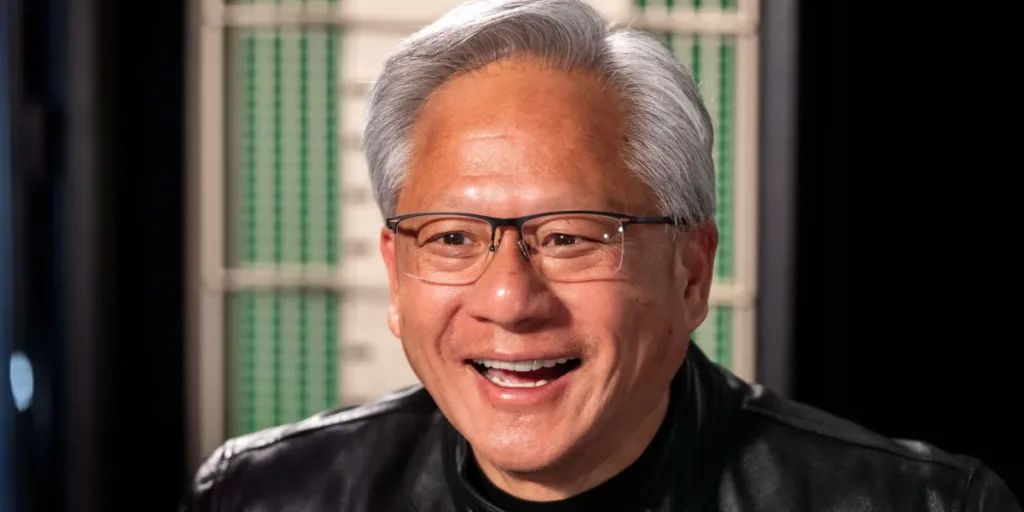
NVIDIA CEO Jensen Huang paused a company-wide all-hands meeting on Friday, August 28, 2026, to take a phone call from US President Donald Trump, according to accounts shared by attendees.
The interruption, reportedly captured in real time by employees watching the livestream, offered a rare window into how the White House still pulls Silicon Valley’s biggest names into its orbit.
The Moment That Stopped the Room
The internal gathering was already underway when a staffer reportedly slipped a note to Huang. He glanced at his phone, told the assembled NVIDIA workforce that the president was on the line, and stepped out of frame.
Employees who tuned in described the scene in posts that circulated on X and LinkedIn through the weekend. Worth noting: NVIDIA has not issued an official statement on the call. The White House press office also reportedly declined to comment when reached by reporters.
That silence leaves the substance of the conversation — and its timing — open to interpretation, but the optics alone have done plenty of work.
Why a Chip CEO Keeps the President’s Number
NVIDIA sits at the heart of America’s AI compute buildout.
The China Question Hanging Over the Call
The timing is awkward. Just days earlier, reporting surfaced that Beijing had tightened rare-earth export licensing, reportedly cutting shipments to overseas data centre operators by roughly three-quarters. That move directly threatens NVIDIA’s CEO Jensen Huang manufacturing partners, who rely on Chinese-processed magnet materials for cooling systems and power infrastructure.
If Trump raised those export curbs on the call, he would have been asking Huang to weigh in on a geopolitical lever that could either accelerate or derail NVIDIA’s growth trajectory. Huang has consistently argued that winning the AI race depends on supply-chain resilience, not just chip design leadership. A presidential ask for his read on rare-earth choke points would fit that pattern.
What Comes Next for NVIDIA and the White House
Expect more — not fewer — of these exchanges. The CHIPS Act follow-on funding is still being disbursed, and the administration’s AI Action Plan is due for an update before year-end. NVIDIA’s data centre revenue is reportedly on track to exceed $200 billion for the fiscal year, which gives Huang leverage that few other CEOs can match.
That said, the relationship carries risk. Every publicised call feeds a narrative that AI infrastructure is being shaped by political access rather than market demand. Rivals like AMD and Intel are already courting Washington with their own commitments to onshore packaging and advanced fabrication. Huang’s next public appearance will likely draw more scrutiny than usual. For now, the call is a single data point. But for an industry where every conversation between a CEO and the president can move billions in capex, even a single data point matters.
Related Articles
FAQs
Did NVIDIA confirm the call with Trump?
No. NVIDIA has not publicly confirmed or denied the conversation, and the White House reportedly declined to comment.
When did the all-hands meeting take place?
The internal meeting was held on Friday, August 28, 2026, according to employee accounts shared on social media.
Why would Trump call NVIDIA’s CEO directly?
NVIDIA sits at the center of US AI infrastructure, making its CEO a key voice on chip export policy, supply-chain resilience, and data center expansion.
How does this affect NVIDIA’s China business?
It does not change NVIDIA’s commercial position directly, but it underscores Washington’s influence over the company’s strategic decisions as Beijing tightens rare-earth exports.
What are the risks for NVIDIA from high-level White House access?
Publicized calls can reinforce perceptions that AI infrastructure decisions are shaped by political access, giving rivals like AMD and Intel room to position themselves as alternatives.
Was this article helpful?
Your feedback directly improves future articles on this site.


