NZ
 IND
 NAM
 IRE
 MOZ
 UGA
 Aston Villa
 Man City
 Rayo
 Elche
 GMB
 ZMB
 NGA
 LES
 Cagliari
 Bologna
 IPS1
 NFO1
 ALA1
 MCF1
 TOR3
 MON2
 BRE1
 NICE2
 TAS67/4 (15.4/50 ov, target 305)
 VIC304/7
 NZ-A135/3 (41 ov)
 IND-A113
 DHA
 RAJ
 MYMS
 CHATT
 RAN
 BAR
 SYL
 KHU
 UAE
 NED
 PAK
 ENG
 IND-W
 ZIM-W
 AFG170/3 (34.3/50 ov, target 170)
 ZIM169
 DOLPH56/0 (3.5/8 ov, target 56)
 SWD51/4 (8/8 ov)
 WSW1
 BRI1
 Como
 Sassuolo
 Augsburg
 Union Berlin
 Cologne
 Schalke
 Mainz
 Bremen
 RB Leipzig
 Elversberg
 VFB2
 BMG3
 AHL4
 KHA1
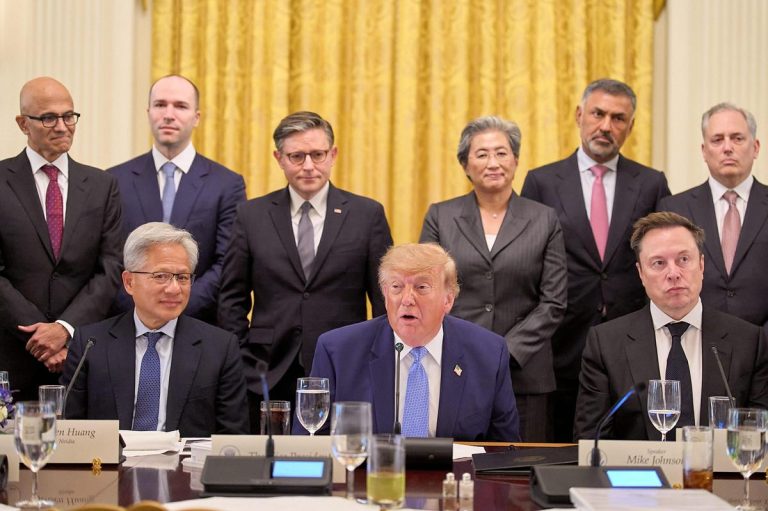
On October 2, 2026, a closed-door White House summit brought NVIDIA and Anthropic into direct conflict over the future of artificial Intelligence regulation. As executives from 14 leading AI firms gathered, Anthropic’s CEO Dario Amodei reportedly pushed for strict national security thresholds on training runs costing over $1 billion, while NVIDIA’s Jensen Huang warned against federal mandates that could stifle next-generation GPU deployments. The details remain unconfirmed, drawn only from a supplied briefing rather than an official transcript. The room was closed to the public. The policy stakes were not.

What Happened At The White House AI Safety Summit
The White House Office of Science and Technology Policy reportedly moderated the debate among executives from 14 leading artificial Intelligence firms. NVIDIA Chief Executive Officer Jensen Huang argued against rigid federal mandates that could restrict the deployment of the company’s Blackwell Ultra and Rubin architecture GPUs in commercial datacenters. Anthropic’s position moved in the opposite direction.
Reports suggest Amodei’s proposal would place stricter national security thresholds around frontier training runs once compute costs exceed $1 billion, a level that would target the largest model-development programmes rather than ordinary business AI projects. > “Stricter national security thresholds” became the defining phrase attached to Amodei’s public position. That distinction matters because the proposal focuses on the scale of training infrastructure, while NVIDIA’s objection concerns what governments might do after imposing broad controls. The supplied account does not include a verbatim transcript, detailed legislative language, or a final agreement from the closed-door meeting. The argument extends a debate covered in our earlier Frontier Safety Anthropic analysis: whether frontier AI safety should be managed through voluntary company commitments or enforceable government thresholds. For more detail, see VentureBeat AI.
Why NVIDIA And Anthropic See Different Risks
Anthropic develops frontier models, so its exposure is tied to training capacity, national security risks, and the consequences of increasingly capable systems. A reported $1 billion compute threshold would create a clear point at which a training run could face additional scrutiny, although the facts supplied for this report do not specify the proposed review process or penalties. NVIDIA supplies the infrastructure that makes those training runs possible.
Huang’s position reflects concern that rigid federal mandates could delay or restrict the use of Blackwell Ultra and Rubin GPUs in commercial datacenters, affecting cloud providers and enterprises that are planning multi-year hardware deployments. The disagreement is therefore not simply about safety versus speed. It is about who controls the trigger: model developers seeking safeguards around expensive training runs, or federal agencies that could impose rules affecting hardware availability across the commercial market. NVIDIA’s hardware role gives the discussion a direct connection to datacenter investment. Our earlier NVIDIA Spark Apple coverage also illustrates why NVIDIA’s product strategy increasingly intersects with broader computing policy, although the summit focused on AI infrastructure rather than consumer devices. For more detail, see OpenAI Blog.
The Policy Context For AI Companies
The meeting arrives as AI firms compete to build larger systems while governments assess whether existing rules can handle training runs with national security implications. A reported threshold based on compute cost could give regulators a measurable signal, but the supplied facts do not define how compute would be calculated across rented cloud infrastructure, proprietary datacenters, or multiple training stages.
That gap is significant. Companies could face different obligations depending on whether regulators measure the cost of GPUs, electricity, cloud contracts, engineering labour, or the complete training programme. NVIDIA’s concern also reaches beyond one product generation. Blackwell Ultra and Rubin represent named architecture families in the company’s commercial roadmap, so deployment restrictions could affect cloud operators, research institutions, and businesses buying accelerated computing capacity. Anthropic’s wider infrastructure relationships add another layer. Earlier coverage of the Akamai Anthropic Cloud connection shows how model development increasingly depends on distributed computing partnerships rather than a single company’s facilities.
What Happens Next After The Summit?
The immediate outcome remains unclear because the discussion was closed-door and no final federal mandate was identified in the supplied facts. The next meaningful development would be publication of draft thresholds, definitions for a reported $1 billion training run, or a formal statement from the Office of Science and Technology Policy.
Companies should watch the wording, not just the headline. A rule aimed at frontier training could still affect datacenter procurement if it limits which GPUs can be installed, where they can be operated, or which customers can access them. The opening scene was a policy meeting, but its effects could reach server halls worldwide. If Amodei’s threshold becomes formal and Huang’s deployment concerns shape the final text, AI safety rules may determine both how models are trained and where NVIDIA’s next architectures can run. The next test is whether Washington can set a safety threshold without turning commercial AI infrastructure into a regulatory bottleneck.
FAQs
What did Anthropic propose?
Reportedly, Anthropic CEO Dario Amodei advocated stricter national security thresholds for frontier AI training runs exceeding $1 billion in compute cost during the fourth quarter of 2026.
What did NVIDIA oppose?
According to the supplied briefing, NVIDIA CEO Jensen Huang argued against rigid federal mandates that could restrict the deployment of Blackwell Ultra and Rubin architecture GPUs in commercial datacenters.
How many AI companies joined the debate?
The closed-door debate reportedly involved executives from 14 leading artificial Intelligence firms, with moderation by the Office of Science and Technology Policy.
Is there a final US AI rule?
No final federal rule or agreement has been officially confirmed. Specific thresholds, enforcement mechanisms, and implementation details remain unconfirmed.
Was this article helpful?
Your feedback directly improves future articles on this site.