ALS0
 AHL0
 WAS2
 AQAJ1
 TRA0
 NEF0
 SAS
 FIO
 ATA
 PAR
 LOR
 BRE
 NEW
 EVE
 DEP
 OSA
 WI-A
 LIONS
 Galatasaray
 Stuttgart
 Shakhtar
 Sporting
 NED183/3 (36/50 ov, target 183)
 OMA182
 Athletic2
 Real Sociedad1
 Juventus2
 Napoli0
 Marseille2
 Toulouse0
 NZ-A424
 IND-A346 & 32/0 (11 ov)
 QLD280
 VIC307 & 136/6 (66 ov)
 SYL218 & 218
 CHATT210 & 126/1 (37 ov, target 227)
 MYMS108 & 315/9 (91 ov) (f/o)
 KHU288
 DHA
 BAR266/8 (70 ov)
 RAN256
 RAJ231 & 110/3 (27 ov)
 ASSAM135
 KNTKA180/2 (36 ov)
 MEGHA
 NAGA244/8 (67 ov)
 TPURA219/7 (74.3 ov)
 SAU
 BENG143
 MAHA21/2 (8 ov)
 ODSA
 JHK37/3 (25 ov)
 CHD
 TN320/4 (86 ov)
 NZ
 IND
 TOK
 MOW
 BIK
 JAB
 LUL
 POA
 DOLPH
 WPR
 CD
 AUCK
 OTAGO
 CANT
 AFG81/3 (8.1/20 ov, target 80)
 ZIM79
 NAM131/5 (21.2/50 ov, target 130)
 IRE129
 MS-W109 (18.1/20 ov, target 125)
 PS-W124/9
 KSS0
 ZEN1
 OVI0
 LPA2
 ATRO1
 VOL0
 ALLB0
 EST0
 SHO0
 MGR0
 Atlético
 Bayern
 Elche0
 Valencia1
 Lecce1
 Genoa2
 Liverpool0
 Arsenal1
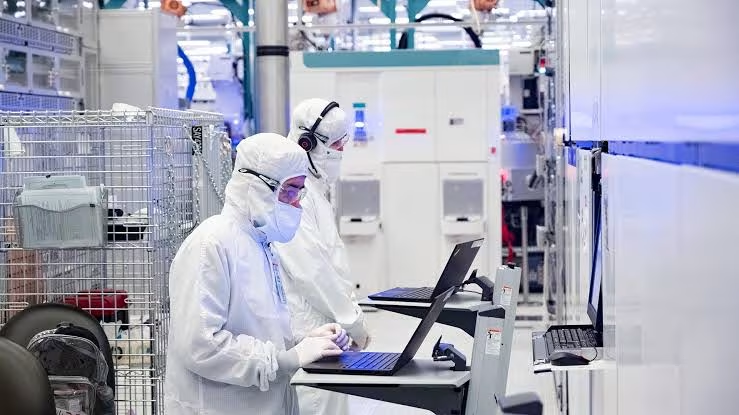
Intel has announced a shift in server chip production that reshapes its global manufacturing priorities. The semiconductor giant will now put enterprise processors ahead of traditional desktop components. The move responds to a significant shortage of data center silicon.
Company leaders acknowledge that current output can’t fully meet modern computing needs. Consumer hardware sales are widely expected to decline gradually across international markets, while enterprise infrastructure demand is growing quickly. The pivot follows direct feedback about silicon allocation bottlenecks; production changes will affect facilities in both the U.S. and Europe, as well as upcoming workstation architectures. Market participants should keep a close eye on inventory allocations.
Key Intel Server Chip Shift Details
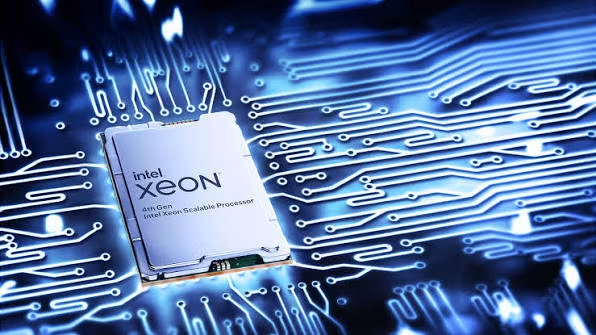
Intel’s immediate priority is to ramp up production of its latest Xeon server processors. Demand is outpacing planned manufacturing volumes, and executives have described the bottleneck as a significant supply shortage. Production lines at an Irish fabrication site will get more capacity for enterprise silicon, while equipment installation at an Arizona fabrication site is accelerating.
Supply Chain Impact Of The Intel Server Chip Shift
These production changes point to a deliberate move away from consumer-focused processes. In Oregon, engineers are converting specific manufacturing assets from one advanced process to a newer architecture. The conversion once supported mobile designs but now targets data center deployments.
More capacity on the newer architecture is expected to come online in the coming years. Hardware vendors may see better availability of high-performance server racks during that period, as the shift reflects a broader industry move toward compute-heavy workloads. Analysts say AI operators need much more processing power for inference, while agentic applications require dedicated silicon for complex parallel calculations. Traditional gaming and office computing simply can’t match those energy-intensive demands.
What Happens Next For The Industry
Market watchers expect retail motherboard suppliers to face continued pressure in the near term. Component distributors may see longer lead times for mainstream desktop platforms. Enterprise clients will likely get priority access to new server generations.
We recommend following quarterly shipment reports to see how quickly the Arizona and Irish facilities scale up. Supply chain transparency will shape whether prices stabilize across commercial segments, and delays could affect global cloud expansion projects. Executives are balancing legacy consumer demand with rapid enterprise growth; the company expects that momentum to continue as computing needs evolve, with strategic alignment shaping profitability in coming fiscal cycles. For more detail, see Gizmodo.
FAQs
Why is Intel prioritizing server chips over desktop processors?
Enterprise demand exceeds manufacturing capacity, while consumer sales face a gradual decline.
When will the expanded Irish and Arizona facilities reach full capacity?
More capacity on the newer architecture is expected to become available in the coming years.
How does this shift affect existing PC builders?
Retail motherboard suppliers may face longer lead times in the near term.
Will the consumer PC market disappear completely?
Legacy desktop platforms remain active, but they’ll receive lower production priority.
How much revenue did the server division generate recently?
The Data Center and AI unit is described as a major revenue driver, with strong growth in recent periods.
Why is Intel focusing on enterprise growth at this time?
Intel is prioritizing enterprise growth because demand for server chips exceeds its manufacturing capacity. The shift lets the company better align resources with enterprise clients’ evolving computing needs, even as consumer sales gradually decline.
What impact will the shift in production have on the consumer market?
The shift may mean longer lead times for retail motherboard suppliers, affecting PC builders in the near term. Legacy desktop platforms should remain available, but they’ll have lower production priority, reflecting Intel’s focus on enterprise solutions over consumer products. The shift aims to ensure enterprise clients get enough silicon as consumer upgrades slow naturally.
Source: NotebookCheck
Read Next
- What Is Volta-Autodox? Uses large language models to profile victims in 10 to 30 seconds
- iPhone 17 Pro Max Swap for iPhone Duo: The Good, Bad and Baffling After Two Weeks
- OpenAI Pledges to Buy Google AI Chips in First Move Away From Google, Nvidia, and Reliance
Was this article helpful?
Your feedback directly improves future articles on this site.