
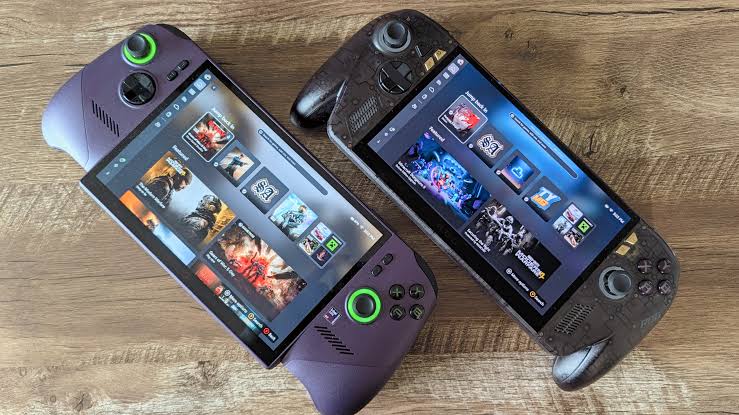
Premium AI handheld gaming PCs are portable computers that pair desktop-class silicon with built-in cooling arrays. On June 2 and 3, 2024, Asus and MSI announced their latest premium handhelds, betting that pocket-sized rigs could finally replace traditional consoles. The competition between the Asus ROG Xbox Ally X20 and MSI Claw 8 EX AI+ highlights the evolving landscape of portable gaming technology.
The Asus ROG Xbox Ally X20 and MSI Claw 8 AI+ took very different architectural paths. That leaves gamers choosing between AMD’s reportedly proven efficiency and Intel’s Lunar Lake silicon.

How do the core specifications and screen sizes differ?
MSI announced the Claw 8 AI+ on June 3, 2024, during Computex. Asus had unveiled its rival platform a day earlier, on June 2. The MSI machine pairs a Lunar Lake processor with an eight-inch, 120Hz panel. That extra display area could make complex UI layouts easier to navigate.
The memory configurations reveal another difference: the MSI ships with 32GB of LPDDR5X RAM. Asus opted for a seven-inch screen with native 1080p resolution and 24GB of LPDDR5X RAM. The larger panel and extra memory could give the Intel build an advantage with multitasking and high-resolution textures. These choices may also affect how each system handles background streaming and cloud sync without slowing the main rendering pipeline.
Memory Allocation Strategies
System architects route shared memory differently in the two chassis designs. The wider panel could let developers render interface elements alongside active gameplay frames. Smaller form factors may require tighter resource pooling and stricter load balancing between the operations.
Which AI handheld gaming PCs deliver stronger performance when rendering modern titles?
Gaming demands vary depending on whether players value visual fidelity or steady frame rates. The Asus lineup launched in July 2024 with a base price of $799.99, setting a solid benchmark for competitors. Its AMD Ryzen Z1 Extreme chip prioritizes efficient rasterization and steady power delivery during shorter sessions.
The Intel configuration, meanwhile, handles heavier ray tracing workloads with optimized driver stacks. Its architecture may have the edge in raw computing throughput during demanding physics calculations. Heavy simulation scenes could run more smoothly on the wider-screen device, while the compact alternative may maintain consistent output in fast-paced combat. Gamers who already own an Essential Steam Handheld may notice faster asset loading right away.
Price often determines which portable computer makes it onto a holiday wish list. Market analysts tracking the segment reportedly say retail prices have climbed steadily as manufacturers add larger cells and higher-refresh-rate panels.
Asus entered the market at $799.99, leaving more room in the budget for accessories or games than a model rumoured to carry a higher upfront price. The competing model is rumoured to cost more because it includes advanced thermal management and premium chassis materials. Investors looking for a lower price should consider the Asus model; those seeking peak graphical settings may need to spend more on its rival. The price gap could leave the two devices with distinct customer bases that rarely overlap at checkout. Consumers comparing their options with a Bose Teases Gaming peripheral ecosystem may find the lower-priced option leaves more money for audio upgrades.
How do battery endurance and heat management hold up during extended sessions?
Power efficiency can determine whether a player finishes a campaign or sees the system throttle down unexpectedly. Both platforms use 80Whr cells to extend play away from wall outlets. The Intel-based unit draws less current while idle, thanks to architectural improvements.
The AMD-based competitor manages heat with aggressive fan curves that kick in earlier than on traditional designs. Extended sessions may give the newer-generation silicon a slight advantage in sustained clock speeds. Planning a marathon weekend? Keep an eye on ambient temperatures: dense urban environments could push both devices into protective throttling sooner than expected. Upgrading to a PlayStation OLED Handheld companion dock might actually offer better passive cooling solutions.
Thermal Throttling Protocols
The cooling systems work independently, despite the devices having identical cell capacities. The Intel chassis spreads surface heat to keep the grip zones comfortable during long sessions. Its AMD sibling directs heat toward the rear ventilation array, trading peripheral warmth for core stability. Check for manufacturer firmware patches before summer releases; updated power limits often change baseline thermals.
Premium AI handheld gaming PCs continue to mature as software optimization catches up with hardware capabilities. Buyers must decide whether larger screens and higher memory caps justify the rumoured price differences between the Asus ROG Xbox Ally X20 and MSI Claw 8 EX AI+.
Can existing game libraries transfer between these two platforms seamlessly?
Digital storefronts sync across operations, allowing players to access their game libraries on both devices. This feature enhances the user experience and provides flexibility for gamers.
<h3 id="do-these-machines-support-external-monitor-output-at-high
Was this article helpful?
Your feedback directly improves future articles on this site.


