NAM321/6 (50 ov)
 IRE
 GMB
 ZMB
 NGA
 LES
 CAG
 BOL
 COMO
 SAS
 FCA
 FCU
 KOE
 S04
 M05
 SVW
 RBL
 ELV
 MOZ19
 UGA23/0 (0.5/20 ov, target 20)
 NZ180/5
 IND181/6 (19.5/20 ov, target 181)
 Ipswich1
 Nottm Forest1
 Alavés1
 Málaga1
 WA105/3 (18.5/50 ov, target 372)
 NSW371/8
 DEN
 KUW
 KENYA
 QAT
 SWD-W
 EPR-W
 TTN-W
 WPR-W
 BOR
 WAR15/1 (2.5/20 ov)
 LIONS
 Limpo21/1 (2.5/20 ov)
 NZ-A135/3 (41 ov)
 IND-A113
 DHA293/3 (84.1 ov)
 RAJ
 MYMS
 CHATT
 RAN320/5 (80 ov)
 BAR
 MEX-W
 ARG-W
 UAE
 NED
 PAK
 ENG
 IND-W
 ZIM-W
 AFG170/3 (34.3/50 ov, target 170)
 ZIM169
 SCP
 HSV
 ARS
 EVE
 Torino3
 Monza2
 Brest1
 Nice2
 Stuttgart2
 Gladbach3
 Al Ahli4
 Al Khaleej1

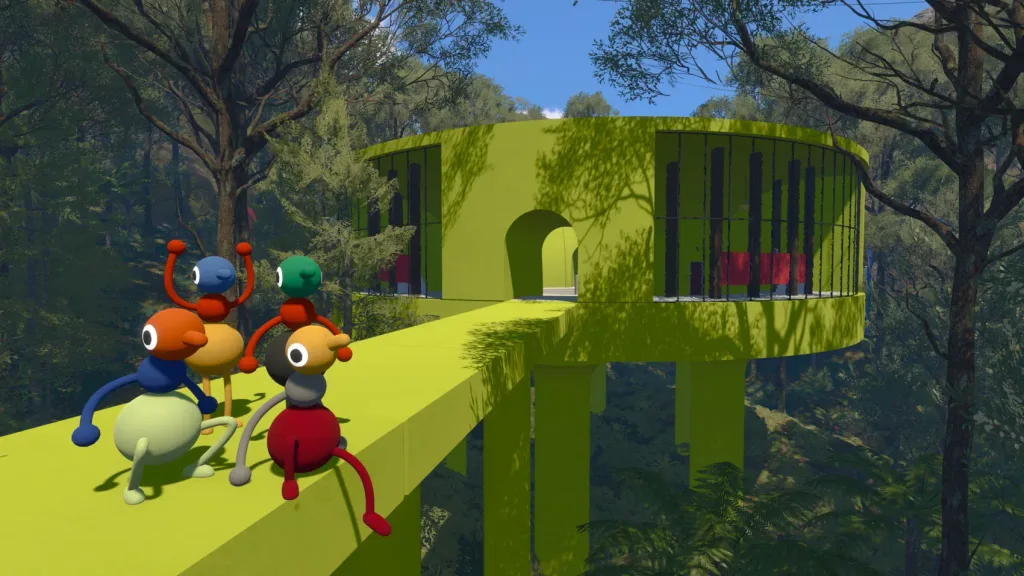
The Walk Advanced co-op puzzles in Big Walk trip up most new duos within the first ten minutes, and that failure loop is why so many players drop the game early.
When one player’s misplaced crate resets a twenty-step sequence, the session usually ends in frustration rather than a retry. Here’s the good news: the pattern behind every failure is consistent, and it’s fixable.
What Makes Walk Advanced Puzzles Hard
Big Walk’s later zones demand two players to act as one machine. One player anchors a moving platform while the other routes a beam, then they swap mid-sequence. The root cause of most failures isn’t skill — it’s symmetrical thinking.
New duos both try to do everything, so they cancel each other out. The game’s physics punish hesitation. A platform drifts back if the anchor releases too early, and a beam re-aims itself if the mover strays.
Most teams attempt both tasks simultaneously, which guarantees at least one reset. The solution is role clarity, not faster reflexes.
Solution One: Commit to Role Specialization
Assign a permanent anchor and a permanent mover before each puzzle. The anchor holds, the mover reads the environment and calls the timing. This halves the mental load per player. The downside: role lock-in feels restrictive.
If the mover misreads a gap, the anchor can’t compensate, and you waste a run. But consistency beats flexibility in Big Walk because the puzzles are deterministic — the same inputs always produce the same result.
Solution Two: Build a Three-Count Callout System
Use a verbal countdown — “one, two, three, go” — for every synchronized action. The anchor moves on “three,” the mover releases on “go.” This removes the guesswork from timing windows that last barely a second. The trade-off: callouts break down under pressure.
When a beam is about to overheat, players start counting faster, and the rhythm collapses. That said, a steady three-count works because Big Walk’s co-op servers introduce slight latency, and a spoken rhythm absorbs that delay better than visual cues.
Solution Three: Adopt the Pause-and-Plan Ritual
Before touching a puzzle, spend thirty seconds walking the arena together. Identify the anchor point, the beam route, and the fail state. This turns a reactive scramble into an execution drill. The cost: it slows early runs. Speedrunners hate it, and casual players often skip it after the first zone.
Yet the ritual pays off in the mid-game, where puzzles chain three mechanics in sequence. Planning beats reaction every time here.
| Approach | Strength | Weakness |
|---|---|---|
| Role specialization | Clear ownership | Inflexible under error |
| Three-count callouts | Precise timing | Collapses under stress |
| Pause-and-plan | Full map awareness | Slows early progress |
The Verdict
If you want to reach Big Walk’s later zones, combine all three: plan first, lock roles, then count. Start with the pause-and-plan ritual in zone two, adopt the three-count by zone four, and keep roles fixed through the finale.
The early slowdown is worth it — the later puzzles punish improvisation harshly. Mastering these Walk Advanced habits turns the game’s hardest co-op sections into a rehearsed duet. Practice the rhythm, trust your partner, and the beam always lands.
Related Articles
FAQs
Why does my platform keep resetting mid-puzzle?
The anchor likely released early. Hold until your partner calls “go,” then release together.
Is one strategy better for random matchmaking?
Yes — use the three-count callouts, since strangers respond better to a fixed rhythm than to role assignments.
Can I play solo with an AI partner?
Big Walk’s puzzles are designed for two human players, and the AI partner often fails the anchor role on advanced stages.
Was this article helpful?
Your feedback directly improves future articles on this site.