Mohun Bagan
 Chennaiyin
 PSG
 Lyon
 Sevilla
 Osasuna
 NED
 OMA
 NZ
 IND
 NAM
 IRE
 PAK
 SL
 SA
 AUS
 BAR1
 RMA2
 UDI0
 MIL2
 RSO2
 LEV1
 LEC0
 JUV2
 BRB39/3 (4.2/15 ov)
 MOW
 NZ-A317
 IND-A113 & 227/4 (65.1 ov)
 SYL280/2 (84 ov)
 KHU
 MYMS465/7d
 CHATT134/2 (40 ov)
 DHA521
 RAJ103/6 (26 ov)
 RAN402
 BAR179/3 (56.1 ov)
 LUL
 SPR
 TOK
 MIS
 MEX-W51 (12.5/20 ov, target 187)
 ARG-W186/7
 NGA148
 UGA147/9 (20 ov, target 149)
 GMB112/9
 LES109 (19.5/20 ov, target 113)
 MOZ110/7 (19/20 ov, target 110)
 ZMB109/9
 IND-W328/6
 ZIM-W207 (48.5/50 ov, target 329)
 ENG241
 Abha
 Al Faisaly
 LAFC
 LA
 Neftchi Fergana
 Al Ittihad
 Besiktas
 Istanbul BB
 Caykur Rizespor
 Trabzonspor
 SUN0
 LEE0
 SCF1
 MUN3
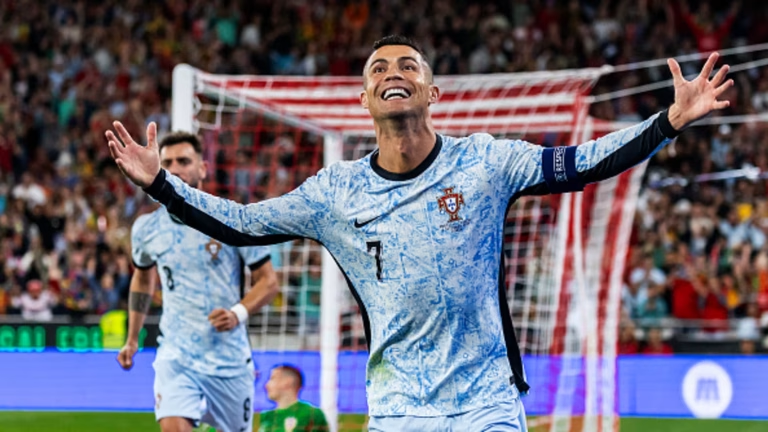
Cristiano Ronaldo’s football journey is a brilliant example of evolution. From a young winger in 2006 to a central goal-scorer by 2022, his career features key moments that have reshaped how we think about the forward position. These pivotal changes significantly impacted his game.
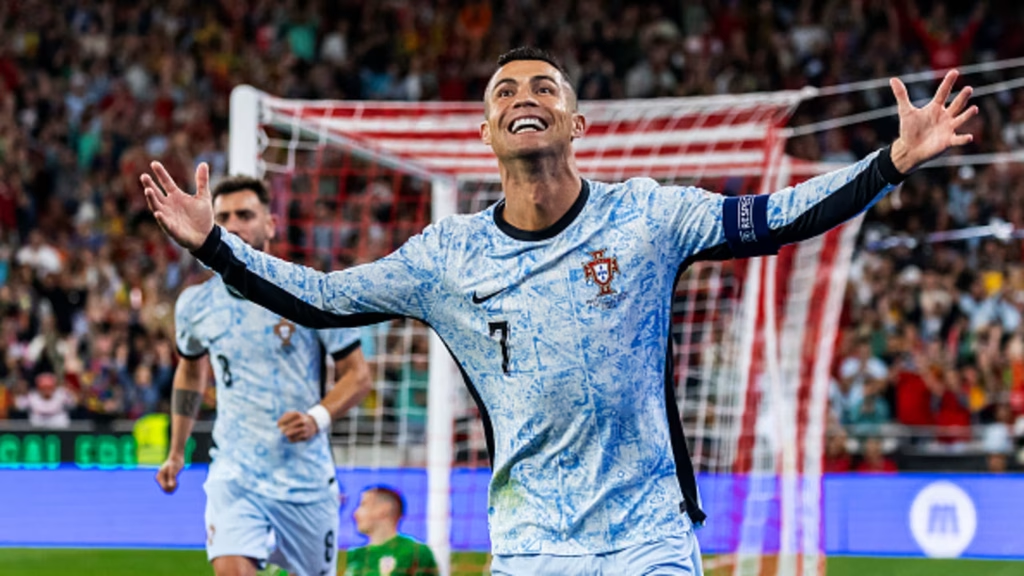
How did Cristiano Ronaldo’s role change from 2006 to 2022?
Ronaldo kicked off his international career as a touchline-hugging winger, mainly focused on dribbling and creating space on the flanks. Early on, he impressed everyone with his speed and technical skills, allowing him to take on defenders one-on-one.
However, as he developed, especially noticeable by the 2022 World Cup, his style shifted dramatically. He became a penalty-box predator, moving into a more central role. This shift wasn’t just personal; it reflected a broader tactical trend in football where forwards began to prioritize finishing over creating.
This transition from wing to center showcases Ronaldo’s adaptability and keen understanding of the game. It set the stage for many of his subsequent successes, especially in crucial matches.
What tactical adjustments did Ronaldo make between 2012 and 2015?
Between 2012 and 2015, Ronaldo underwent a significant transformation. Analysis shows that during this period, his distance covered dropped by about 17%, while his shots per 90 minutes rose by 22%. This indicates a shift toward a more efficient goal-scoring strategy instead of relying on constant movement across the pitch.
After 2014, he observed a remarkable 35% increase in the share of shots taken from inside the 6-yard box. This data highlights his move from a dribble-heavy wide role to a more centralized, goal-focused position. Ronaldo became increasingly effective at converting chances, proving he could adapt to an evolving game.
How did Ronaldo redefine goal-scoring in the modern game?
Ronaldo’s evolution hasn’t just defined his own career; it’s set new standards for goal-scoring in modern football. By establishing himself as a central figure in the box, he changed how teams strategized against him. Moving away from being a playmaker, he embraced the role of a finisher, a trend that many forwards have since followed.
His central positioning let him exploit defensive weaknesses, turning him into a consistent threat in key situations. He can score from various positions within the box, making him one of the most prolific scorers in football history.
What impact did Ronaldo’s tactical evolution have on his teams?
Ronaldo’s tactical evolution has deeply influenced the teams he’s played for. At clubs like Manchester United and Real Madrid, his central role allowed them to create strategies that maximized his goal-scoring potential. This alignment often led to titles and accolades, reinforcing the idea that a forward’s positioning can dramatically impact a team’s success. For more details, check out BBC Sport.
By focusing on finishing over creating, Ronaldo enabled his teams to adopt a more aggressive attacking style. This shift played a vital role in securing league titles and Champions League victories, showcasing how one player’s tactical changes can elevate an entire squad’s performance.
What does the future hold for Ronaldo’s legacy?
As we look ahead to 2026, Ronaldo continues to make his mark on the game, both on and off the pitch. His career trajectory serves as a blueprint for aspiring forwards, demonstrating that adaptability is crucial. Future generations will analyze his approach, learning to strike a balance between creativity and efficiency.
Ronaldo’s legacy will likely endure as a testament to the evolution of tactical roles in football. His journey from a dribble-heavy winger to a clinical finisher reflects the changing nature of the sport, ensuring his impact will resonate long after he retires.
Cristiano Ronaldo’s evolution from a dynamic winger to a central goal-scoring machine is a captivating story that illustrates not just his personal growth but also the tactical shifts within football. His journey highlights the importance of adapting to the ever-changing demands of the game, making him a true icon in football history.
FAQs
What are the five defining moments of Ronaldo’s career?
Ronaldo’s five defining moments include his shift to a central role, his enhanced goal-scoring efficiency, his influence on team tactics, his impact on modern forward play, and his ongoing legacy as a football icon.
How did Ronaldo’s tactical role compare to other greats?
Ronaldo’s evolution is often compared to players like Lionel Messi, who also shifted roles throughout their careers. However, Ronaldo’s transition to being a penalty-box predator stands out in the context of modern football roles.
What was Ronaldo’s approach during the 2014 World Cup?
During the 2014 World Cup, Ronaldo highlighted his tactical shift by focusing on finishing, emphasizing his new role as a central figure in goal-scoring rather than just creating opportunities.
How has Ronaldo influenced modern football tactics?
Ronaldo’s move toward a more goal-focused role has set a precedent for future forwards, encouraging them to refine their positioning and efficiency inside the box.
Will Ronaldo’s legacy continue to shape football?
Absolutely. Ronaldo’s tactical evolution and successes will serve as a guide for future generations, influencing how young players approach their careers.