NAP3
 ROMA3
 CHE0
 TOT0
 VAL1
 VIL0
 DOR0
 SGE0
 WIL0
 CAM3
 ALV0
 FCA1
 MTL0
 NSH0
 RIY
 TAA
 LAZ
 PAR
 RCL
 PAR
 MEX-W
 ARG-W
 ATM
 DEP
 UAE
 NED
 PAK
 ENG
 IND-W
 ZIM-W
 KHO0
 ETT3
 RAC2
 ESP1
 ARS2
 EVE0
 KNGHT126/6
 MPUMA63/4 (10.1/20 ov, target 127)
 NZ-A135/3 (41 ov)
 IND-A113
 SYL
 KHU
 MYMS299/4 (87 ov)
 CHATT
 DHA293/3 (84.1 ov)
 RAJ
 RAN320/5 (80 ov)
 BAR
 GMB
 LES
 MOZ
 ZMB
 NGA
 UGA
 NAM321/6
 IRE290 (47.3/50 ov, target 322)
 NZ180/5
 IND181/6 (19.5 ov)
 BHA3
 WHU0
 Inter Milan
 Fiorentina
 Churchill
 Punjab FC
 Athletic
 Getafe
 C Palace
 Newcastle
 COV0
 FUL1
 OFC0
 NEU0
 NEOM2
 ABH0

Could truly redefine the guided workout experience, not just by offering fitness content, but by leveraging its unparalleled music personalization algorithms?
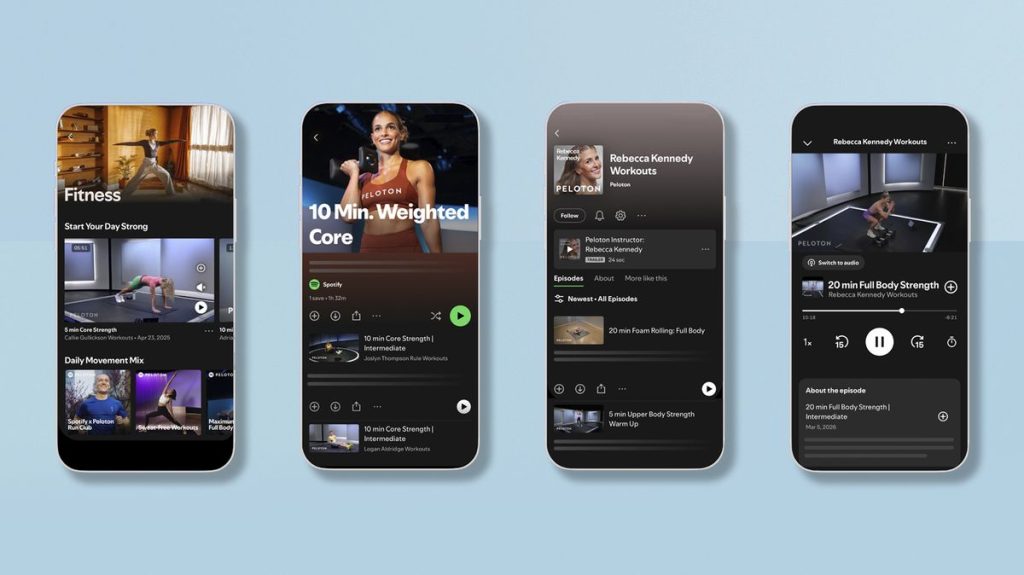
On April 27, 2026, the music streaming giant officially announced its foray into the guided fitness space, a move set to challenge established players like Apple Fitness+ and Fitbit Premium. This new offering, set to roll out on May 15, 2026, promises to integrate music, expert coaching, and real-time activity tracking, all bundled within existing Premium subscriptions at no extra charge.
Spotify’s Bold Entry into the Fitness Arena
The introduction of Spotify’s guided workout experience marks a significant strategic pivot for the audio streaming behemoth. While competitors have long offered curated fitness playlists, is aiming higher by embedding structured coaching sessions directly into its platform.
This isn’t merely about background music; it’s about creating a holistic audio-first fitness journey. The service will feature collaborations with renowned trainers, including Jeanette Jenkins and Joe Holder, who will guide users through various workout regimes. This strategic partnership brings credibility and a human element, crucial for engaging users in a crowded fitness market.
The real differentiator, however, lies in Spotify’s deep-seated expertise in personalization. For years, the company has honed its AI to understand user preferences in music, predicting what listeners want to hear next with uncanny accuracy.
This same engine could be leveraged to curate workout soundtracks that dynamically adapt to a user’s pace, intensity, and even mood. Imagine a run where the tempo of the music seamlessly adjusts as your heart rate climbs, or a yoga session where calming ambient tracks precisely match the instructor’s cues. This potential for hyper-personalized motivation is something that existing fitness apps, while robust in their tracking, have yet to fully unlock.
Why This Move Matters for the Fitness Tech Landscape
Spotify’s aggressive move into guided workouts has profound implications for the broader tech and fitness industries. By including this feature at no additional cost to its existing Premium subscribers, is effectively lowering the barrier to entry for high-quality digital fitness.
This directly pressures competitors like Apple Fitness+ and Fitbit Premium, which typically operate on separate subscription models. Consumers now have a compelling reason to consolidate their digital subscriptions, potentially shifting market share away from those who have historically dominated the connected fitness space.
Furthermore, this integration highlights a growing trend of cross-pollination between different digital service categories. We’ve seen how Apple’s hardware ecosystem is designed to seamlessly connect its various services, and is now demonstrating how a content-first platform can expand its utility into adjacent verticals. The ability to sync with Apple Health and Google Fit is a smart move, ensuring broad compatibility and allowing users to aggregate their fitness data within their preferred health platforms. This interoperability is key to widespread adoption.
For fitness trainers and content creators, this presents a new, massive distribution channel. Collaborating with means reaching millions of users who might not otherwise subscribe to a dedicated fitness service.
The challenge, of course, will be to create audio-first content that stands out and effectively guides users without the visual cues often relied upon in video-based fitness. The success of trainers like Jenkins and Holder will be closely watched as they pioneer this new format. Understanding spotify fully means staying ahead of these developments.
The Numbers: Integration, Cost, and Reach
The core appeal of Spotify’s new offering is its accessibility. The service will be included in the standard Premium subscription, which remains priced at $9.99 per month. This means users already paying for ad-free music streaming gain access to a comprehensive guided workout experience without any incremental cost. This pricing strategy is a direct challenge to competitors; for instance, Apple Fitness+ costs $9.99 per month or $79.99 per year, and Fitbit Premium also has its own subscription tiers.
The integration with Apple Health
FAQs
What is Spotify’s new guided workout experience?
Spotify’s new guided workout experience offers users curated audio workouts featuring trainers and motivational coaching, designed to compete with platforms like Apple Fitness+ and Fitbit.
How does Spotify’s workout feature differ from Apple Fitness+ and Fitbit?
Unlike Apple Fitness+ and Fitbit, which provide video workouts and integrated health tracking, Spotify focuses primarily on audio-guided sessions combined with its extensive music library to enhance the workout experience.
Is the Spotify guided workout experience available to all users?
The guided workout feature is available to Spotify Premium subscribers and is accessible through the Spotify app on supported devices.
Can I customize the workout sessions on Spotify?
Yes, users can choose from various workout types, durations, and intensity levels, allowing a personalized fitness experience tailored to individual preferences.