Xabi Alonso has become the tenth permanent Real Madrid manager of Florentino Pérez’s 21-plus-year presidential reign to be sacked without even completing a year in charge. The 44-year-old Madrid playing legend was dismissed less than seven months after being hired to manage Los Blancos, making this one of the most shocking yet inevitable managerial decisions in recent Real Madrid history. The decision came just when Alonso seemed to have calmed the stormy waters that had threatened to overwhelm him since autumn, following a loss to Barcelona in the Supercopa final—the biggest sin in the dictionary of Must Not Commit for Bernabéu managers.
At the time of his dismissal, Madrid was only four points off the top of LaLiga, safely positioned in the UEFA Champions League top eight, and had a Copa del Rey tie at Albacete scheduled for Wednesday. Those around Alonso will forever look back at the final moments of Sunday’s Supercopa final in Jeddah and think about Álvaro Carreras and Raúl Asencio, who each had point-blank chances to score and take the final to penalties. Yet despite these missed opportunities and the competitive state of the team, Pérez’s decision remained resolute and unforgiving.
The Vinicius Junior Incident and Its Aftermath
The first major offense against Alonso in Pérez’s eyes stemmed from a damaging incident during the victorious Clásico last October. When Alonso substituted Vinícius Júnior—the Brazil international and the president’s most prized asset—the player erupted in anger while showing disrespect for his manager. Even in victory, the player’s actions hogged the headlines as Vinícius screamed into the night air, stating: “This is why I’m going to leave this team. This is why I’m leaving!“

looks on during the LaLiga EA Sports match between Rayo Vallecano de Madrid and Real Madrid CF at Estadio de Vallecas on November 09, 2025 in Madrid, Spain. (Photo by Denis Doyle/Getty Images)
This outburst damaged Alonso’s public reputation and club credibility irreparably in Pérez’s eyes. The president’s primary concern is Vinícius’s future at the club; he wants the 24-year-old star to renew his contract at all costs. Although Alonso palpably repaired much of the damage with his young superstar and on Sunday helped him produce his best goal and best performance since Carlo Ancelotti’s departure, the irreparable damage to Pérez’s perception of his coach had already been done.
The Barcelona Loss: A Capital Offense
The second condemning offense was straightforward yet decisive: losing to Barcelona in a big final remains a capital offense in the Bernabéu rulebook. Approximately five weeks prior to Alonso’s dismissal, the implications were already clear in previous reporting about the precarious nature of his position. The message was unambiguous—win the Supercopa, and Alonso would be left alone to do his job until the end of the season. Fail to capture the trophy, and dismissal would be almost certain.
The Barcelona loss was particularly damaging because it came at a time when Alonso had seemingly stabilized the team’s performances. The team had been building results following victories against Sevilla, Real Betis, and Atlético Madrid, with players clearly pulling for their coach. Real Madrid appeared to be steering toward the extremely valuable top eight of the Champions League with two winnable matches ahead in January.
Media Reaction and Public Sentiment
What was particularly shocking was how utterly caught by surprise the Spanish football media were when the dismissal was announced. Despite having set the table for an Alonso sacking repeatedly throughout November and December, the actual execution came as a stunning development.
The media headlines the morning after Sunday’s final reflected a completely different sentiment than what followed Monday’s announcement. Marca, the most prominent sports newspaper, published headlines including “Xabi revives the Mourinho style” and “What a miss from Carreras in the 95th minute,” with no blame thrown at the coach. Alfredo Relaño, the famous Marca columnist, stated definitively: “Xabi Alonso lost the final but saved his situation.”
The more hawkish and Pérez-oriented publication Diario AS used “Only Raphinha was better than Madrid” as their match headline following the Supercopa defeat. Self-confessed ultra-Madridista columnist Tomás Roncero’s column read “Nothing to reproach you over,” suggesting that even Madrid-aligned media felt Alonso had done nothing to warrant immediate dismissal.
Poor Management Upward and Relationship Issues
The fourth significant offense in Pérez’s assessment was that Alonso, fundamentally, hadn’t “played the game.” Managing upward has become an increasingly critical skill when coaching at a big club—this is true anywhere in the world, but particularly when your direct boss is the unaccountable Florentino Pérez.
Throughout his entire life, Xabi Alonso has been “the man.” Whether as the son of excellent player Periko Alonso, while coming through Real Sociedad’s ranks, playing brilliantly for Liverpool, Madrid, Bayern Munich, and Spain, or making history by taking Bayer Leverkusen to their best-ever trophy season and winning the Bundesliga for the first time in the club’s history, Alonso has been venerated, respected, ultra-talented, backed, desired, rewarded, and awarded deity status.
His accomplishments speak for themselves: He is regarded as a hero of the greatest match in Liverpool’s entire history, a local boy made good at Real Sociedad, José Mourinho’s lieutenant at Madrid during triumphant periods, and Pep Guardiola’s chosen linchpin while winning trophy after trophy at Bayern Munich. Through all these experiences, he never needed to kowtow to anyone.
However, at Madrid, things are fundamentally different. When his friend and mentor Pep Guardiola used a vulgar expression in support of Alonso before Manchester City won at the Bernabéu in December, it went down very badly indeed. Alonso’s postmatch response, teased out by a journalist, seemed sympathetic to Guardiola’s suggestions about Alonso’s troubled relationship with Pérez—and this sympathy was particularly damaging.
For most of his tenure, Alonso was standoffish and cool with the assembled, hard-nosed, Pérez-aligned media who turned up to news conferences six times a week at the Madrid training ground. He began changing his approach only recently when he realized he was fighting for his continued employment, expanding on answers, sharing jokes, and becoming more touchy-feely. However, he played that critical game far too late.
The Mbappé Guard of Honor Incident
The most symbolically damaging moment came on Sunday in Jeddah. Alonso suggested to his players that they form a guard of honor for Barcelona’s victorious players, mirroring what Hansi Flick’s team had done for Real Madrid when they walked up to receive their losers’ medals. However, Kylian Mbappé usurped the manager and fiercely gestured to the squad that he, not Alonso, had the final word. Mbappé made clear that there would be no guard of honor and no way would the team honor Barcelona’s victory. This imagery proved extremely damaging to Alonso’s authority and image.

| Incident | Date | Impact | Severity |
|---|---|---|---|
| Vinícius Substitution Outburst | October 2025 | Undermined managerial authority | Critical |
| Manchester City Loss at Bernabéu | December 2025 | Damaged relationship perception | High |
| Supercopa Final Loss | January 12, 2026 | Sealed dismissal fate | Critical |
| Mbappé Guard of Honor Refusal | January 12, 2026 | Loss of dressing room control | Severe |
Poor Results and Tactical Accountability
The third major issue centered on Madrid’s inconsistent performances. When Madrid played anodyne, point-dropping football against Rayo Vallecano, Elche, and Girona, and then lost consecutively at home to Manchester City and Celta Vigo, a massive manhunt was mounted by both the club and the media to find someone to blame. Correctly or not—and the assessment is firmly “not”—it has been the coach rather than the president or the players who has been found guilty by Pérez’s administration.
| Defensive Performance Area | Issues Identified |
|---|---|
| Home losses | Manchester City and Celta Vigo defeats |
| Point-dropping matches | Rayo Vallecano, Elche, Girona performances |
| Defensive organization | Inconsistent protection of goal |
| Midfield control | Loss of dominance in central areas |
Alonso’s Complete Managerial Record at Real Madrid
| Metric | Status |
|---|---|
| Tenure Length | Less than 7 months (from mid-2025 to January 12, 2026) |
| Permanent Manager Position | 10th sacked under Pérez (21+ years) |
| League Position at Dismissal | 4 points off top of LaLiga |
| Champions League Status | Safely in top eight |
| Trophy Record | No trophies secured before dismissal |
| Final Match | Supercopa final loss to Barcelona in Jeddah |
Florentino Pérez’s Presidential Ambitions and Desperation
A revealing sign of Pérez’s general mood and strategic direction involves the naming of the stadium itself. For the longest time, it has been called the Santiago Bernabéu in honor of the man previously regarded as the greatest leader in Real Madrid’s history. Increasingly, and often in formal terms, it is being referred to simply as “the Bernabéu”—a change that represents a gradual, strategic, and corporate-driven shift of Pérez toward positioning himself at the top of the podium of all-time presidents.
This 78-year-old billionaire president has gradually but consistently aimed at moving beyond his “Primus inter pares” (first among equals) status to be regarded as the all-time greatest. His costly and, so far, not wholly successful redevelopment of the Santiago Bernabéu was supposed to be the jewel in the crown of his legacy but has not hit home with the power he expected. With his 79th birthday just a couple of months away, Pérez feels that time is flying and he has none to waste.

He desperately desires more league wins, more Champions Leagues, fewer sights of Barcelona lifting trophies, and less whistling and jeering when Madrid play at their imperious headquarters. He craves the formation of a European Super League. Right now, he is being thwarted in too many of those desires, and Alonso became a convenient scapegoat for institutional failures.
The Precedent of Previous Sackings
It must be noted that those previous nine coaches whom Pérez sacked only a few months into their reigns usually made way for more successful, more glorious periods for the club. European and domestic trophies were stacked up, and the best players actively chose to move to Real Madrid during those transitions. This fact is incontestable and explains why, despite the irrationality of immediately dismissing another manager, Pérez is confident in his approach.
Pérez’s ruthlessness has historically been rewarded with success. His irresistible force has repeatedly defeated apparently immovable objects throughout his presidential tenure. However, the concerning question remains whether this pattern can continue indefinitely, or whether sacking Alonso represents a breaking point where institutional problems have become too deep for managerial changes alone to resolve.
The Appointment of Álvaro Arbeloa
Following Alonso’s dismissal, Álvaro Arbeloa was named as the new Real Madrid coach. Pérez’s decision to appoint Arbeloa rather than address deeper structural issues represents a perpetuation of the real flaws rather than a cure of them.
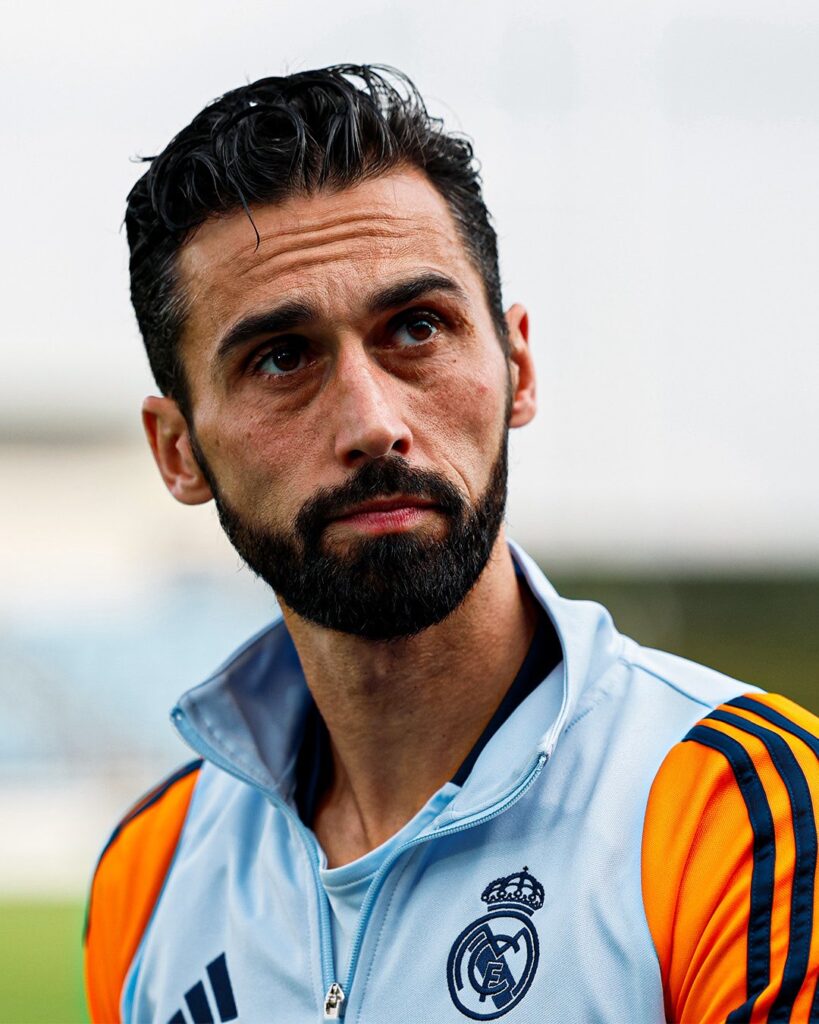
The appointment suggests that Madrid’s leadership remains committed to the managerial carousel approach—replacing personalities rather than examining systemic problems.
Alonso’s Legacy and Playing Career Context
Understanding Alonso’s stature helps contextualize the tragedy of his dismissal. As a player, he had won everything there was to win in his playing career. He made history by making Bayer Leverkusen Bundesliga champions for the first time in the club’s 120-year history. His accomplishments as a player are unquestionable and earned him respect worldwide.
His managerial record at Bayer Leverkusen was particularly impressive, earning him admiration across European football for his tactical acumen and ability to build a cohesive team. Yet at Madrid, none of these accomplishments nor his legendary playing status could protect him from Pérez’s impatience and desire for immediate success.
Read More: Why Xabi Alonso and Real Madrid Parted Ways