NZ180/5 (20 ov)
 IND
 NAM95/2 (21.1/50 ov)
 IRE
 MOZ
 UGA
 AVL
 MNC
 RAY
 ELC
 GMB
 ZMB
 NGA
 LES
 CAG
 BOL
 COMO
 SAS
 FCA
 FCU
 Ipswich1
 Nottm Forest1
 Alavés1
 Málaga1
 Torino3
 Monza2
 Brest1
 Nice2
 WA
 NSW290/5 (42.4/50 ov)
 DEN
 KUW
 KENYA
 QAT
 SWD-W
 EPR-W
 TTN-W
 WPR-W
 NZ-A135/3 (41 ov)
 IND-A113
 DHA
 RAJ
 MYMS
 CHATT
 RAN
 BAR
 SYL
 KHU
 MEX-W
 ARG-W
 UAE
 NED
 PAK
 ENG
 IND-W
 ZIM-W
 AFG170/3 (34.3/50 ov, target 170)
 ZIM169
 TAS137 (25.2/35 ov, target 276)
 VIC304/7 (50 ov)
 CHE0
 DYI0
 CHO1
 QIN0
 HEN1
 BEI0
 LIA1
 ZHE0
 QWC1
 YUN0
 SHX0
 Shanghai Shenh0
 TIG0
 SHP0
 WTT1
 SHT3
 KOE
 S04
 M05
 SVW
 RBL
 ELV
 Stuttgart2
 Gladbach3
 Al Ahli4
 Al Khaleej1
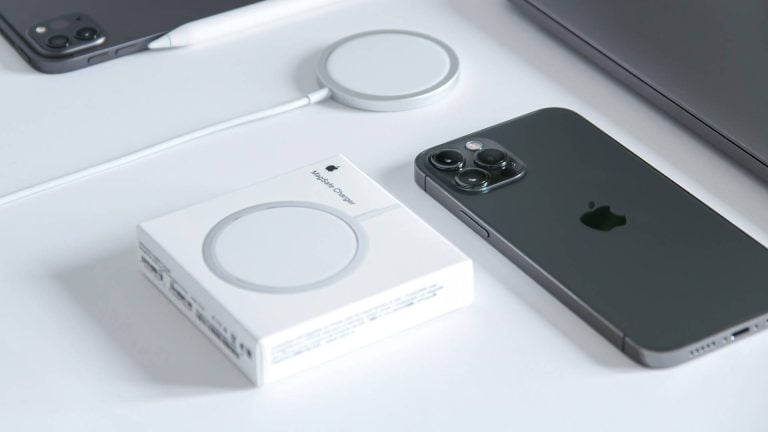
Magsafe Charging: The MagSafe ring clicks into place, and you assume your iPhone is receiving the fastest possible charge; the reality is that this magnetic precision still comes with a 15-watt ceiling. Apple released the MagSafe charger alongside the iPhone 12 series on October 13, 2020, introducing a system that prioritizes alignment over raw throughput.
Today, six years later, the ecosystem has matured into the default standard for wireless accessories, yet the fundamental engineering trade-offs remain unchanged. While the magnetic connection eliminates the frustration of fumbling with cables in low light, the 15-watt ceiling creates a persistent gap between user expectations and actual fill rates. Buyers often overlook this limit when browsing third-party listings, assuming that any magnetic pad will match wired speeds. Understanding these boundaries helps users decide whether the convenience justifies the slower recharge times during their daily routine.
MagSafe Charging’s Core Design and Trade-offs
Apple introduced the MagSafe ecosystem on October 13, 2020, redefining how users interact with their devices through a ring of magnets aligned directly around the internal wireless charging coil. Since that launch date, the magnetic charging standard has evolved from a novelty into the baseline expectation for accessory design, even as we documented earlier how magnetic accessory evolution reshaped the market across multiple categories. For everyday users juggling charging cables across multiple rooms, the system offers a predictable workflow, yet it also imposes hard limits on power throughput that many buyers overlook when shopping for replacements.

MagSafe’s 15-Watt Charging and NFC
The core specification remains consistent: the standard MagSafe charger delivers up to 15 watts of wireless power delivery to supported devices. Reaching this peak rate on supported iPhone 15 and iPhone 16 models requires a 30W USB-C power adapter; using lower-wattage bricks can prevent the charger from reaching its maximum output.
Accessories communicate securely with the handset using a Near Field Communication (NFC) chip embedded inside the accessory. On July 13, 2021, Apple expanded the lineup with the MagSafe Battery Pack, introducing a portable solution that charges connected iPhones at 5 watts while on the go. That output is lower than the standard MagSafe charger’s up to 15 watts. > “Accessories communicate with the iPhone using a Near Field Communication (NFC) chip embedded inside the accessory.”
MagSafe Charging: Specifications
| Specification | Detail |
|---|---|
| Launch Date | October 13, 2020 |
| Wireless Power | Up to 15 watts |
| Battery Pack Output | 5 watts |
| Communication Method | NFC chip |
| Qi2 Compatibility | Supported |
Qi2 and iPhone 15/16 Compatibility
The landscape shifted significantly when Apple adopted the Qi2 wireless charging standards in recent generations, aligning the open protocol with the MagSafe Charging alignment profile developed by Apple. This move means that third-party chargers can use the same alignment profile.
Current models, including the iPhone 15 and iPhone 16 series, maintain support for Qi2 and MagSafe wireless charging up to 15 watts when paired with a 30W USB-C power adapter. For Indian consumers, the proliferation of Qi2 accessories has lowered entry costs, with compatible pads reportedly available under ₹1,500. Meanwhile, checking the health of older hardware remains relevant, especially for those considering a pro battery replacement upgrade after years of wireless charging cycles.
MagSafe Charging’s 15-Watt Speed Trade-off
As the product cycle matures, the debate centers on whether magnetic alignment will remain the dominant form factor or yield to more flexible solutions. The 15-watt limit stands as the primary bottleneck; faster charging demands higher heat dissipation, which the thin profile of the MagSafe ring reportedly struggles to manage efficiently.
Users relying on wireless charging for daily top-ups will continue to see slower speeds compared to wired USB-C alternatives, particularly when tracking fast-fill metrics. The ecosystem rewards convenience above all, offering a reliable connection that survives pocket lint and awkward desk angles. Ultimately, MagSafe Charging succeeds by solving the frustration of lost cables, even if it accepts a slower charge rate as the cost of that simplicity. MagSafe trades raw speed for zero-friction reliability, making it the practical choice for clutter-free desks despite the 15-watt cap.
FAQs: MagSafe Charging
How much power does the standard MagSafe charger deliver?
The standard MagSafe charger provides up to 15 watts of wireless power to supported iPhone models. This peak output requires a 30W USB-C power adapter on supported iPhone 15 and iPhone 16 models.
Can third-party accessories replace the Apple MagSafe charger?
Third-party chargers can offer the same magnetic alignment profile when they support Qi2, which adopts the alignment profile used by Apple. These accessories offer snap-on functionality at varying
Why does the MagSafe Battery Pack charge at only 5 watts?
The MagSafe Battery Pack charges connected iPhones at 5 watts while on the go. This output is lower than the standard MagSafe charger’s up to 15 watts.
How do MagSafe accessories verify compatibility with my iPhone?
MagSafe accessories communicate with the iPhone using an NFC chip embedded inside the accessory.
Was this article helpful?
Your feedback directly improves future articles on this site.