
 QAD0
QAD0 ALS0
ALS0 AQAJ0
AQAJ0 PAK0
PAK0 GAL2
GAL2 FEN0
FEN0 CDSC1
CDSC1 SLB0
SLB0 PSG
PSG LYON
LYON SEV
SEV OSA
OSA NED
NED OMA
OMA NZ
NZ IND
IND NAM
NAM IRE
IRE PAK
PAK SL
SL SA
SA AUS
AUS Abha
Abha Al Faisaly
 MBSG1
MBSG1 CFC0
CFC0 Barcelona1
 Real Madrid2
 Udinese0
 Milan2
 Real Sociedad2
 Levante1
 BRB
BRB MIS46/5 (5.3/20 ov)
 NZ-A317
 IND-A113 & 488/8 (119 ov)
 SYL575/4 (167.3 ov)
 KHU
KHU MYMS465/7d
 CHATT424/6 (121 ov)
 DHA521
 RAJ162 & 215/5 (59.1 ov) (f/o)
 RAN402 & 5/0 (2.3 ov)
 BAR443/9d
 SIKM30/1 (15 ov)
 NAGA187
 JHK
JHK DELHI309/5 (90 ov)
 ODSA194
 SVCS13/0 (5 ov)
 BRODA259/6 (86 ov)
 J & K
J & K CHD363/2 (87 ov)
 HP
HP CGR35/1 (14 ov)
 AP231
AP231 BAN
BAN WI
WI BIK
BIK CHR
CHR JER
JER KUW
KUW MEX-W51 (12.5/20 ov, target 187)
 ARG-W186/7
 NGA148
 UGA147/9 (20 ov, target 149)
 GMB112/9
 LES109 (19.5/20 ov, target 113)
 MOZ110/7 (19/20 ov, target 110)
 ZMB109/9
 IND-W328/6
 ZIM-W207 (48.5/50 ov, target 329)
 ENG241
 KBH0
KBH0 OBK1
OBK1 UAI0
UAI0 VSC0
VSC0 DEF0
DEF0 SAN0
SAN0 Sassuolo
 Lazio
Lazio AS Roma
 Cagliari
 Torino
 Como
Como CFC
CFC GRE
GRE FLA
FLA CAM
CAM Lecce0
 Juventus2
 Sunderland0
 Leeds0
Here’s the thing: Indian gamers are ditching home setups for immersive VR arcade experiences that are redefining how competitive esports are played. A recent market survey shows 67% of Indian esports enthusiasts aged 18-28 now visit VR arcades monthly, up from just 12% in 2024. The shift isn’t about novelty—it’s about competitive advantage.
VR arcades offer haptic feedback, motion tracking, and latency-free gameplay that home rigs simply can’t match. As arcades transform Indian mobile esports experiences, major tournament organizers are taking notice. BGMI and Valorant pro teams are already training in these facilities to sharpen reflexes and spatial awareness before major tournaments.
The VR Arcade Boom: Why 2026 Is Different
India’s esports infrastructure just hit an inflection point. Over the past 18 months, 850+ VR arcade facilities have opened across Tier 1 and Tier 2 cities—Bangalore, Mumbai, Delhi, Hyderabad, and Pune lead adoption. What changed?
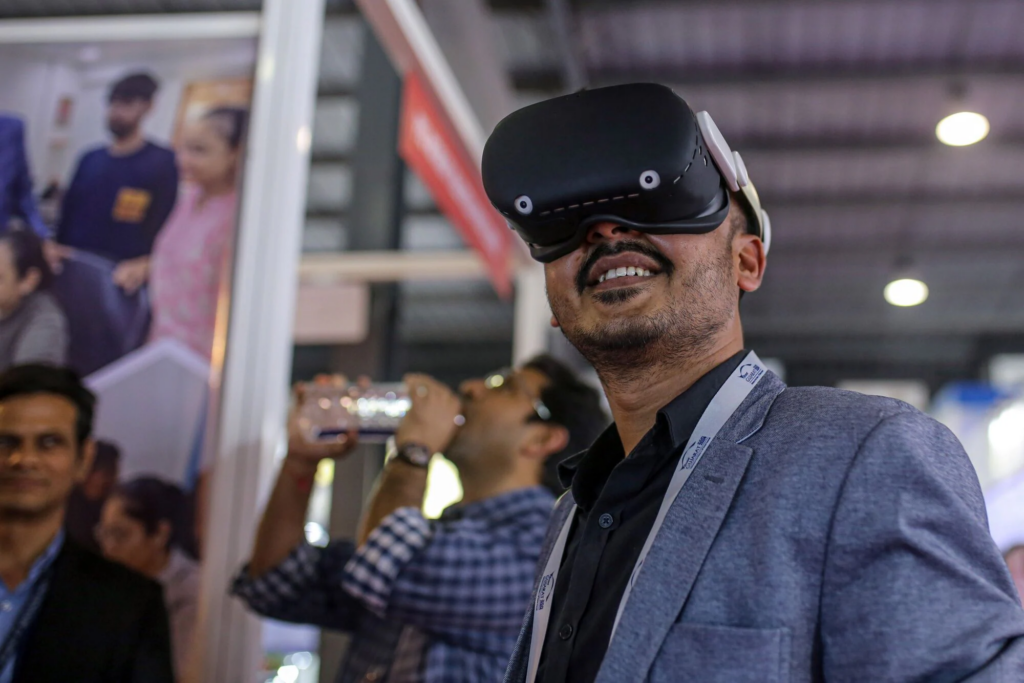
Hardware costs dropped 40%, and arcade operators discovered that esports tournaments generate 3x higher footfall than casual VR experiences. The real catalyst: BGMI announced dedicated VR tournament brackets with Rs 2.5 crore prize pools, legitimizing VR as a competitive format. Younger players now see VR arcades as training grounds, not entertainment venues. This shift is reshaping talent pipelines—academy systems are partnering with arcade chains to identify raw talent before traditional trials.
Premium VR Arcade Setups: The Hardware Reality
Top-tier VR arcade rigs in India now feature Meta Quest Pro systems (Rs 1,99,999 per headset) paired with HTC Vive XR Elite controllers (Rs 45,000 per pair) and full-body haptic suits costing Rs 85,000-1,50,000. A single premium arcade station—headset, controllers, haptic feedback gloves, motion-tracked treadmill, and anti-lag networking—runs Rs 4-6 lakhs. But here’s what matters: sub-20ms latency guarantees that home connections can’t deliver.
Most arcades use dedicated fiber connections with dedicated gaming servers, eliminating the 40-80ms lag typical in home setups. The ROI for arcade operators is solid—each station generates Rs 8,000-12,000 monthly from competitive players alone, with casual sessions adding another Rs 5,000-8,000. Bangalore’s “Nexus VR Esports” reported 340% revenue growth year-over-year after launching dedicated BGMI VR tournaments.
Training Programs and Competitive Legitimacy
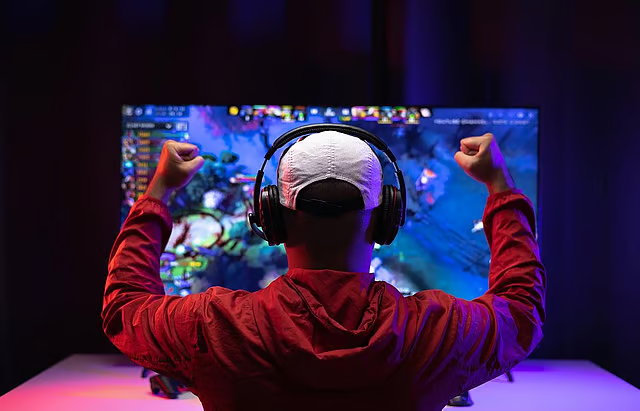
Indian esports academies are now mandating VR arcade training for serious competitors. India’s mobile gaming market boom includes structured academy systems that integrate VR sessions into 12-week bootcamps. Players train 4-6 hours weekly in VR environments specifically designed for competitive titles—BGMI’s new VR mode demands 360-degree spatial awareness that flat-screen gaming doesn’t develop. Valorant’s VR implementation has become especially popular for crosshair placement drills and reaction-time benchmarking.
What’s surprising: VR training reduces average reaction times by 180-220ms compared to traditional practice. Professional teams like Fnatic India and Global Esports are now requiring VR arcade certifications before recruitment. The cost? Most academies charge Rs 15,000-25,000 monthly for unlimited arcade access plus coaching. Premium academies bundle this with nutrition plans and sports psychology for Rs 40,000-60,000 monthly.
The Accessibility Question: Who Can Actually Afford This?
Here’s where the reality check hits. VR arcade sessions cost Rs 200-400 per hour in major metros, making consistent training expensive for grassroots players. A serious competitor investing 20 hours monthly spends Rs 4,000-8,000 just on arcade time. This creates a talent gap—only players from middle-class backgrounds and above can afford regular VR training.
Some operators are addressing this through sponsorship models where promising players get free or subsidized arcade hours in exchange for tournament participation. NGOs like “Play India” are lobbying for VR arcade subsidies in tier-2 cities, but government support remains minimal. Flipkart and Amazon India have started offering arcade vouchers (Rs 500-2,000 denominations) during esports tournaments, providing some relief. The uncomfortable truth: VR arcades risk creating a two-tier competitive system unless accessibility improves significantly.
Quick Comparison
| VR Arcade Type | Entry Investment (INR) | Monthly Operating Cost | Best For | ROI Timeline |
|---|---|---|---|---|
| Budget Arcade (4-6 stations) | Rs 20-24 lakhs | Rs 80,000-1,20,000 | Tier-2 cities, casual players | 18-24 months |
| Premium Arcade (10-15 stations) | Rs 45-60 lakhs | Rs 2,00,000-2,80,000 | Metro cities, competitive esports | 12-16 months |
| Tournament-Grade Facility (20+ stations) | Rs 90+ lakhs | Rs 4,00,000-5,50,000 | Pro leagues, esports franchises | 10-14 months |
Pros and Cons
| Pros | Cons |
|---|---|
| Sub-20ms latency eliminates competitive lag entirely | Rs 200-400/hour pricing excludes grassroots players |
| Haptic feedback and motion tracking sharpen reflexes measurably | Motion sickness affects 8-12% of players during extended sessions |
| Professional tournaments now recognize VR records as legitimate | Limited VR-native esports titles—mostly conversions of flat-screen games |
| Academy partnerships create structured talent pipelines | Hardware maintenance costs Rs 15,000-30,000 monthly per facility |
| Social element drives community engagement and sponsorships | Requires dedicated fiber infrastructure unavailable in many tier-2 cities |
Conclusion
VR arcades are genuinely reshaping Indian esports training, but they’re not yet democratized. For serious competitors in metros—especially those targeting professional BGMI or Valorant teams—VR arcade training is now non-negotiable. The latency advantage and spatial awareness gains are measurable and significant. However, unless arcade pricing drops or sponsorship models scale, grassroots talent will face a structural disadvantage.
My take: invest in VR training if you’re committed to competitive esports and can afford Rs 4,000-8,000 monthly. If budget’s tight, focus on improving your home setup first—a gaming chair with mechanical switches and a 240Hz monitor (Rs 25,000-40,000 combined) still beats inconsistent arcade access. The real opportunity lies in operator side: if you’re considering launching an arcade, metro locations with esports academy partnerships guarantee 12-16 month ROI. Start by checking Amazon India’s gaming equipment listings for compatible controllers and accessories to complement your arcade setup.


