A Vietnam War film from legendary Japanese director Shinya Tsukamoto is heading to Japanese audiences, marking a bold turn into war cinema for the provocative auteur. The film, titled “Mr. Nelson, Did You Kill People?”, explores the psychological toll of combat without flinching. Tsukamoto, known for his transgressive body horror and experimental narratives, brings his signature intensity to this intimate character study of a Vietnam veteran grappling with trauma and moral reckoning.
Vietnam War film: Tsukamoto’s Radical Shift Into War Drama
Shinya Tsukamoto has spent three decades challenging audiences with grotesque imagery and philosophical provocation. His Vietnam War film enters completely new territory. The veteran filmmaker typically mines body horror and surrealism—think “Tetsuo: The Iron Man” and “Gemini”—yet here he confronts the visceral reality of armed conflict.
What drives a director known for abstraction toward documentary-style realism? The answer lies in the material itself: a deeply personal exploration of guilt, accountability, and whether violence can ever be justified. This Vietnam War film strips away Tsukamoto’s usual visual excess, replacing it with claustrophobic dialogue and moral ambiguity. The result feels less like a genre exercise and more like a philosophical interrogation.
The Vietnam War Film’s Core Premise
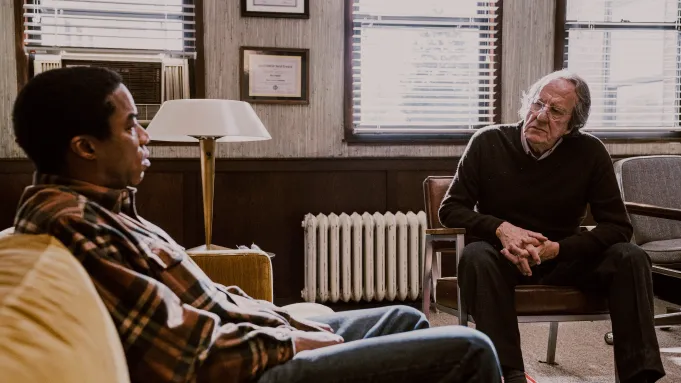
“Mr. Nelson, Did You Kill People?” centers on a former American soldier confronting his past decades after combat ended. The title itself poses the central question: not if he killed, but whether he can admit it. This Vietnam War film eschews battlefield spectacle entirely—no explosions, no heroic narratives.
Instead, Tsukamoto stages the entire drama in confined spaces: interrogation rooms, memory, confession. The film’s runtime stretches the viewer’s patience intentionally, mirroring the protagonist’s psychological unraveling. Similar to how intense character studies have found critical acclaim on streaming platforms, this Vietnam War film prioritizes psychological depth over action. The veteran protagonist remains nameless for much of the runtime, a deliberate choice that universalizes his trauma.
Why This Matters for Japanese Cinema
Japanese filmmakers have rarely tackled American military history with such directness. Tsukamoto’s intervention signals a shift—not toward mainstream war cinema, but toward existential interrogation of foreign conflicts. The film arrives as Japanese audiences increasingly engage with international OTT content and arthouse releases.
This positions Tsukamoto’s work as counterprogramming: intellectually demanding, morally unresolved, deliberately uncomfortable. The film’s Japan release suggests growing appetite for challenging war narratives beyond traditional national cinema frameworks.
FAQ
Q: Is this a traditional war film?
No. Tsukamoto rejects action sequences and heroic framing entirely. This functions as psychological drama.
Q: When does it release in Japan?
The exact release date hasn’t been publicly confirmed yet, but distribution plans are underway for 2026 (according to VentureBeat AI)
Q: Will it get international distribution?
Likely. Festival circuits and arthouse distributors typically champion Tsukamoto’s work globally (as reported by OpenAI Blog)
Q: How long is the film?
Runtime details remain undisclosed, though Tsukamoto’s recent work averages 90-120 minutes.
Q: Does it require knowledge of Vietnam War history?
No. The film prioritizes personal trauma over historical context, making it accessible to viewers unfamiliar with the conflict.