Usb-c High-end Audio: The USB Implementers Forum published the first USB Type-C specification in August 2014, creating the connector now used by high-end DACs, headphone amplifiers, digital audio players and studio interfaces worldwide.
USB-C for high-end audio gear promised one reversible port for power, data and increasingly sophisticated digital audio connections. That promise came with a catch. USB-C describes the connector and electrical capabilities, not a guaranteed sound quality, codec, power output or feature set.

Usb-c high-end audio: 2014: USB-C for High-End Audio Gear Begins With a Connector
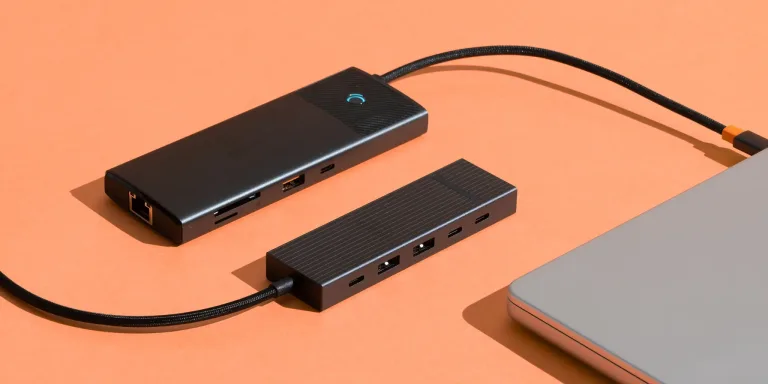
The original USB Type-C specification introduced a reversible 24-pin connector that could carry USB data, DisplayPort signals and power through one compact interface. The USB Implementers Forum designed the standard for computers and mobile devices, while audio manufacturers later adapted it for DACs, amplifiers and interfaces.
This distinction matters because a USB-C port can support very different implementations. One device may offer USB 2.0 data rates, while another uses USB 3.2 or USB4. Both can look identical from the outside, yet deliver different transfer speeds, charging behaviour and accessory compatibility. For audio, the main advantage was immediate: a digital signal could travel directly from a laptop, tablet or phone to an external DAC without relying on a 3.5 mm analogue output. That reduced the importance of the source device’s internal headphone hardware.
Usb-c high-end audio: 2016–2020: High-End Audio Adopts One Digital Link
As Apple, Samsung and laptop makers reduced their dependence on traditional ports, USB-C became more common on portable audio products. USB Audio Class standards allowed ope
2020–2024: Convenience Exposes USB-C’s Audio Weaknesses
The connector’s wider adoption exposed the biggest problem: USB-C is not a complete audio standard. Passive cables, active cables, Thunderbolt cables and USB4 cables can share the same shape but differ in wiring, data speed and power support. That creates practical friction for expensive equipment. A USB-C DAC may work with a computer but fail with a smartphone because of host-mode support, power limits or software restrictions.
A cable included with a monitor may charge a device yet lack the data lanes required by a high-end audio interface. The accessory market adds another concern. Cheap cables can create intermittent connections, electrical noise or charging conflicts, although digital audio errors usually appear as dropouts and disconnections rather than subtle changes in tonal character. We should separate those faults from claims that every USB-C cable produces a different sound. The same transition affected everyday products. Our coverage of the U&i Audio TWS range reflects how USB-C charging has moved into mainstream accessories, while VAIO Panther Using a modern laptop design shows how manufacturers increasingly treat USB-C as a general-purpose connection.
2026: What USB-C for High-End Audio Gear Means Now
In 2026, USB-C is the most practical connection for many computer-based audio systems because it combines digital transfer, charging and device control. It can reduce desk clutter and make a single DAC usable across a Mac, Windows PC, Android phone and tablet, provided each host supports the required USB Audio Class features. The trade-off is specification overload. Buyers need to check sample-rate support, DSD handling, balanced output power, driver requirements, host compatibility and whether the product is bus-powered.
The connector should be treated as the starting point, not the buying decision. Cost pressures across electronics also affect audio accessories. Our reporting on the RAM Shortage Could influence smaller technology brands shows why component and supply constraints can shape product pricing, though memory supply does not determine USB-C audio performance directly. High-end audio is moving toward fewer proprietary connections, but the next improvement will need clearer labelling rather than another connector redesign. A future box should state exactly what its USB-C port supports, so buyers can match the cable and source without guesswork.
USB-C audio advantages and limitations
| Area | Advantage | Limitation |
|---|---|---|
| Data | Carries digital audio to an external DAC | Capabilities vary by USB version |
| Power | Can run compact DACs and amplifiers | May reduce host-device battery life |
| Compatibility | Works across many modern devices | Host mode and drivers can block operation |
| Setup | One reversible connector reduces clutter | Similar-looking cables have different features |
FAQs
Is USB-C better than a 3.5 mm headphone jack?
USB-C can be better when an external DAC or amplifier is desired, because it sends digital audio out of the source device. A 3.5 mm jack may be simpler for low-power headphones and avoids host-mode or cable compatibility issues.
Does every USB-C cable support high-resolution audio?
No. USB-C cables differ in data capability, wiring and power support, so buyers should use a cable rated for the DAC and host device.
Can USB-C audio introduce noise?
USB-C systems can experience electrical interference or connection faults, especially with poorly designed hardware. Digital errors usually appear as dropouts, clicks or disconnections rather than a consistent change in sound character. The strongest USB-C audio systems will be defined by transparent specifications, not the connector printed on the box.
Was this article helpful?
Your feedback directly improves future articles on this site.