
 SA329 (82.3 ov)
 AUS
AUS SAS2
SAS2 LAZ4
LAZ4 ALS1
ALS1 HIL0
HIL0 ROMA
ROMA CAG
CAG TOR
TOR COMO
COMO BAN
BAN WI
WI IND-W
IND-W ZIM-W
ZIM-W GOA
GOA SC Delhi
 Milan
Milan Bologna
 Parma
Parma Udinese
 Venezia
 Inter Milan
 AFG177
 ZIM140 (19.1/20 ov, target 178)
 ABH0
ABH0 ALF1
ALF1 PAK110
 SL114/2 (18.1/50 ov, target 111)
 NAM316/7
 IRE253 (44.5/50 ov, target 317)
 SIKM184
 NAGA187 & 46/4 (34 ov)
 JHK131/4 (47 ov)
 DELHI515/5d
 ODSA194
 SVCS13/0 (5 ov)
 BRODA616
 J & K6/0 (4 ov)
 CHD685/5d
 HP49/0 (14 ov)
 CGR216/8 (95 ov)
 AP231
AP231 HYD193/2 (54 ov)
 PNJB431
 KNTKA297/7 (95 ov)
 TPURA194
 KER101/6 (35 ov)
 BENG350
 MAHA278/9 (100 ov)
 GUJ223
 MNPR364
 ARP111 & 95/2 (36 ov)
 UAE
UAE OMA
OMA AUCK
AUCK CANT
CANT CD
CD ND
ND DEN
DEN QAT
QAT KENYA
KENYA KUW
KUW POA
POA SPR
SPR NZ198/3
 IND199/4 (13.2/20 ov, target 199)
 NED371/5
 JAB113 (19.3/20 ov, target 133)
 KAY132/9
 HSV1
HSV1 SGE3
SGE3 RWE1
RWE1 RBL2
RBL2 SGS2
SGS2 FCA4
FCA4 BOC2
BOC2 M050
M050 CUA0
CUA0 GIR1
GIR1 EXC1
EXC1 ADO0
ADO0 APN1
APN1 ELC1
ELC1 CF 0
CF 0 CEE1
CEE1 SES2
SES2 ESP1
ESP1 AIK1
AIK1 ELF1
ELF1 Genoa
Genoa Juventus
 Monza
Monza Napoli
 Sevilla2
 Osasuna0
 PSG2
PSG2 Lyon0
Lyon0 Mohun Bagan1
 Chennaiyin0
 SAA2
SAA2 EST0
EST0 BEI2
BEI2 JHM2
JHM2The introduction of Transformer architecture in 2017 was a pivotal moment for artificial intelligence, initially focusing on language modeling. Since then, its use has grown rapidly, branching into various data processing tasks. This architecture’s knack for efficiently managing sequential data has made it a staple not just in natural language processing (NLP) but also in image recognition and even protein folding.
Data Evolution of Transformer Architecture
Introduction to Transformer Models
Vaswani et al. introduced the Transformer architecture in December 2017 during the NeurIPS conference. Its design, especially the self-attention mechanism, lets the model assess how different words in a sentence relate to each other. This feature has proven essential for language tasks, enabling it to surpass older models like recurrent neural networks (RNNs) and convolutional neural networks (CNNs) in many NLP benchmarks.
Key Innovations in Attention Mechanisms
One standout feature of Transformers is the multi-head self-attention mechanism. This innovation allows the model to focus on various parts of the input sentence all at once. The original paper indicates that this not only enhances the model’s contextual understanding but also boosts computational efficiency. Here’s a look at some key metrics that highlight the impact of Transformers:
| Metric | Transformers | RNNs | CNNs |
|---|---|---|---|
| Training Speed | Fast (thanks to parallelization) | Slow (sequential) | Moderate |
| Context Understanding | Superior | Limited | Variable |
| Application Range | Wide (NLP, vision, etc.) | Narrow | Moderate |
The speed and efficiency of Transformers have led to their widespread use across different fields, marking a significant shift in AI model design and implementation. For more details, check out Gizmodo.
Expanding Applications Beyond Language
Transition from NLP to Multimodal Data
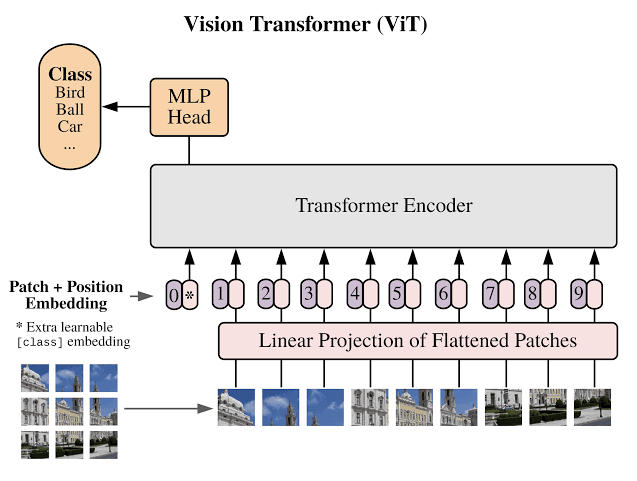
After their initial success in NLP, researchers started adapting Transformer architecture for multimodal data processing. This shift has broadened its application range, leading to uses in image recognition and, more recently, protein folding. For instance, Vision Transformers (ViTs) have shown great potential in tasks traditionally dominated by CNNs, achieving top results in image classification challenges. For more information, see Engadget.
Case Studies: Vision Transformers and Beyond
Vision Transformers have transformed our approach to tasks like object detection and image generation. Their architecture allows them to analyze visual information much like they do with text, leading to a more cohesive method for AI. OpenAI’s GPT series, which reached GPT-4 by 2023, highlights the adaptability of Transformers when dealing with various data types, showcasing their versatility.
Looking ahead, a new Transformer-based device was announced on July 20, 2026. It features specifications like 16GB RAM, 512GB storage, a 6-core processor, a 6.000-inch display, and a 4,500mAh battery. This device is expected to launch on August 15, 2026, with a
FAQs
What are Transformers and how do they work?
Transformers are a type of neural network architecture designed to process sequential data using self-attention mechanisms. This allows for better context understanding and enables parallel processing.
How have Transformers impacted language processing?
Transformers have greatly enhanced language processing capabilities, outperforming previous models like RNNs and CNNs. They manage longer dependencies and deliver faster training speeds.
What are the implications for other data types?
The flexibility of the architecture has led to successful applications in image processing and other fields like protein folding, showing its potential for even broader uses in AI research.
Future trends in Transformer applications?
Future directions include advancements in multimodal processing, improved model efficiency, and integrating Transformers into various real-world applications, such as autonomous systems and healthcare.
The Transformer architecture has not just changed language modeling but has also opened up a future rich with possibilities for universal data processing.


