SA329 (82.3 ov)
 AUS
AUS TOR1
TOR1 COMO3
COMO3 FLE1
FLE1 ARS1
ARS1 BAN
BAN WI
WI IND-W
IND-W ZIM-W
ZIM-W GOA
GOA SC Delhi
 Milan
Milan Bologna
 Parma
Parma Udinese
 Venezia
 Inter Milan
 Genoa
Genoa Juventus
 Monza
Monza Napoli
 ROMA4
ROMA4 CAG2
CAG2 SAS2
SAS2 LAZ6
LAZ6 AFG177
 ZIM140 (19.1/20 ov, target 178)
 ABH0
ABH0 ALF1
ALF1 AUCK
AUCK CANT
CANT CD
CD ND
ND SIKM184
 NAGA187 & 46/4 (34 ov)
 JHK131/4 (47 ov)
 DELHI515/5d
 ODSA194
 SVCS13/0 (5 ov)
 BRODA616
 J & K6/0 (4 ov)
 CHD685/5d
 HP49/0 (14 ov)
 CGR216/8 (95 ov)
 AP231
AP231 HYD193/2 (54 ov)
 PNJB431
 KNTKA297/7 (95 ov)
 TPURA194
 KER101/6 (35 ov)
 BENG350
 UAE
UAE OMA
OMA ENG
ENG SL
SL DEN
DEN QAT
QAT KENYA
KENYA KUW
KUW POA
POA SPR
SPR BRB
BRB VAG
VAG PAK110
 NAM316/7
 IRE253 (44.5/50 ov, target 317)
 NZ198/3
 IND199/4 (13.2/20 ov, target 199)
 NED371/5
 JAB113 (19.3/20 ov, target 133)
 KAY132/9
 TORD3
TORD3 MIR3
MIR3 DON2
DON2 EXT3
EXT3 MNR0
MNR0 AND1
AND1 DOR2
DOR2 SVW2
SVW2 PEN1
PEN1 CLY1
CLY1 MKD4
MKD4 BRO1
BRO1 BAR3
BAR3 YORK1
YORK1 HOR1
HOR1 YEO2
YEO2 ARO2
ARO2 PON0
PON0 PASO2
PASO2 COR1
COR1 Gamba Osaka
 Buriram
 Kashima
 Pohang Steelers
 Sevilla2
 Osasuna0
 PSG2
PSG2 Lyon0
Lyon0 Mohun Bagan1
 Chennaiyin0
Thomas Frank’s Tottenham aren’t known for goals. In fact, scoring has been a significant problem since the former Brentford manager took charge last summer following the dismissal of Ange Postecoglou. The numbers paint a concerning picture: Spurs’ current rate of 1.61 goals per game across all competitions represents their lowest output in any season since 2014-15, when they managed just 1.60 per game. With several matches remaining, there’s every possibility Frank’s side could dip below even that modest figure.
The struggles extend beyond mere statistics. Tottenham have found it difficult to create meaningful chances under Frank’s stewardship, they don’t maintain possession particularly well, and in Premier League action, they currently sit in 14th position after suffering more defeats (nine) than they’ve achieved wins (seven) or draws (eight). The landscape has been bleak for supporters, with fans chanting “sacked in the morning” at Frank following defeats to West Ham and booing their team off at halftime. Many are calling for the manager’s dismissal despite his relatively short tenure and the club’s severe injury crisis that has left him with just 11 senior players available.
Yet amid the disappointment and inconsistency, something peculiar has emerged: Tottenham have produced a remarkable collection of spectacular goals. While there hasn’t been much to celebrate in terms of results or performances, the highlight reel from this season is surprisingly extensive.
The Wondergoal Phenomenon
For a team struggling to find the back of the net with regularity, Tottenham have scored an extraordinary number of eye-catching goals. The catalog includes three bicycle kicks of varying quality, a scissor kick, the third-longest-range goal in the Premier League this season, and at least two contenders for the prestigious Puskás Award for goal of the year.
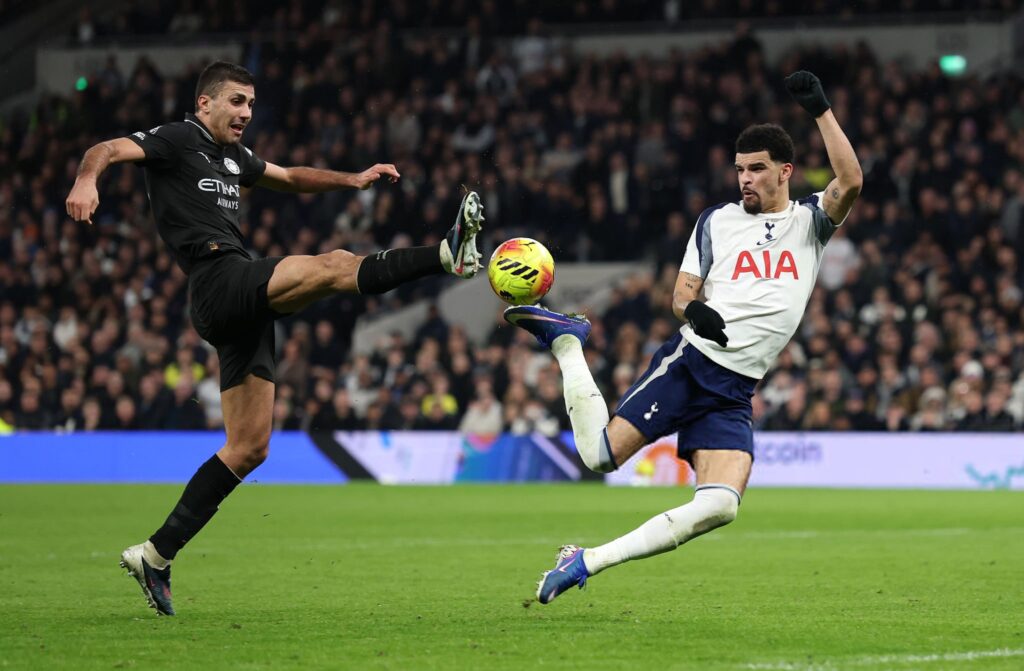
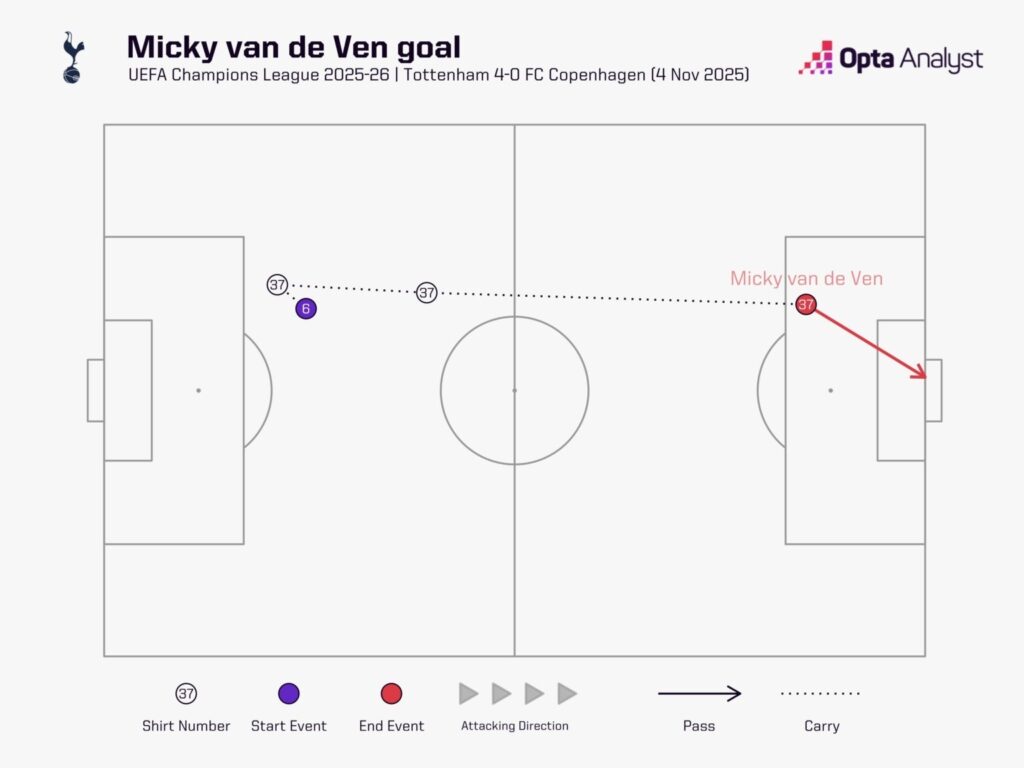
One standout effort came from Micky van de Ven against Copenhagen in the Champions League, following the longest ball carry preceding a goal on record in the competition’s history. Most recently, Dominic Solanke’s scorpion kick against Manchester City on February 1, 2026, produced one of the goals of the season. Trailing 2-0 at halftime and being booed off by their own fans, Spurs staged a remarkable second-half comeback.
Solanke’s stunning acrobatic equalizer in the 70th minute—a back-heeled flick from behind him that looped over world-class goalkeeper Gianluigi Donnarumma—completed the fightback in a 2-2 draw. The striker later described watching the ball go in while doing a “roly-poly” as “one in a million” and admitted he kept watching replays on the stadium big screen during the match. These moments have provided Tottenham’s social media team with plenty of content to celebrate, even if the overall campaign has been frustrating.
Notable Wondergoals This Season
| Player | Opponent | Type of Goal | Competition | Significance |
|---|---|---|---|---|
| Richarlison | Arsenal | Long-range shot (35.3m) | Premier League | 3rd longest goal in PL this season |
| Micky van de Ven | Copenhagen | Solo run | Champions League | Longest ball carry before goal in UCL history |
| Dominic Solanke | Manchester City | Scorpion kick | Premier League | Puskás Award contender |
| João Palhinha | Doncaster | Bicycle kick | EFL Cup | Set-piece brilliance |
| João Palhinha | Bournemouth | Bicycle kick | Premier League | Second bicycle kick |
| Cristian Romero | Newcastle | Bicycle kick | Premier League | Third bicycle kick |
| Richarlison | Burnley | Scissor kick | Premier League | August Goal of the Month nominee |
| Lucas Bergvall | West Ham | Header | Premier League | September Goal of the Month nominee |
Remarkably, the club’s official list of spectacular strikes shared on social media doesn’t even include Lucas Bergvall’s impressive header against West Ham in September, which earned a nomination for the Premier League Goal of the Month competition. In a season most fans might prefer to forget quickly, there have been an abundance of memorable individual moments.
The Statistical Explanation
The correlation between Tottenham’s struggles and their wondergoal production isn’t coincidental. Data reveals that only two teams in the Premier League are averaging a lower expected goals (xG) value per shot than Tottenham this season. With a rate of 0.09 xG per shot, Spurs rank better only than Nottingham Forest and Sunderland.
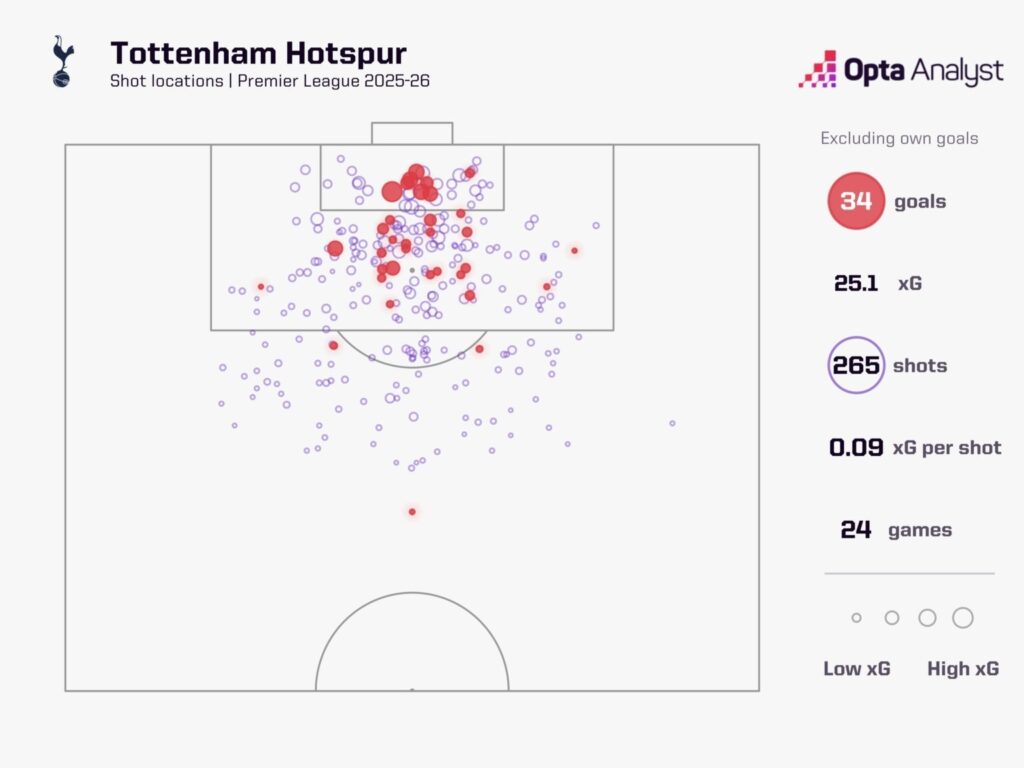
This metric is crucial to understanding the phenomenon. In simple terms, Tottenham are consistently taking lower-quality chances compared to almost every other team in the division. Lower-quality chances are, by definition, more difficult to convert into goals.
Shot Quality Comparison
| Metric | Tottenham | Premier League Average | League Leaders |
|---|---|---|---|
| xG per shot | 0.09 | ~0.11 | ~0.14 |
| Goals per game (all competitions) | 1.61 | N/A | N/A |
| Premier League wins | 7 | N/A | N/A |
| Premier League draws | 8 | N/A | N/A |
| Premier League losses | 9 | N/A | N/A |
However, Tottenham possess genuinely talented players who, despite the team’s struggles, remain capable of moments of magic. Some of those difficult, low-quality chances will inevitably find the net, and this season, a disproportionate number have done so in spectacular fashion.
Breaking Down the Spectacular Strikes
Long-Range Brilliance
Richarlison’s extraordinary consolation goal in the defeat at Arsenal exemplifies the pattern. Scored from 35.3 meters from goal, only two strikes have been registered from further out in the Premier League this season. The Brazilian’s effort came from Tottenham’s third shot of the afternoon at the Emirates, a moment of pure opportunism created by a João Palhinha tackle rather than cohesive team play.
The context matters significantly: until Burnley’s recent defeat to Sunderland, Tottenham’s expected goals total of 0.07 in that Arsenal match represented the lowest by any team in a single Premier League game all season. Yet from such unpromising circumstances emerged one of the goals of the campaign.
Set-Piece Spectaculars
The trio of bicycle kicks all originated from set-pieces, an area where Tottenham have excelled under Frank despite their general struggles. Set-piece effectiveness has increased across the Premier League, but Spurs have particularly embraced this aspect of the game.
Crucially, each bicycle kick came from second balls or a new phase of play rather than the initial delivery into the box. While the defending in each instance could be questioned, the execution from Palhinha against Doncaster and Bournemouth, and Romero at Newcastle, deserves recognition for ingenuity, athleticism, and opportunism.
Open Play Acrobatics
Both Richarlison’s scissor kick against Burnley early in the season and Solanke’s sensational scorpion kick against Manchester City on February 1, 2026, occurred in open play following crosses from Tottenham’s right flank. The Solanke goal was particularly significant as it capped a stunning comeback from 2-0 down, with Spurs having been booed off at halftime by their own supporters.
The context of that Manchester City match perfectly illustrates Tottenham’s season. Rayan Cherki and Antoine Semenyo had put City comfortably ahead before the break, with Frank’s team offering almost nothing in attack. The toxic atmosphere at Tottenham Hotspur Stadium threatened to intensify pressure on the embattled manager. However, Solanke sparked the revival by forcing an own goal from Marc Guehi in the 53rd minute, before producing his moment of magic 17 minutes later.
Conor Gallagher’s cross from the right wasn’t perfect—slightly behind Solanke—but the striker demonstrated remarkable skill merely to readjust his positioning. Leaning forward and flicking his trailing heel, he looped the ball over Donnarumma in a goal reminiscent of famous scorpion kicks by Olivier Giroud, Zlatan Ibrahimovic, and Henrikh Mkhitaryan. Solanke accomplished this against one of world football’s elite goalkeepers, earning Man of the Match honors for his brace.
The 2-2 draw had significant Premier League title race implications, with City’s failure to hold their lead leaving them six points behind leaders Arsenal. For Frank, the comeback temporarily eased pressure, with former Everton CEO Keith Wyness noting that the players’ fighting spirit showed they were “still playing for Frank.”
Crossing Patterns
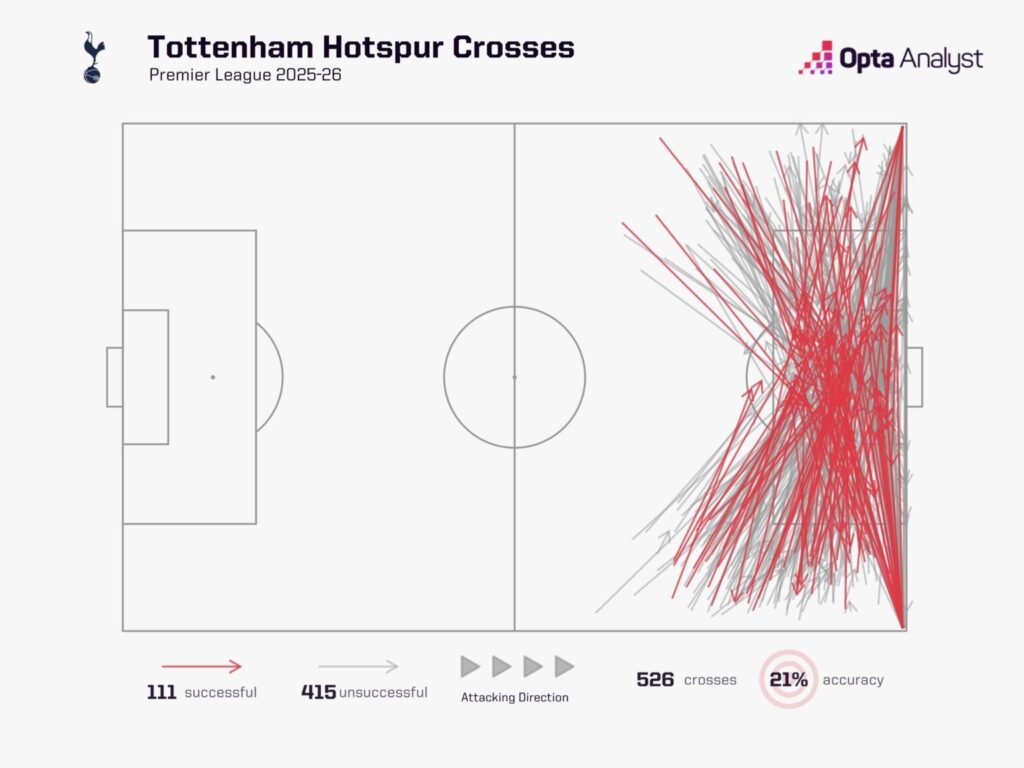
The fact that Tottenham deliver so many crosses into the penalty area contributes to these spectacular moments. Only Newcastle (615) and Nottingham Forest (561) have attempted more crosses in the Premier League this season than Spurs (526). With such high volume, not every delivery will be perfect, but two skilled finishers have capitalized on imperfect service in extraordinary fashion.
Van de Ven’s Unique Effort
Micky van de Ven’s goal against Copenhagen stands apart as a demonstration of exceptional individual quality combined with physical superiority. His surge from one end of the pitch to the other resembled a professional competing against children. The Danish opposition simply couldn’t cope with his combination of speed and strength, attributes that make Van de Ven unique among world football’s centre-backs.
The Underlying Problem
While each wondergoal provides a memorable moment that supporters and neutrals will recall for years, Tottenham face a concerning reality: none of these strikes are remotely repeatable as a sustainable strategy.
The club might argue that having scored three bicycle kicks, more could follow. The truth, however, is that such moments cannot be relied upon for consistent results. Only Bergvall’s goal at West Ham, assisted by Romero’s chipped forward pass, could realistically be described as something practiced on the training ground, and even that required improvisation as the Swede headed over the goalkeeper while running rather than controlling the ball to create a better opportunity.
The Championship Blueprint
The irony isn’t lost on observers familiar with Frank’s previous work. At Brentford, he built teams renowned for creating high-quality scoring opportunities and exercising patience rather than shooting from distance. “We’re a big believer in making the chance bigger,” Frank explained in a December 2022 interview with the club’s supporters’ trust. “It’s about creating good opportunities where we increase the opportunity to score.”
The statistical evidence supports his philosophy. During his final three Premier League seasons with Brentford, the club ranked first, second, and first respectively for average xG value per shot, consistently achieving at least 0.13 xG per attempt. This approach emphasized quality over quantity, creating situations where success became more probable.
This methodology isn’t translating to Tottenham. For various reasons, Frank’s current side struggles to generate high-quality chances, and individual brilliance accounts for too many of their goals as compensation.
Lessons from the Elite
The best teams in football don’t rely on wondergoals. They create consistently good opportunities that produce what might be termed “boring goals.”
Consider Pep Guardiola’s finest Manchester City teams. They perfected the technique of reaching the byline and delivering low crosses for simple tap-ins. The execution required precision and movement, but the finish itself was often mundane.
Arsenal currently lead the Premier League largely through defensive solidity and set-piece proficiency. While capable of spectacular strikes, they depend far more on functional, repeatable patterns that generate reliable results.
Sustainable Success Metrics
| Team Characteristic | Elite Teams | Current Tottenham |
|---|---|---|
| Average xG per shot | 0.13-0.15 | 0.09 |
| Goal creation | Systematic, repeatable | Individual brilliance |
| Shot selection | Patient, high-quality | Frequent, lower-quality |
| Dependence on spectacular goals | Minimal | Significant |
The Path Forward and Frank’s Future
Frank understands the fundamental issue, but his position has become increasingly precarious. After a 2-1 home defeat to relegation-threatened West Ham on January 18, fans loudly booed him off the pitch and chanted “you’re getting sacked in the morning.” Board-level meetings were held to discuss his future, though he was given the Champions League match against Borussia Dortmund, which Spurs won 2-0 thanks to goals from Cristian Romero and Solanke.
The scorpion kick goal against Manchester City provided temporary respite, with the comeback from 2-0 down demonstrating that the players haven’t given up on their manager. However, Tottenham’s subsequent 2-0 defeat at Manchester United on February 7 renewed pressure, with the club currently sitting 14th in the Premier League table, just three points above the relegation zone.
Frank has revealed that he had lunch with key figures including CEO Vinai Venkatesham and sporting director Johan Lange, insisting he feels their trust and backing. Yet with Tottenham having won just two of their last 15 Premier League matches and eliminated from both domestic cups, fan patience has worn thin. Reports suggest the club hierarchy is considering alternatives including former managers Mauricio Pochettino and Enzo Maresca, with some seeing assistant Johnny Heitinga as a potential interim option.
The disconnect between Frank’s established philosophy and Tottenham’s current reality suggests either tactical implementation problems, personnel limitations, or both. His track record at Brentford demonstrates a preference for building teams that create superior chances through patient buildup and intelligent movement, but severe injuries have left him with just 11 senior players, complicating any tactical vision.
The abundance of spectacular goals this season highlights the squad’s technical quality. Players like Solanke, Richarlison, Van de Ven, and others possess the skill to produce moments of magic. However, transforming individual brilliance into collective consistency represents the challenge facing Frank—assuming he’s given enough time to address it.
Read More: Built by the Fans: Why the Stadium of Light Is Fueling Sunderland’s Rise