Maggie Gyllenhaal’s gothic Frankenstein reimagining is bold, bizarre, and brimming with questions when the credits roll. Released on March 6, 2026, via Warner Bros., The Bride! is a fantastical creative explosion — a romantic turn-on, a rightful feminine scream, and a film that is more made to be felt than explained. Disney But let’s explain it anyway.
The Bride! (2026) — Film Facts
| Detail | Info |
|---|---|
| Director / Writer | Maggie Gyllenhaal |
| Release Date | March 6, 2026 |
| Distributor | Warner Bros. Pictures |
| Lead Cast | Jessie Buckley, Christian Bale, Annette Bening |
| Supporting Cast | Penélope Cruz, Jake Gyllenhaal, Peter Sarsgaard |
| Setting | 1930s Depression-era Chicago |
| Inspired By | Bride of Frankenstein (1935) + Mary Shelley’s Frankenstein (1818) |
| Runtime | 126 Minutes |
| Rating | R |
The Story — A Woman Refuses to Be Defined
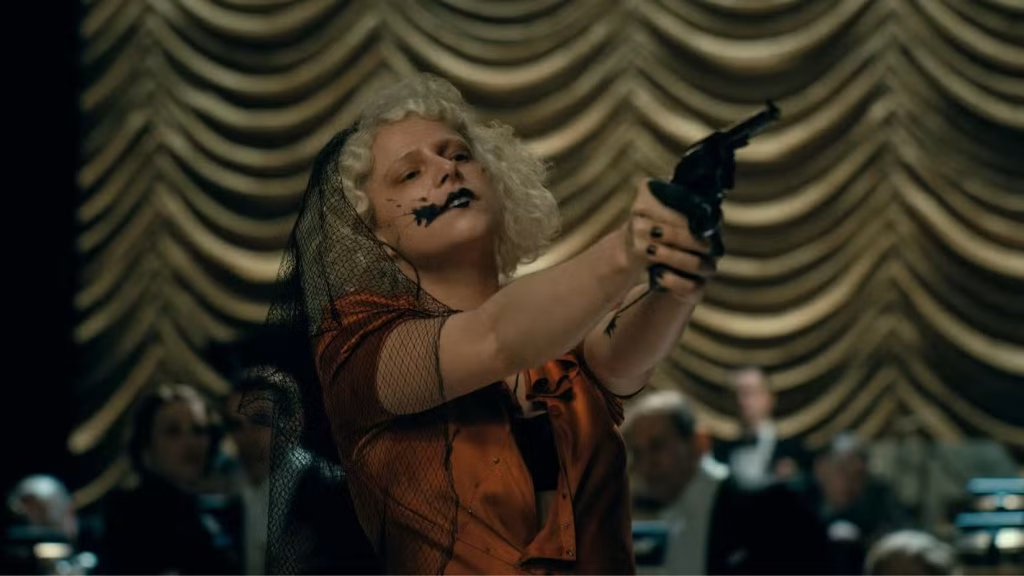
Frank (Christian Bale), a lonely monster, asks scientist Dr. Euphronious (Annette Bening) to resurrect a murdered woman named Moll Aida as his companion. But instead of the submissive partner Frank imagined, the resurrected woman — now called the Bride — challenges the very idea of her existence, travels through Chicago, and discovers freedom through encounters with dancer Myrna Mallow (Penélope Cruz) and singer Ronnie Reed (Jake Gyllenhaal). IMDb
Adding a brilliant meta layer, the Bride is given three names across the film — Ida (given by Mary Shelley), Penelope Rogers (given by Frank), and finally one she chooses herself — while also being intermittently inhabited by the spirit of Mary Shelley, the original author of Frankenstein.
The Ending — What Really Happens
The final act erupts into violence: a drive-in ambush leaves Frank critically wounded, and Dr. Euphronious performs an improvised emergency resurrection on both Frank and the Bride — framing survival not as a miracle but as a precarious, morally loaded bargain.
The film’s defining moment comes when Frank proposes to the Bride. She responds with the phrase she has repeated throughout the film — “I’d prefer not to” — a direct reference to Herman Melville’s Bartleby, the Scrivener, used as an act of quiet, devastating defiance against male control over her life.
The film closes on a bittersweet note — Frank and the Bride choose to stay together, but not out of obligation. Their bond is real yet fragile, and their future remains deliberately unresolved.
The Deeper Meaning
At its core, The Bride! is a film about rage — about what happens when a woman, pushed to her absolute limit by a society that wants to erase her, finally shows her monster side. Gyllenhaal has described the film’s central theme as society’s habit of telling women they are “too much” — and the Bride’s arc is a direct, uncompromising rejection of that label.
According to Bride of Frankenstein‘s Wikipedia page, the 1935 original gave the Bride less than five minutes of screen time and zero dialogue — making Gyllenhaal’s decision to centre the entire film on her perspective one of cinema’s most meaningful acts of reclamation.
Is a Sequel Coming?
No sequel has been officially confirmed, but the open-ended finale deliberately teases unresolved threads — including whether Frank and the Bride retain their memories post-resurrection and what consequences Dr. Euphronious ultimately faces. Whether the story continues depends entirely on audience response.
For more Hollywood film breakdowns, ending explainers, and movie reviews, visit our Entertainment section on TechnoSports and check out our guide to the best Hollywood films releasing in theatres in March 2026.