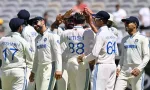
It was a sea of blue at the Narendra Modi Stadium, and a black-and-blue beating for the luckless nearly-men of world cricket, as India delivered their third T20 World Cup title, and second in a row, with a ruthless 96-run victory over New Zealand in Ahmedabad before 86,824 spectators.

India became the first team to retain their title in T20 World Cup history and the first side to lift three men’s T20 World Cups. For New Zealand, it was their fifth final across ICC events since 2015, but the most emphatic beating of the lot.
Table of Contents
The Setting
The Ahmedabad final on November 19, 2023 was constantly invoked in the build-up. That and a game two weeks prior against South Africa remain the only two losses over four ICC white-ball tournaments. When Mitchell Santner won the toss and asked India to bat, Abhishek Sharma and Sanju Samson walked out, and the past became irrelevant.

| Match Summary | Details |
|---|---|
| Venue | Narendra Modi Stadium, Ahmedabad |
| Toss | New Zealand (opted to bowl) |
| India | 255/5 in 20 overs (Samson 89 off 46, Kishan 54 off 25, Abhishek 52 off 21; Neesham 3-46) |
| New Zealand | 159 all out (Seifert 52 off 23, Santner 43; Bumrah 4-15, Axar 3-27) |
| Result | India won by 96 runs |
| Attendance | 86,824 |
This opening partnership, forged after Barbados 2024 and the big-name retirements that followed, was the engine of this T20 side. By the time they were done with a 98-run stand in 7.1 overs, India had their third ICC triumph in three years after going without one for 11 years.
First Innings: India 255/5 in 20 Overs
Just as in their semi-final over England, India were asked to bat first but responded with power-hitting. Abhishek Sharma and Ishan Kishan both topped 200 strike rates in contrasting fifties, but it was Sanju Samson who seized the plaudits with his second score of 89 in consecutive innings, taking his tally to 275 in 98 balls since finding his range in India’s pivotal win over West Indies.
The Powerplay Onslaught (0-6 overs: 92/0)
New Zealand’s battleplan was to rotate options and hope India’s batters would fail to line each new man up. For precisely two overs, it worked. Matt Henry aimed full for four consecutive dot balls to Samson, who then pumped a shorter ball over long-on. Glenn Phillips’ offspin conceded three singles and a two in his first powerplay over of his T20I career.

But then it unravelled. Jacob Duffy lost his radar after a marginal wide, and Abhishek pounced with two fours. Lockie Ferguson was launched for 24, with Abhishek slicing him over covers for six, before Samson launched a leading edge over deep third. Neither stroke was remotely timed, but both carried the ropes.
Henry returned for the fifth change in as many overs, but India’s horse was bolting. New Zealand bowled eight wides in the powerplay, the most they’ve ever conceded in a T20I. By the end of Duffy’s second over, Abhishek had hacked his way to an 18-ball fifty, the fastest ever in a T20 World Cup knockout game. He still hadn’t truly found the middle despite smacking 20 runs in five balls, including a top-edged swing that just eluded Mark Chapman before rolling away for four. India racked up 92 for 0 in the powerplay, 80 from its last four overs.
Middle Overs Masterclass (7-14 overs: 99 runs, 1 wicket)
Abhishek snicked a wide one off Rachin Ravindra’s first ball for 52 off 21. Their next eight overs realised 105 runs – technically slower, but the purity of strokeplay was now off the charts.
Samson reached his fifty from 33 balls, then celebrated with two brutal sixes off Ferguson, who retreated with figures of 2-0-48-0. Ravindra was planted into the stands three times in a row, including a fierce inside-out drive, to take India to 191 for 1 after 14 overs.

At the other end was Kishan, whose timing was Rolex-worthy. Mitchell Santner had conceded 13 runs from his first 14 balls, but Kishan clubbed him deep into the midwicket stands with a glorious slog-sweep, then repeated the dose en route to a 23-ball fifty. Samson joined only Shahid Afridi and Virat Kohli as men who have scored fifties in both the semi-final and final of a T20 World Cup.
The Death Overs Drama (15-20 overs: 64 runs, 4 wickets)
For the first 15 overs, the catchers in the crowd had had more success than New Zealand’s fielders. All that changed in Jimmy Neesham’s second over, which ended with three wickets for one run in six balls.
His first ball to Samson was a high full-toss, and McConchie made his mark with a sure-footed take at long-on. Four balls later, Kishan couldn’t connect cleanly on a low full-toss, and Chapman had a simpler take. Suryakumar Yadav’s first-ball pick-up seemed perfectly timed, but Ravindra galloped round the rope for a brilliant diving take.

Tilak’s first-ball cut off Duffy burst clean through Finn Allen’s taped-up hands at backward point. After limiting India to 28 runs in 24 balls from overs 15-19, Shivam Dube applied a final smack-down, clubbing Neesham’s final over for 24 with two sixes and three fours.
Second Innings: New Zealand 159 All Out
By the time India had piled on 255 for 5, New Zealand were in need of a display even more eye-popping than their semi-final against South Africa, where Finn Allen had belted a tournament-record 33-ball hundred. Instead, they ran into Jasprit Bumrah, who served up unanswerable figures of 4 for 15 in four overs – each wicket delivered with that delectable dipping offcutter.
Early Collapse (Powerplay: 3 wickets)
India had produced three 250-plus scores in their last four games. New Zealand’s best hopes lay on their opening pair producing an encore of their semifinal. Finn Allen was dropped by Dube in the first over and a 21-run second over from Hardik Pandya set foundations for a strong start. That was as good as it got.

Axar Patel, brought on to bowl the third over, won his match-up against Allen, having him caught at long-on. Then, for a second game in a row, Bumrah struck with his first delivery – a slower ball – that Ravindra attempted to play a pick-up shot to and found Kishan at deep backward square leg. Before the Powerplay ended, Axar had cleaned up Glenn Phillips to begin the procession.
Brief Resistance (7-14 overs)
Tim Seifert brought New Zealand some joy by taking down Varun Chakaravarthy for 16 to complete a 23-ball fifty. Chakaravarthy had his man in the next over with Kishan completing another fine catch in the deep. Before that dismissal, Hardik Pandya had Mark Chapman dragging on. At 72 for 5, the match was effectively done.
Bumrah Seals the Title
Still there was time for Bumrah to conjure more off-cutter magic as he cleaned up Neesham and Henry off successive deliveries and then dislodged Santner’s timber to rubber-stamp his class on another phenomenal tournament after his Player of the Tournament-winning heroics 18 months ago.

Tilak Varma sealed victory with a well-judged take at long-on off the lesser-spotted spin of Abhishek.
In front of 86,824, almost every one of them unilaterally and deafeningly their own, India became the first side to lift three men’s T20 World Cups and the first to defend this title, their dominance underscored by the 96-run winning margin.
Read More: Hardik Pandya, Always There When India Need the Last Act
FAQs
What was the final score of the T20 World Cup 2026 final?
India scored 255/5 in 20 overs (Samson 89 off 46, Kishan 54 off 25, Abhishek 52 off 21; Neesham 3-46) and bowled out New Zealand for 159 (Seifert 52 off 23, Santner 43; Bumrah 4-15, Axar 3-27) to win by 96 runs at the Narendra Modi Stadium in Ahmedabad before 86,824 spectators.
What historic achievement did India accomplish?
India became the first team to retain their T20 World Cup title and the first side to lift three men’s T20 World Cups. This was their third ICC triumph in three years after going without one for 11 years. The Ahmedabad final on November 19, 2023 and a game against South Africa remain their only two losses over four ICC white-ball tournaments.
What was Abhishek Sharma’s record in the final?
Abhishek Sharma scored an 18-ball fifty, the fastest ever in a T20 World Cup knockout game. He finished with 52 off 21 balls as India racked up 92 for 0 in the powerplay, with 80 runs coming from the last four overs. New Zealand bowled eight wides in the powerplay, their personal worst in this phase in T20Is.
How did Jasprit Bumrah perform in the final?
Bumrah finished with figures of 4 for 15 in four overs, each wicket delivered with his dipping offcutter. He struck with his first delivery for a second game in a row, dismissing Rachin Ravindra. He cleaned up Neesham and Henry off successive deliveries and dislodged Santner’s timber after his Player of the Tournament heroics 18 months ago.
What was Sanju Samson’s achievement in the knockout stages?
Samson scored his second consecutive score of 89, taking his tally to 275 runs in 98 balls since finding his range in India’s win over West Indies. He reached his fifty from 33 balls and joined only Shahid Afridi and Virat Kohli as men who have scored fifties in both the semi-final and final of a T20 World Cup.