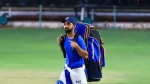
South Africa and West Indies cricket teams are finally departing India following their exits from the ICC Men’s T20 World Cup 2026, after being stranded for over a week due to West Asia regional conflict causing widespread aviation disruptions. The departures mark the end of a frustrating period where both teams faced repeated delays in securing flights home, with charter arrangements repeatedly cancelled due to airspace closures and international travel restrictions.
Team Departure Timeline and Status
According to the latest ICC statement, four South Africa players and five family members have already boarded flights and are en route home, with the remaining 29 members of their contingent scheduled to depart within the next 24 hours. For West Indies, nine members have already left India, while the remaining 16 are booked on commercial flights departing within the next 12 hours.

| Team | Players Departed | Family Members | Total Remaining | Departure Window | Reason for Delay |
|---|---|---|---|---|---|
| South Africa | 4 | 5 family members | 29 | Next 24 hours | West Asia airspace closures |
| West Indies | 9 | Not specified | 16 | Next 12 hours | Charter flight cancellations |
Tournament Exit and Stranding Timeline
| Team | Tournament Result | Exit Date | Location | Days Stranded |
|---|---|---|---|---|
| West Indies | Super 8 loss to India | March 1, 2026 | Kolkata | Over 9 days |
| South Africa | Semifinal loss to New Zealand | March 4, 2026 | Kolkata | Over 6 days |
| England | Semifinal loss to India | March 5, 2026 | Mumbai | Departed March 7 (2 days) |
West Asia Crisis Impact on Aviation
The ongoing military conflict in West Asia has created unprecedented disruption to international air travel, affecting team departures across the T20 World Cup. Key complications include airspace closures across multiple nations, missile warnings creating flight safety concerns, re-routing constraints forcing alternate flight paths, and widespread cancellation and rescheduling of both commercial and charter flights at short notice.
These conditions remained entirely outside the ICC’s control, making travel arrangements significantly more complex and time-consuming than under normal circumstances. The ICC faced criticism for disparate treatment, particularly regarding England’s rapid departure within two days compared to West Indies and South Africa’s extended stays, though officials clarified different routing options, circumstances, and travel conditions resulted in varying timelines.
Player Frustrations and Social Media Reaction
West Indies coach Daren Sammy expressed frustration through social media, posting “Day 6” and later “Day 9” updates tracking days his team remained stranded in Kolkata after their March 1 match. Several South African players, including Quinton de Kock and David Miller, voiced concerns on Instagram about uncertain travel arrangements and extended delays.

The frustrations escalated when initially planned charter flights from Kolkata to Johannesburg repeatedly failed to materialize, forcing the ICC to pivot to individual commercial flight bookings instead of coordinated team departures.
ICC’s Statement and Acknowledgment
The ICC acknowledged genuine frustration among players, coaches, support staff, and families unable to return home promptly after tournament campaigns concluded. The governing body rejected suggestions that travel decisions were driven by factors other than safety, feasibility, and player welfare, explicitly stating no link existed between South Africa/West Indies arrangements and England’s separate departure circumstances.
Officials confirmed continuous engagement with airlines, charter operators, airport authorities, ground handlers, and government stakeholders across multiple jurisdictions to secure safe travel solutions. ICC Chairman Jay Shah reportedly spoke directly with affected players, providing assurances regarding safe passage home.
Future Scheduling Implications
Many West Indies and South African players face immediate pressure to return for IPL 2026 commitments, where franchises depend on their participation. The extended stranding created scheduling conflicts and raised concerns about player fatigue ahead of domestic competitions.

Read More: Team India to Get Rs 131 Crore Cash Prize from BCCI for Winning T20 World Cup 2026