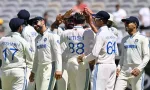
Australia launched their T20 World Cup 2026 campaign with an emphatic 67-run victory over Ireland in Colombo on February 11, 2026, overcoming the dramatic absence of captain Mitchell Marsh to deliver an impressive all-round performance. Nathan Ellis produced a career-best 4 for 12, while Adam Zampa claimed 4 for 23 as Australia bowled Ireland out for just 115 while defending 182 for 6. The victory showcased Australia’s depth and adaptability despite fielding only 12 available players.
Table of Contents
Match Summary
The encounter at the R. Premadasa Stadium in Colombo unfolded against a backdrop of late drama, with Mitchell Marsh ruled out just 15 minutes before the toss due to a testicular injury sustained earlier in the week. Travis Head assumed captaincy responsibilities, and despite losing his own wicket to a run-out in the second over, Australia recovered through sensible batting on a tough, slow, gripping surface. Ireland’s chase never gained momentum after captain Paul Stirling retired hurt from the first ball, and Ellis’s mastery with slower balls dismantled their top order before Zampa cleaned up the tail.

Match Scorecard
| Team | Score | Overs |
|---|---|---|
| Australia | 182/6 | 20.0 |
| Ireland | 115 | 16.5 |
Result: Australia won by 67 runs
Player of the Match: Nathan Ellis (4/12)
Cricinfo’s MVP: Nathan Ellis (64.13 points)
Venue: R. Premadasa Stadium, Colombo
Date: February 11, 2026
First Innings: Australia’s Batting (182/6 in 20 Overs)
Pre-Match Drama and Early Setback
Australia’s T20 World Cup 2026 campaign began with unprecedented disruption when captain Mitchell Marsh was ruled unavailable just 15 minutes before the toss. The testicular injury, caused when Marsh was struck in the groin while batting earlier in the week, forced Travis Head into emergency captaincy duties. With Tim David being given extra recovery time for a hamstring injury and no replacement yet named for Josh Hazlewood, Australia arrived at the venue with only 12 available players.
The dramatic build-up continued when Head received a life in the first over, cutting Matthew Humphreys to backward point where Ben Calitz dropped a low chance. Ireland had dropped seven catches against Sri Lanka in their previous match, making this an ominous start. However, the reprieve proved short-lived as a horrid mix-up led to Head being run out in the second over, adding to the sense of unease surrounding Australia’s depleted squad.
Inglis and Green’s Powerplay Response
Josh Inglis and Cameron Green immediately set about calming Australian nerves with aggressive batting during the fielding restrictions. The pair quickly established a scoring rate above ten runs per over, demonstrating the intent required on a pitch that would become increasingly difficult as the innings progressed.
The duo struck a six apiece in the fifth over against Mark Adair. Inglis’s maximum nearly became a parried boundary catch by Gareth Delany, who had just touched the rope with his foot while attempting the catch. Green’s dismissal came when he picked out midwicket, ending a partnership of 49 runs that had provided Australia with crucial early momentum.
Inglis followed in the over after the powerplay, driving George Dockrell to cover. The early flurry of boundaries had earned Australia the ability to avoid forcing shots too aggressively, but Glenn Maxwell’s continued lean run of form posed fresh concerns. Maxwell edged Harry Tector behind, with Lorcan Tucker taking a sharp catch, leaving Australia at 88 for 4 in the tenth over.
The Crucial Renshaw-Stoinis Partnership
With Australia precariously positioned and Cooper Connolly out of form followed only by the bowlers in the batting order, a vital partnership became essential. Matt Renshaw, elevated to the squad in place of Matt Short specifically for these Colombo conditions, partnered with Marcus Stoinis to craft a match-defining stand.
Renshaw and Stoinis quickly assessed that the slow, gripping surface demanded intelligent cricket rather than power hitting. They minimized dot balls and ran hard between the wickets, with Australia eventually tallying 22 twos for the innings—a remarkable statistic that highlighted their approach.

Renshaw waited 28 deliveries to find the boundary, eventually driving Dockrell through the covers. Stoinis had found the rope twice in three balls against Tector in the 12th over, but boundaries remained rare commodities. The partnership progressed primarily through quick singles and converted twos, showcasing adaptability often absent in modern T20 cricket.
The 18th over brought renewed aggression when pace returned to the attack. Stoinis launched Adair over deep midwicket for six, though he had been dropped by Delany in the covers three balls earlier. Adair removed Stoinis with a low full toss, but the partnership of 61 runs from 44 balls had propelled Australia to a competitive total. They crossed 180, a score that appeared formidable on this challenging pitch.
Australia Batting Performance
| Batsman | Runs | Notable Performance |
|---|---|---|
| Marcus Stoinis | 45 | Crucial partnership, intelligent batting |
| Matt Renshaw | 37 | Patient innings on difficult pitch |
| Josh Inglis | 37 | Aggressive powerplay batting |
| Cameron Green | – | Early boundaries in powerplay |
Ireland Bowling Performance
| Bowler | Notable Performance |
|---|---|
| Mark Adair | Dismissed Stoinis, conceded boundaries in powerplay |
| George Dockrell | Dismissed Inglis, economical through middle overs |
| Harry Tector | Dismissed Maxwell, bowled in middle overs |
| Matthew Humphreys | Opened bowling, dropped early chance |
First Innings Analysis
Australia’s total of 182 for 6 represented excellent crisis management on a pitch offering significant assistance to bowlers. The Renshaw-Stoinis partnership proved pivotal, demonstrating that Australia’s batting arsenal extends beyond mere power hitting. Their ability to assess conditions, rotate strike, and run aggressively between wickets showcased the tactical maturity required for success in T20 World Cup 2026. The 22 twos accumulated during the innings became a telling statistic, reflecting intelligent batting on a surface unsuited to constant boundary hitting.
Second Innings: Ireland’s Chase (115 All Out in 16.5 Overs)
Stirling’s Injury Blow
Ireland’s chase suffered a catastrophic blow before it could properly begin when captain Paul Stirling retired hurt from the first ball of the innings. He jabbed a full delivery from Xavier Bartlett to the on side and set off for a single, but within a couple of steps was clearly in severe pain. Stirling barely managed to complete the run, limping back to the dugout and leaving Ireland without their most experienced batsman and leader.
Ross Adair was dropped by Renshaw at point in the second over—a simple chance that should have been taken. However, Ireland couldn’t capitalize on this reprieve. Harry Tector lofted Matt Kuhnemann into the deep, where Cameron Green safely held the catch, giving Australia their first wicket.
Ellis’s Masterclass with Slower Balls
Nathan Ellis, serving as the senior member of Australia’s remaining pace attack following Hazlewood’s absence and Marsh’s injury, produced a spell of bowling that will be remembered as one of the finest in T20 World Cup 2026. His mastery of slower ball variations completely bamboozled Ireland’s batsmen.

Ellis’s first delivery to Ross Adair was a back-of-the-hand slower ball that utterly deceived the batsman. Adair played all around it, watching helplessly as the ball crashed into middle stump. It represented pace-bowling deception at its absolute best, showcasing the kind of skill that separates good bowlers from match-winners.
Two balls later, Curtis Campher pulled straight to midwicket, and Ireland’s chase was unraveling rapidly. At the start of Ellis’s next over, Ben Calitz dragged a delivery into leg stump. Inside the powerplay, Ellis’s figures read an extraordinary 2-1-5-3, establishing complete dominance that Ireland could never recover from.
Zampa Completes the Rout
With the top order demolished, Adam Zampa assumed responsibility for working through Ireland’s middle and lower order. The leg-spinner’s variations and control proved too much for batsmen already demoralized by Ellis’s opening spell. Zampa methodically picked up four wickets, never allowing Ireland any opportunity to build partnerships or launch a meaningful counterattack.
George Dockrell provided Ireland’s only significant resistance, top-scoring with 41 runs in a brave but ultimately futile effort. His innings represented defiance rather than realistic hope, as wickets fell regularly at the other end.

Final Wicket
Fittingly, it was Ellis who ended the match, claiming his fourth wicket to finish with career-best figures of 4 for 12. The comprehensive nature of Australia’s bowling performance—dismissing Ireland for just 115 in 16.5 overs—demonstrated the gulf in class between the sides and announced Australia’s intent in the T20 World Cup 2026.
Ireland Batting Performance
| Batsman | Runs | Notable Performance |
|---|---|---|
| George Dockrell | 41 | Top scorer, lone resistance |
| Paul Stirling | – | Retired hurt first ball |
| Ross Adair | – | Deceived by Ellis slower ball |
| Curtis Campher | – | Dismissed by Ellis |

Australia Bowling Performance
| Bowler | Overs | Runs | Wickets | Notable Performance |
|---|---|---|---|---|
| Nathan Ellis | – | 12 | 4 | Career-best figures, masterful slower balls |
| Adam Zampa | – | 23 | 4 | Cleaned up middle and lower order |
| Xavier Bartlett | – | – | – | First ball caused Stirling injury |
| Matt Kuhnemann | – | – | 1 | Dismissed Tector |
Second Innings Analysis
Ireland’s chase never threatened Australia’s total following Stirling’s first-ball retirement hurt and Ellis’s devastating opening spell. The loss of their captain and most experienced batsman before meaningful runs were scored proved psychologically damaging. Ellis’s slower ball variations exposed technical limitations against high-quality pace bowling on a helpful surface. Zampa’s subsequent control ensured no late-order resistance could develop. The comprehensive 67-run defeat highlighted the gap between Australia’s depth and Ireland’s resources in challenging conditions.
Match-Winning Performance: Nathan Ellis
| Category | Performance |
|---|---|
| Bowling Figures | 4/12 |
| Powerplay Figures | 2-1-5-3 |
| Key Wickets | Ross Adair, Curtis Campher, Ben Calitz, plus one more |
| Variations | Back-of-the-hand slower balls |
| Cricinfo MVP | 64.13 points |
| Achievement | Career-best bowling figures |

Nathan Ellis’s performance represented one of the outstanding individual bowling displays in T20 World Cup 2026. His ability to execute slower ball variations with pinpoint accuracy on a receptive pitch proved unplayable for Ireland’s batsmen. The back-of-the-hand slower ball that dismissed Ross Adair will feature in highlight reels as an example of pace bowling at its most skillful. Ellis’s figures of 2-1-5-3 inside the powerplay effectively ended the contest, demonstrating how a single bowler can dominate T20 cricket when conditions suit their skills.
Read More: T20 World Cup 2026: South Africa Survive Double Super Over as Gurbaz’s Heroics Fall Short
FAQs
Why didn’t Mitchell Marsh play in Australia’s T20 World Cup 2026 opener?
Mitchell Marsh was ruled unavailable just 15 minutes before the toss due to a testicular injury sustained when he was struck in the groin while batting earlier in the week. Travis Head captained Australia in his absence.
What were Nathan Ellis’s bowling figures against Ireland?
Nathan Ellis produced career-best figures of 4 wickets for 12 runs, including an extraordinary spell of 2-1-5-3 inside the powerplay that effectively decided the match.
What was the final margin of Australia’s victory?
Australia won by 67 runs, defending 182 for 6 by bowling Ireland out for just 115 in 16.5 overs in their T20 World Cup 2026 Group B encounter.
Who scored the most runs for Australia in the match?
Marcus Stoinis top-scored with 45 runs, playing a crucial innings in partnership with Matt Renshaw that propelled Australia to a competitive total on a difficult pitch.
Where was the Australia vs Ireland T20 World Cup 2026 match played?
The match was played at the R. Premadasa Stadium in Colombo, Sri Lanka, on February 11, 2026, with the pitch offering significant assistance to bowlers throughout.