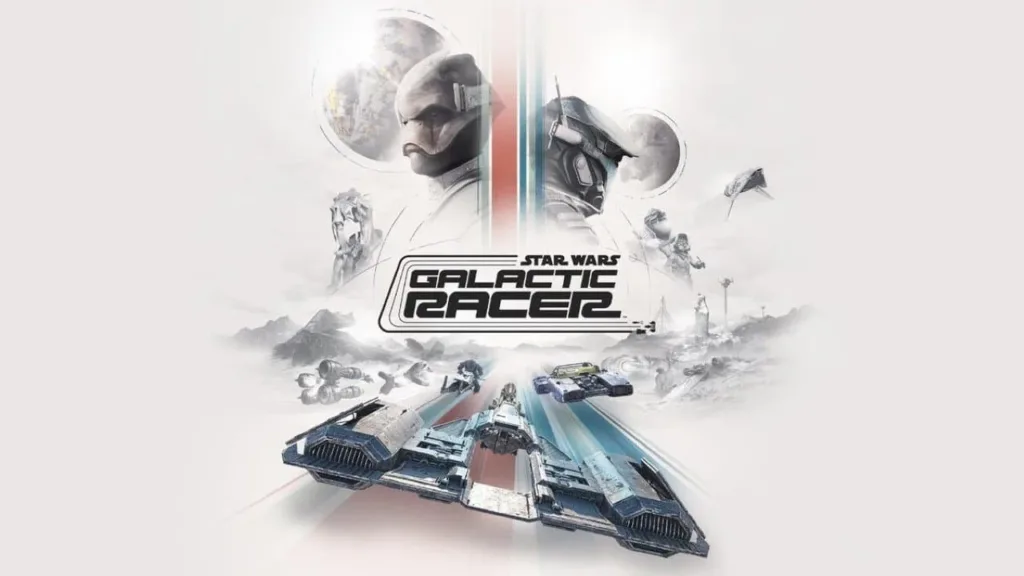
Star Wars: Galactic Racer chose track-based racing over open world design to create an “expanding replayability loop,” according to Fuse Games creative director Kieran Crimmins. Despite the team’s extensive experience with open-world racing from their Criterion days working on Burnout, the studio deliberately opted for structured tracks that reward mastery.
This design decision aligns with Star Wars universe traditions where racing appears as organized sport—from Episode 1’s podracing to The Bad Batch’s riot racing.
Why Tracks Over Open World
Creative director Kieran Crimmins explained to IGN that track-based racing delivers unique benefits impossible in open-world formats. “We wanted to have that replayability loop that expands over time,” Crimmins stated. “All those benefits people learn in the tracks, the more they play, learning the handling, that familiarity getting them better.”
The focused approach creates “high consequence, high action, high replayability” that generates player stories impossible in sprawling open environments. Rather than a “massive smorgasbord” playground experience, Galactic Racer emphasizes skill progression and track mastery.
According to Crimmins, pursuing both track-focused racing and open world exploration would introduce conflicting design challenges that would dilute the core experience.

Star Wars Racing as Sport
| Design Element | Reason | Star Wars Connection |
|---|---|---|
| Track-based racing | Replayability and mastery | Galactic League sport format |
| Story-focused campaign | Character-driven narrative | Star Wars fans crave story |
| Paddock hub area | Low-intensity social space | Contrast to high-speed racing |
| Canonical character (Shade) | Player inhabits story role | Not faceless silhouette |
Studio CEO Matt Webster emphasized that racing exists as organized sport throughout Star Wars canon. Episode 1’s podracing, The Bad Batch Season 2’s riot racing, and Star Wars Resistance’s low-altitude starfighter racing all portray racing as structured competitive events rather than casual exploration.
“Racing as a sport and activity is something that’s inside Star Wars, and tracks lend themselves to that really well at an action level,” Webster noted. Structured tracks authentically represent the Galactic League format central to the game’s premise.
Character-Driven Racing Adventure
Unlike traditional racing games where players control faceless drivers, Galactic Racer positions itself as a “racing adventure” starring canonical character Shade. Players experience story progression through a paddock hub area providing low-intensity spaces between high-octane races.
Webster explained that Star Wars fans “crave the characters and a story,” making narrative integration essential. The paddock serves as a social area where players interact with characters, advance plot threads, and customize vehicles—offering crucial pacing contrast to intense racing sequences.
Shade’s personal vendetta against Kestar Bool, the Galactic League’s current frontrunner, drives the campaign narrative. Players are hired by league founder Darius Pax to take down Bool, with Shade’s mysterious history with the antagonist unfolding throughout the story.

Locations and Customization
Confirmed racing locations include iconic Star Wars planets like Sentinel One, Ando Prime, and Jakku. Players choose from different racing classes with heavy emphasis on vehicle modification and personalization, creating unique racing machines.
The game includes podracing alongside other Star Wars racing disciplines, filling the void left since Star Wars Episode 1: Racer.
Star Wars: Galactic Racer launches later in 2026 for PlayStation 5, Xbox Series X/S, and PC. For more Star Wars gaming news and racing game updates, follow our coverage.