BAN
 WI235/4 (70 ov)
 AFG
 ZIM326/5 (87 ov)
 AZ0
 JUV2
 B040
 OLM0
 SLB1
 LECH0
 CEL1
 USG1
 CEL0
 BES0
 HBE0
 OFI1
 GOA
 Bengaluru
 Hamburg
 Gladbach
 Venezia
 Udinese
 Toulouse
 Strasbourg
 Everton
 Coventry
 Sevilla
 Alavés
 NZ
 IND
 PAL
 REMO
 MIL0
 FER2
 AND2
 SLZ0
 CRY1
 TSG1
 LEV1
 JAG0
 WAR138/7 (20 ov)
 BOL138/5
 DMJIR290 & 134/5 (46 ov) (f/o)
 HYD-R519/8d
 KRBLS280 & 2/1 (2 ov)
 SRB241 & 388/5d
 FSLB259 & 54/1 (26 ov) (f/o)
 PRB503/4d
 LAHW234 & 40/4 (17 ov, target 412)
 FATA362 & 283
 ISB215 & 163/6 (51 ov)
 MUL327
 PCBXI151/8d
 SL223/7d & 121/6 (38 ov)
 ZIM-A
 IRE-A420/9 (90 ov)
 MS-W
 SS-W
 MR-W
 AS-W
 BH-W
 HH-W
 KAY
 SPR
 TUSK
 RHINO
 MOUNT
 ROCKS
 CHR
 POA
 WI-A123 (16.3/20 ov, target 220)
 LIONS219/7
 ST-W166 (19/20 ov, target 184)
 PS-W183/3
 BIK83
 KAG86/1 (9.4/20 ov, target 84)
 JAB133/8 (20 ov, target 150)
 LUL149/8
 MAL1988
 SL1991/1 (13.5/50 ov, target 89)
 STG1
 NKC2
 SUN0
 DZG2
 TOR1
 ARA1
 MON1
 FCN0
 UCRA2
 EGN0
 KBH2
 IBE1
 CRU
 BAH
 LSK0
 PLZ1
 NEC3
 OMON1
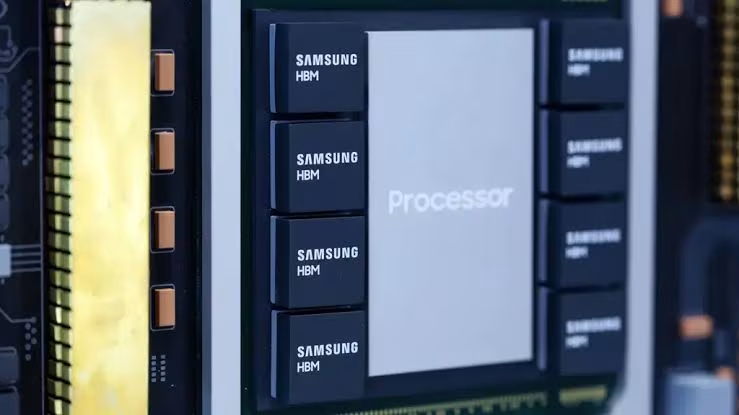
On Tuesday, November 3, 2026, reports pointed to a new route for smuggling restricted South Korean memory into China. Traffickers are reportedly pairing banned High Bandwidth Memory (HBM) with cheap, unsanctioned processors to exploit a critical gap in export controls. The scheme remains unconfirmed, but it highlights urgent vulnerabilities in global chip regulations.

South Korea HBM Smuggling: The Reported Problem
The account, covered by Tom’s Hardware, describes expensive High Bandwidth Memory (HBM) chips paired with low-performing processors from a chip firm.
The memory is linked to South Korean suppliers Samsung and SK Hynix, and the reported destination is China. The issue isn’t just whether controlled components cross a border: this method could place advanced memory in a product whose processor draws less scrutiny. For AI infrastructure buyers, the harder question is whether export checks assess the component that defines a system’s capabilities—or only its main processor. The account also says the goods reportedly move through Hong Kong to Shenzhen, underscoring enforcement challenges across multiple jurisdictions; it doesn’t establish the activity’s scale or how many shipments have reached buyers.
The Processor-Based Control Gap
Processor-based classification hinges on how export controls assess a combined product. If reviewers focus on processor performance, a low-performing chip may face fewer restrictions than a high-end accelerator. HBM attached to that processor could then receive different treatment from the same memory exported on its own.
That distinction matters because HBM helps systems move large volumes of data quickly, and the account identifies South Korean companies Samsung and SK Hynix as major producers. Pairing controlled memory with a less capable processor may undermine rules meant to limit access to advanced computing hardware. The core weakness is a component-by-component approach: a modest processor can sit alongside strategically valuable memory, exposing how product classification may fail when rules overlook the combination.
What Regulators Can Change—and the Trade-Offs
Full-package assessment would have regulators evaluate the entire hardware bundle, including memory, instead of relying mainly on processor specifications. This could make it harder to use a low-performing chip as cover for restricted components. The trade-off is more work for customs agencies and legitimate exporters, including those shipping goods for ordinary commercial uses.
A second option is stronger documentation and end-use checks for HBM shipments and products containing it. These checks could help authorities trace buyers and flag suspicious transfers, but they depend on reliable records and cooperation across borders. More checks could slow legitimate trade and raise manufacturers’ compliance costs; neither measure comes free. Wider controls could curb evasion, but overly broad rules may disrupt lawful sales without stopping illicit networks. A focused approach should check component specifications and declared end users while limiting unnecessary friction.
FAQs
How Are AI Chip Smugglers Exploiting Trade Control Loopholes?
AI Chip Smugglers are packaging expensive High Bandwidth Memory (HBM) chips with cheaper, unsanctioned processors to bypass trade restrictions. This tactic allows the illegal export of banned technology from South Korea to China.
What Impact Does Smuggling Have on the Technology Market?
The smuggling of HBM chips undermines fair competition and poses risks to national security. It also complicates regulatory efforts aimed at controlling the flow of advanced technology across borders.
Read Next
- DLSS 5 Lands in Hogwarts Legacy, War Thunder and Where Winds Meet This November
- KARNAGE Sentinel and Sentinel 82: Two Gasket-Mounted Mechanical Keyboards Built for Diwali Upgrades
- The BEST Google Play Redeem Codes as of November 2026
Was this article helpful?
Your feedback directly improves future articles on this site.