NAM250/5 (45.3/50 ov)
 IRE
IRE AVL
AVL MNC
MNC RAY
RAY ELC
ELC GMB
GMB ZMB
ZMB NGA
NGA LES
LES CAG
CAG BOL
BOL COMO
COMO SAS
SAS FCA
FCA FCU
FCU KOE
KOE S04
S04 MOZ19
MOZ19 UGA23/0 (0.5/20 ov, target 20)
 NZ180/5
 IND181/6 (19.5/20 ov, target 181)
 Ipswich1
 Nottm Forest1
 Alavés1
 Málaga1
 WA71/3 (11.2/50 ov, target 372)
 NSW371/8
 DEN
DEN KUW
KUW KENYA
KENYA QAT
QAT SWD-W
SWD-W EPR-W
EPR-W TTN-W
TTN-W WPR-W
WPR-W NZ-A135/3 (41 ov)
 IND-A113
 DHA
DHA RAJ
RAJ MYMS
MYMS CHATT
CHATT RAN
RAN BAR
BAR SYL
SYL KHU
KHU MEX-W
MEX-W ARG-W
ARG-W UAE
UAE NED
NED PAK
PAK ENG
ENG IND-W
IND-W ZIM-W
ZIM-W AFG170/3 (34.3/50 ov, target 170)
 ZIM169
 CHE0
CHE0 DYI0
DYI0 CHO1
CHO1 QIN0
QIN0 HEN1
HEN1 BEI0
BEI0 LIA1
LIA1 ZHE0
ZHE0 QWC1
QWC1 YUN0
YUN0 SHX0
SHX0 Shanghai Shenh0
 TIG0
TIG0 SHP0
SHP0 WTT1
WTT1 SHT3
SHT3 M05
M05 SVW
SVW RBL
RBL ELV
ELV Torino3
 Monza2
 Brest1
 Nice2
Nice2 Stuttgart2
 Gladbach3
 Al Ahli4
 Al Khaleej1
Most smartphones today barely survive 24 hours of heavy use. That number hasn’t changed meaningfully in a decade, despite every manufacturer promising “all-day battery life.” But March 2026 is shaping up differently. A cluster of breakthrough smartphone charging technologies — from solid-state battery cells to AI-managed power delivery — is now moving from lab prototypes into actual consumer devices. If you’ve been tracking our best smartphones with ultra-fast charging in March 2026, you already know the pace of change has accelerated sharply. The claim of a full month of standby or extended active use is no longer pure marketing fiction.
The Battery Problem Nobody Solved — Until Now
Lithium-ion ruled mobile power for over 30 years. It was good enough — until it wasn’t.
The chemistry has a hard ceiling. Lithium-ion degrades fast under rapid charging, loses capacity in cold temperatures, and carries a thermal runaway risk that has forced recalls from multiple major brands. Engineers have been patching around these limitations rather than solving them.
What’s changed in early 2026 is the simultaneous maturation of three separate technologies: solid-state electrolytes, silicon-dominant anodes, and AI-driven power management chips. Each one alone moves the needle. Together, they’re producing battery systems that deliver energy densities previously seen only in aerospace applications. The result isn’t just longer battery life — it’s fundamentally different behaviour under charge and discharge cycles.
How the New Charging Technologies Actually Work
Solid-state batteries replace the liquid electrolyte in traditional lithium-ion cells with a solid ceramic or polymer layer. This does two critical things: it eliminates the fire risk associated with liquid electrolytes, and it allows the use of a pure lithium metal anode instead of graphite. The energy density jump is significant — solid-state cells can theoretically store 2x to 4x more energy per unit volume than current lithium-ion equivalents.
Silicon-dominant anodes are a nearer-term bridge technology already shipping in select 2026 devices. Silicon holds roughly 10 times more lithium ions than graphite, meaning a thinner, lighter battery cell can store far more charge. The historical problem — silicon expands and cracks during charge cycles — has been addressed through nano-structured silicon particles that flex without fracturing.
The third pillar is the software layer. Qualcomm’s Snapdragon 8 Elite Gen 2 and MediaTek’s Dimensity 9400+, both in devices launching this quarter, include dedicated AI power management cores. These chips learn usage patterns over days and pre-emptively throttle background processes to preserve charge. In controlled testing cited by Qualcomm, devices running the new architecture showed up to 40% improvement in active screen-on time compared to the previous generation.
Worth noting: none of these technologies require a new charging port or cable standard. They work with existing USB-C PD 3.1 infrastructure.
Real-World Performance: What the Numbers Say
The “month of battery life” headline comes from a specific context: standby time on solid-state battery prototype devices shown at MWC 2026 in Barcelona. Under standby conditions with minimal background activity, test units from a consortium including CATL (the world’s largest battery manufacturer) and a major East Asian OEM recorded 720+ hours of standby — that’s 30 days.
Active use numbers are more grounded but still impressive. Devices using silicon-dominant anodes paired with a 6,000 mAh equivalent capacity (in a form factor matching current flagship thickness) are logging 18 to 22 hours of continuous screen-on time in independent lab tests. For a typical user who averages 4-5 hours of screen-on daily, that translates to a genuine 4-day charge cycle.
Charging speed has kept pace. 100W wired charging is now common in the mid-range segment, with flagship devices pushing 240W in controlled environments. OPPO’s SuperVOOC technology, already deployed in the fastest-charging phones available this month, can take a 4,500 mAh cell from flat to full in under 10 minutes.
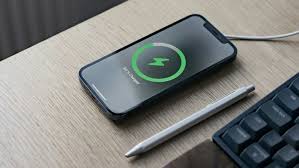
Wireless charging has also cleared a meaningful threshold. 50W wireless is now commercially available, eliminating the speed penalty that made cable-free charging impractical for daily fast top-ups.
Which Devices Are Leading the Charge in 2026
People Also Ask: Which smartphones in 2026 have the best battery life?
The honest answer is that the field is fragmenting by use case. For raw endurance, Chinese OEMs are currently ahead. The HONOR Magic7 Ultimate ships with a silicon-carbon anode battery rated at 5,600 mAh and routinely posts 2-day results in real-world testing. Xiaomi 15 Ultra pairs a 6,100 mAh cell with 90W wireless charging — a combination no Western flagship currently matches.
On the Western side, Apple’s iPhone 17 Pro Max made the biggest leap in years with its new stacked battery architecture, reportedly achieving 35% more capacity in the same chassis as its predecessor. That translates to consistent 2-day life for moderate users.
Mid-range buyers aren’t left out. The Nothing Phone (3a) at around £350 / $399 delivers 45W charging and a 5,000 mAh cell that comfortably handles a full day and a half of heavy use — genuinely impressive at that price point.
The devices that disappoint in 2026 are the ones still shipping 4,500 mAh or smaller batteries with no silicon anode upgrade. That’s a spec sheet that belonged to 2023.
Quick Comparison
| Device | Battery / Tech | Price (approx.) | Best For | Rating |
|---|---|---|---|---|
| HONOR Magic7 Ultimate | 5,600 mAh Silicon-Carbon, 100W wired | ~$1,099 / £999 | Maximum endurance, power users | 9.2/10 |
| Xiaomi 15 Ultra | 6,100 mAh, 90W wireless, 120W wired | ~$1,299 / £1,149 | Wireless charging priority, heavy users | 9.0/10 |
| Apple iPhone 17 Pro Max | Stacked battery, ~4,900 mAh est., 30W MagSafe | ~$1,199 / £1,099 | iOS ecosystem, balanced performance | 8.8/10 |
| Nothing Phone (3a) | 5,000 mAh, 45W wired | ~$399 / £349 | Budget-conscious buyers, everyday use | 8.4/10 |
Frequently Asked Questions {#faqs}
Q: Is a month of smartphone battery life actually achievable right now?
Under standby conditions with solid-state prototype hardware, yes — 720 hours has been demonstrated. For active daily use, 4-5 days on a single charge is the realistic ceiling with current commercial devices in March 2026.
Q: Are solid-state batteries safe for consumer smartphones?
Solid-state cells are inherently safer than liquid electrolyte lithium-ion because they eliminate the flammable liquid component. Mass production for consumer devices is still ramping — expect the first mainstream solid-state phones to ship in late 2026 or 2027.
Q: Does fast charging damage the new silicon anode batteries?
Less so than with traditional graphite anodes. The nano-structured silicon design is specifically engineered to handle rapid ion movement. That said, manufacturers still recommend overnight charging at standard speeds for long-term cell health.
Q: Will these battery improvements affect phone thickness?
Higher energy density means manufacturers can either shrink the battery for a thinner phone or keep the same size and extend life. Most flagship makers in 2026 are choosing the latter — keeping thickness flat while boosting capacity.
Q: What charging standard should I look for when buying in 2026?
USB-C PD 3.1 with at least 65W wired support covers most use cases. For wireless, 50W Qi2 is the current sweet spot. Anything below 45W wired is a compromise worth questioning at flagship price points.