CFC0
CFC0 GRE0
GRE0 FLA2
FLA2 CAM1
CAM1 NED
NED OMA
OMA NZ
NZ IND
IND NAM
NAM IRE
IRE PAK
PAK SL
SL SA
SA AUS
AUS Abha
Abha Al Faisaly
 AFG
AFG ZIM
ZIM Sassuolo
 Lazio
Lazio SEV2
SEV2 OSA0
OSA0 PSG2
PSG2 LYON0
LYON0 MBSG1
MBSG1 CFC0
CFC0 Barcelona1
 Real Madrid2
 NZ-A317 & 58/3 (18 ov, target 313)
 IND-A113 & 516
 SYL575/4 (167.3 ov)
 KHU
KHU MYMS465/7d
 CHATT424/6 (121 ov)
 DHA521
 RAJ162 & 215/5 (59.1 ov) (f/o)
 RAN402 & 5/0 (2.3 ov)
 BAR443/9d
 SIKM30/1 (15 ov)
 NAGA187
 JHK
JHK DELHI309/5 (90 ov)
 ODSA194
 SVCS13/0 (5 ov)
 BRODA259/6 (86 ov)
 J & K
J & K CHD363/2 (87 ov)
 HP
HP CGR35/1 (14 ov)
 AP231
AP231 HYD
HYD PNJB289/6 (90 ov)
 BAN
BAN WI
WI IND-W
IND-W ZIM-W
ZIM-W MEX-W51 (12.5/20 ov, target 187)
 ARG-W186/7
 NGA148
 UGA147/9 (20 ov, target 149)
 BRB149/5 (16.2/20 ov, target 148)
 MIS147
 MOW107/9
 TOK111/5 (18.4/20 ov, target 108)
 LUL88/3 (9.5/20 ov, target 88)
 SPR87
SPR87 AMG1
AMG1 CUI0
CUI0 COR0
COR0 LLA0
LLA0 TOR1
TOR1 HAL1
HAL1 MICH0
MICH0 WASH1
WASH1 ISU0
ISU0 BYU1
BYU1 JUV1
JUV1 NAU0
NAU0 BOL0
BOL0 UDV0
UDV0 AS Roma
 Cagliari
 Torino
 Como
Como Daejeon
 Vissel Kobe
 Darul Ta'zim
 Port FC
 Kyoto Sanga
 Newcastle Jets
 Shanghai Port
 Cong An Ha Noi
 Udinese0
 Milan2
 Real Sociedad2
 Levante1
Last weekend in Boston, Scotland played their most important game of international football in 28 years — a nervy, heart-in-mouth affair against Haiti at the World Cup that ultimately sparked the party to end all parties in a city the Tartan Army have adopted as their own.
Boston has been overtaken by full-time dreamers and relentless ambassadors for their country. There isn’t a cop in the city who hasn’t been charmed by them, nor a local business that hasn’t benefited hugely from the Tartan Army dollar. They’ve been a happy whirlwind, a force of nature — and before the exodus, there is still a job to be done.
What was said in previewing Haiti can be said again looking ahead to Morocco.
After the big one comes the ever bigger one. This one, if it goes well, could be the greatest result not just in 28 years but, arguably, in 154 years of Scottish international football — since the pioneering 0-0 draw with England in the very first international match in the history of the game.
What’s at Stake: The Promised Land of Knockout Football
A draw against Morocco would almost certainly send Steve Clarke’s side into the knockout stages — the first time in the nation’s history that Scotland would progress beyond a major tournament group stage. Even a narrow defeat would be good news, depending on how the permutations play out among the best third-placed qualifiers.
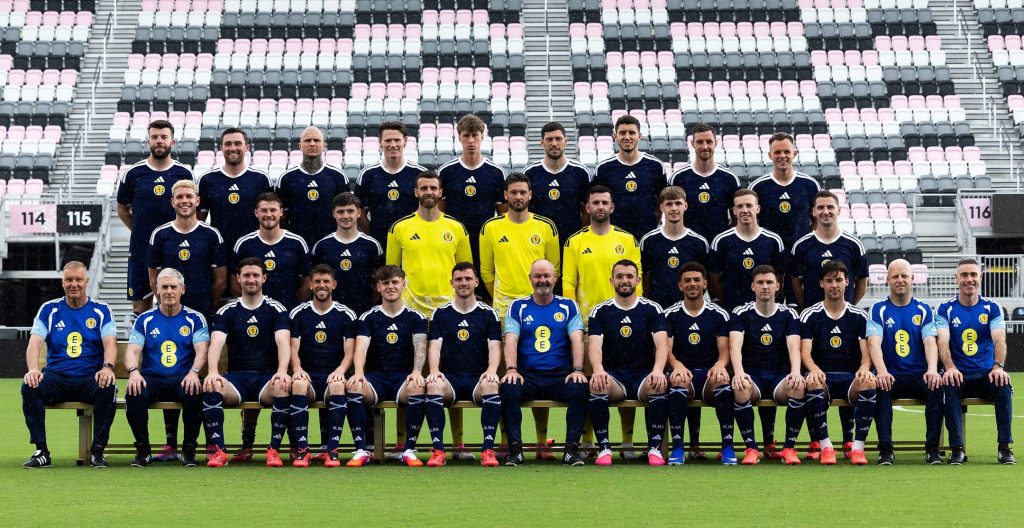
Stalemate against a nation ranked sixth in the world would be a result of historic proportions. Winning would be the single greatest achievement in 154 years of Scottish international football, stretching back to the 1872 contest when captain Robert Gardner — a man of the Victorian era, with firm roots at Queen’s Park — led his country in the first international ever played.
The manager, the players, and the Scottish FA have been laying it on the line from the beginning of this tournament: the target is becoming the first Scotland squad to make it out of a group in a major championship. That context hangs over everything.
Haiti Was Hairy — But It Was Just the Start
It is worth being honest about what the Haiti performance actually was. It was a brilliant victory in a pressure-filled, must-win game — and it was also a performance beneath what this Scotland side is capable of producing.
A deflected winner. A Grant Hanley handball in the box not given as a penalty. A magnificent Hanley block denying a near-certain goal. A late Frantzdy Pierrot header that drifted just wide when many in the stadium were already bracing themselves. These were moments of fortune as much as organisation.
Scotland had their moments too — no-one is disputing that. But at various points in qualification, good fortune shone brightly on them, and luck always runs out in the end. Against the sixth-best international side in the world, a performance operating below capacity is not going to be enough.
These players are capable of more than they delivered against Haiti. Now is the time to prove it.
Morocco: What Scotland Are Up Against
In their 1-1 draw with Brazil on Saturday, Morocco showed exactly why they represent the most formidable test Clarke’s side has faced.
They bossed the opening period almost entirely. In the first 30 minutes, they had 12 shots on goal. When they scored, it was a microcosm of their quality — a moment of lethal accuracy and movement.
Brahim Díaz’s pass was threaded between Gabriel (Premier League winner with Arsenal) and Marquinhos (double Champions League winner with PSG). Ismael Saibari’s lobbed finish was gorgeous, and too good for Alisson (Liverpool). That is a slight lack of concentration from two world-class defenders and one of the finest goalkeepers on the planet — and it was undone by two touches.
Brazil head coach Carlo Ancelotti made two changes at half-time. Casemiro was substituted because an 18-year-old was making him look like an old man.
Bouaddi: The Breakout Star of the Tournament
Ayyoub Bouaddi is 18 years old and is already the story of this World Cup.
The Lille midfielder made his UEFA Conference League debut at 16 — the youngest player to have featured in a UEFA club competition. He is also the youngest to have played a top-flight game in France in the 21st century. His current price tag is reported at £61 million, though that figure is likely to keep rising the longer this tournament continues.
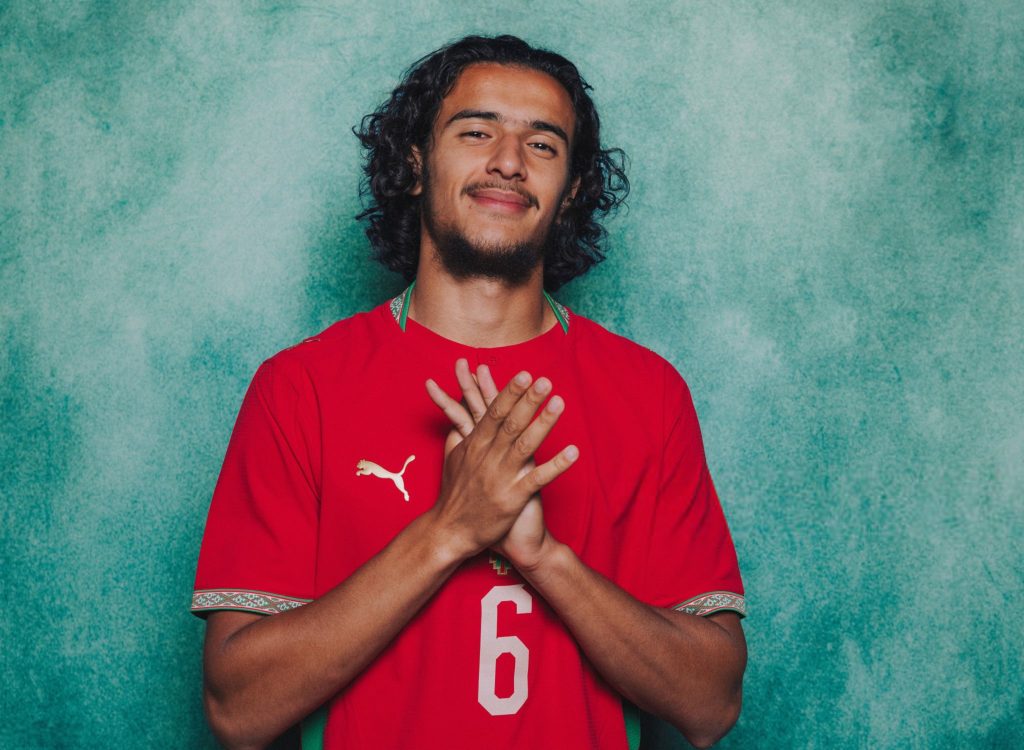
He has technique and vision that bear no relationship to his age. Against Brazil, he was making Casemiro — one of the most decorated defensive midfielders of his generation — look sluggish.
Ancelotti did not wait until half-time to make his assessment. Casemiro was hooked. That is the level of impact Bouaddi is already having.
The Morocco Threat Map: Diaz, Saibari, El Khannouss, Hakimi
Morocco possess dynamic threats from multiple positions, and the damage they can inflict is not limited to one channel.
Brahim Díaz — the Real Madrid attacker playing for Morocco after switching allegiance from Spain — brings directness and quality in the final third. Saibari is a clever, technical forward. Bilal El Khannous, the left-sided midfielder, adds another layer of creativity and forward movement.
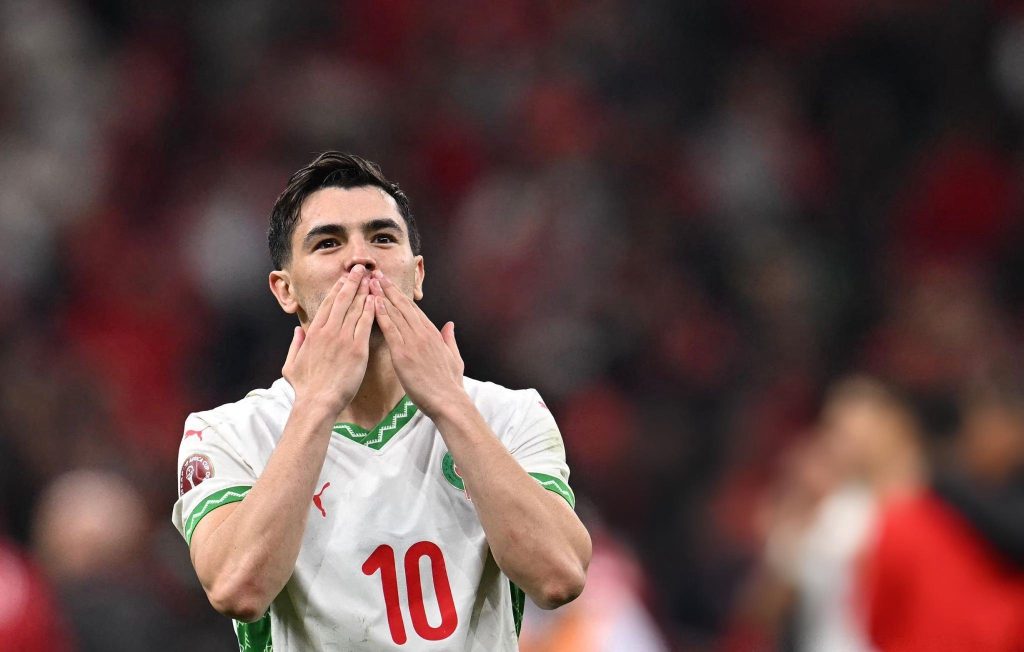
And then there is Achraf Hakimi.
The Paris Saint-Germain right-back is, on his best days, the finest player in his position in world football. Born in Spain to a father who was a street vendor and a mother who worked as a cleaner, Hakimi has spoken often about how his upbringing shaped his character and his hunger. A Serie A winner with Inter, a twice-over Champions League winner with PSG, and a World Cup semi-finalist with Morocco in 2022 — his career record is exceptional.
Hakimi is at his best going forward. He is an explosive force down Morocco’s right, and when he overlaps it creates chaos for any left side trying to contain him.
A Team of the Diaspora
Morocco are another nation at this World Cup whose squad tells the story of migration and colonial ties. Of the starting line-up that drew with Brazil:
| Morocco Starting XI vs Brazil — Origin | Detail |
|---|---|
| Goalkeeper | Born in Canada |
| Two defenders | Born in Spain |
| One defender | Born in France |
| One defender | Born in Netherlands |
| Neil El Aynaoui (midfielder) | Born in France |
| Bouaddi | Born in Spain |
| Saibari | Born in Spain |
| El Khannous | Born in Belgium |
| Additional squad members | Nine more from Spain, Belgium, France, Netherlands |
Drawn from the diaspora across multiple continents, they are nonetheless Moroccan to the core of their beings. This is not a collection of convenient eligibility switches — it is a national team that reflects the movement of people and the depth of connection that transcends geography.
Scotland’s Totems Must Show Up
Scotland’s players themselves have not been hiding from the fact that the Haiti performance was below their best. And the honest truth is that two of their most important players were not at their level.
Scott McTominay — the Napoli midfielder and talisman — ran his heart out. With all nations having played one game, he ranked sixth overall in distance covered across the entire tournament. But he was not the influence he can be. The creative spark, the decisive moments, the leadership from an advanced position — those were missing, possibly the lingering effect of a stomach bug or, perhaps, the sheer weight of the occasion.
John McGinn contributed a goal, but he too was not the complete force he has been at his best for Aston Villa and for Scotland under Clarke.
It did not matter on the day against Haiti. It will matter against Morocco. Scotland’s totems need to turn up.
What Clarke Will Do Tactically
Clarke is likely to make at least one significant tactical adjustment. The expectation is that he will drop a striker and bring in an extra midfielder — a recognition that Morocco’s energy and class requires additional bodies in the central areas, both to stifle and to retain the capacity to counter.
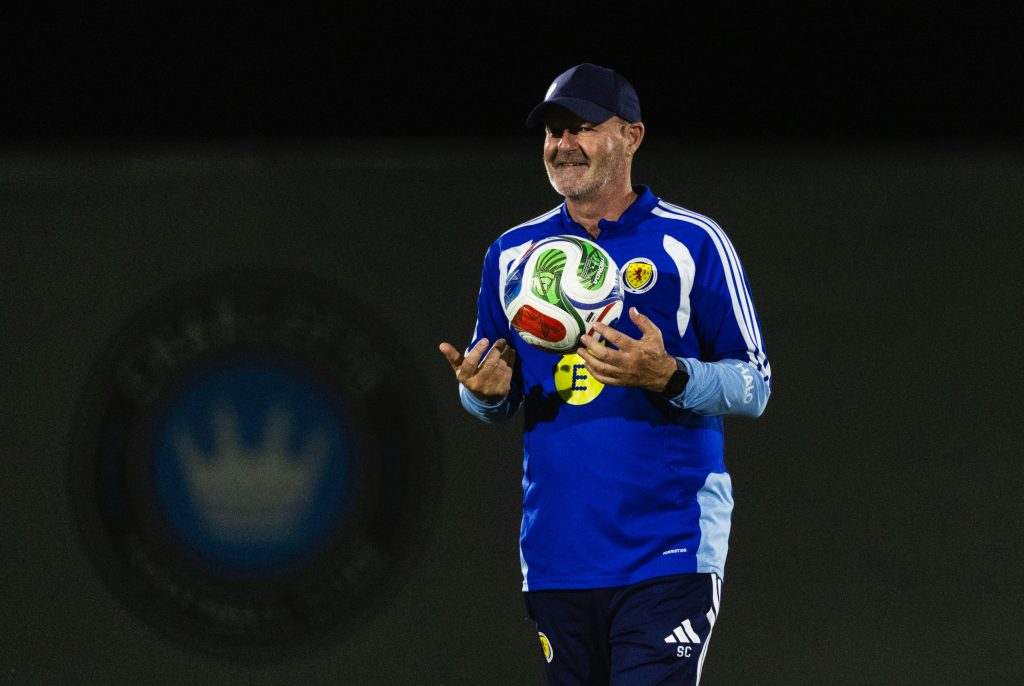
This cannot be backs-to-the-wall for 90 minutes. That is not a recipe for anything other than survival — and Morocco, with their speed and creativity, would eventually punish a team not offering enough threat in the other direction.
The balance Clarke must find is one of the hardest in tournament football: deep enough to absorb Morocco’s forward runs, but brave enough to hurt them on the break. Scotland have shown in this World Cup that they can win ugly. Against Morocco, they need to win smart.
Morocco’s Defensive Record: An Interesting Caveat
For all their attacking dynamism, Morocco do not score as many goals as you might expect. Despite Díaz, Saibari, El Khannous, and the overlapping Hakimi, they have tended to be conservative in how often they put the ball in the net.
Morocco have not lost a game in two and a half years — with an asterisk: they were beaten by Senegal in the Africa Cup of Nations final before being awarded a 3-0 victory by the Confederation of African Football after Senegal were sanctioned for walking off the pitch for 15 minutes in protest at a penalty decision. The chaos that surrounded that episode was extraordinary.
For Scotland, the knowledge that Morocco are not prolific scorers despite their quality is marginally encouraging. This is not a team that will destroy you six or seven times. They are more likely to win narrow.
The Jeopardy Is Intoxicating
Everything about this match screams ‘the biggest test of their international lives’.
But everything we know about this Scotland team tells us they are built for exactly this kind of fight. They go to major tournaments without expectation, they press forward collectively, they work relentlessly, and they find ways to win games they have no business winning.
The Tartan Army have been a force of nature in Boston. The dreamers in Beanotown are not going home yet without seeing whether their heroes can do something that has never been done before.
Scotland need McTominay at his best. They need McGinn at his best. They need Clarke’s tactical plan to be executed for a full 90 minutes. They need some of the fortune that has followed them to stick around just a little longer.
They need all of this — and then a little bit more.
They go again.
Read More: Australia’s World Cup Wildcard: Why Nestory Irankunda Could Explode in World Cup 2026