India’s AI education gap is getting serious institutional attention. Get Set Learn (an Arvind Mafatlal Group company), Qualcomm Technologies, and Arduino have announced a strategic collaboration to embed Physical AI and STEAM education into India’s K–12 school ecosystem — announced on February 25, 2026 in New Delhi, with further implementation details to be shared at the February 2026 AI Summit.
Table of Contents
Partnership at a Glance
| Detail | Info |
|---|---|
| Partners | Get Set Learn + Qualcomm Technologies, Inc. + Arduino |
| Get Set Learn Parent | Arvind Mafatlal Group |
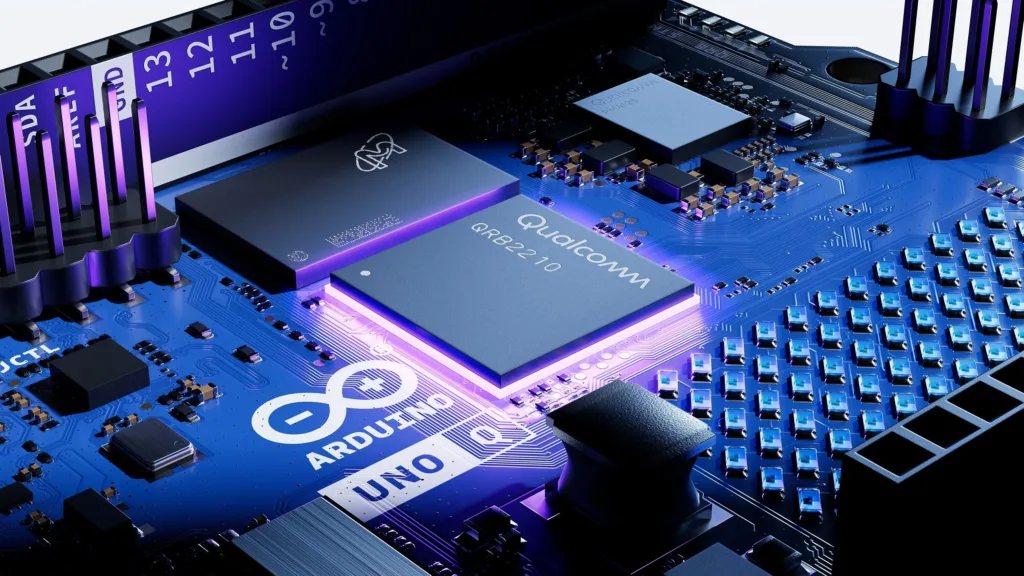
| Qualcomm’s Role | Edge AI capabilities — energy-efficient, on-device, low-connectivity resilient |
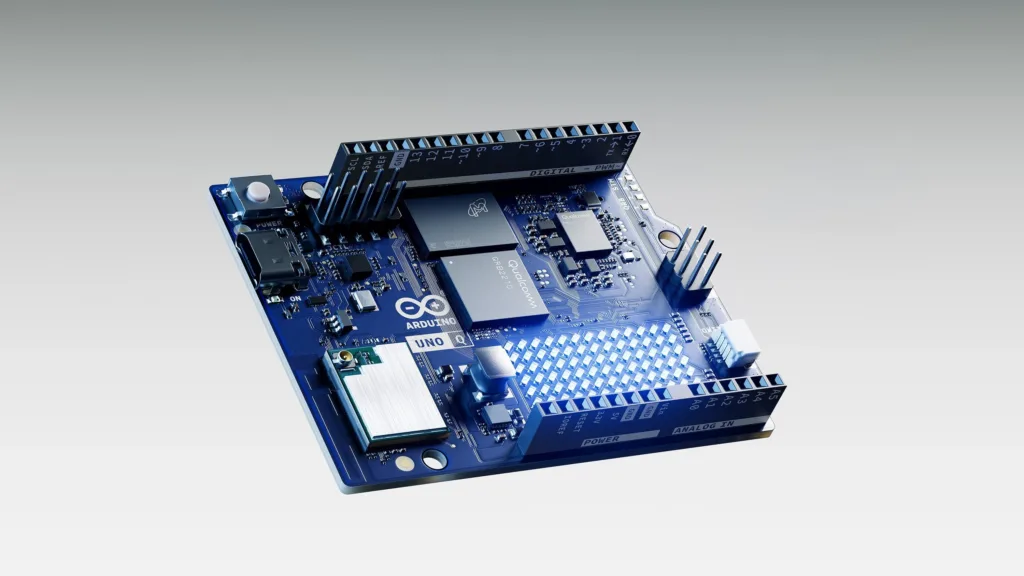
| Arduino’s Role | Open-source hardware, toolchains, and developer-trusted electronics platform |
| Get Set Learn’s Role | On-ground implementation — national school partnerships + content ecosystem |
| Target | K–12 learners across public and private school systems in India |
| Focus Areas | Electronics, coding, robotics, AI — from sensing/actuation basics to local inference |
| Lab Integration | ATL and STEAM labs converted into certification-led, structured learning spaces |
| Key Design Principle | On-device AI — no cloud dependence, works in low-connectivity classrooms |
| Student Outcomes | Portfolio of practical builds + certifications mapping to higher education and entry-level jobs |
| Next Milestone | February 2026 AI Summit — implementation scale and details |
Why “Physical AI” Is the Right Frame for India’s Classrooms
Most AI education programmes teach students to use AI tools — prompt engineering, model APIs, app integrations. The Qualcomm-Arduino-Get Set Learn curriculum teaches students to build AI-enabled physical systems: sensors that read the environment, actuators that respond to it, control loops that manage feedback, and local inference that processes data on-device without sending it to the cloud.
This distinction matters enormously for India’s education context. The majority of India’s schools — especially across tier-2 and tier-3 cities, and in government systems — have unreliable internet connectivity. An AI curriculum built on cloud APIs fails the moment connectivity drops. A curriculum built on Qualcomm’s edge AI capabilities running on Arduino hardware continues to function regardless of network availability, reducing both recurring costs and infrastructure dependence.
The progression from fundamentals to deployable systems is structured deliberately: students start by reading sensors and controlling actuators, then implement feedback and safety systems, then integrate perception tasks like vision and audio classification. The endpoint is a working, deployable build — not a simulation or a slide deck — which maps directly to what engineering programmes and entry-level tech roles expect candidates to demonstrate.
ATL lab integration is the scalability mechanism. India’s Atal Tinkering Labs (ATLs) exist in thousands of schools nationwide — the collaboration converts these existing infrastructure assets into certified, structured Physical AI learning environments rather than requiring new labs to be built from scratch.
Savi Soin, Senior Vice President and President of Qualcomm India, framed the initiative as starting the edge AI journey where it matters: “India’s AI future will be built on locally deployed, energy-efficient physical intelligence, and that essential journey must begin in our classrooms today.”
For more details, visit Get Set Learn’s official website and Arduino’s education platform.
Check our AI education and STEAM India news on TechnoSports and our Qualcomm India initiatives and Snapdragon 2026 coverage.
FAQs
What is the Qualcomm, Arduino, and Get Set Learn partnership about?
The three partners are embedding Physical AI education into India’s K–12 schools — combining Arduino’s open-source hardware with Qualcomm’s edge AI capabilities and Get Set Learn’s national school network to teach students to build intelligent physical systems that work without cloud connectivity.
What is Physical AI education and why does it matter for Indian students?
Physical AI education teaches students to design and build real AI-enabled systems — sensors, actuators, robotics, and local inference — rather than just using cloud-based AI tools, giving them practical skills that map directly to engineering programmes and entry-level tech careers.