NGA
NGA UGA
UGA MEX-W
MEX-W ARG-W
ARG-W CRY0
CRY0 NEW1
NEW1 HUL1
HUL1 BRE0
BRE0 LIV2
LIV2 BHA0
BHA0 MAN0
MAN0 BOU2
BOU2 ATA3
ATA3 FRO3
FRO3 GEN1
GEN1 VEN0
VEN0 AUX
AUX MNS
MNS ANG
ANG LOR
LOR OLM
OLM HAC
HAC REN
REN STR
STR TOU
TOU TRY
TRY SUN
SUN LEE
LEE SCF
SCF MUN
MUN LEC
LEC JUV
JUV ATH4
ATH4 GET0
GET0 INT2
INT2 FIO1
FIO1 CHU2
CHU2 PFC3
PFC3 GMB112/9
 LES109 (19.5/20 ov, target 113)
 DEN
DEN PNG
PNG LIMWn
LIMWn NW-W
NW-W NCWmn
NCWmn FsWm
FsWm BOL137/9 (20 ov)
 TITNS137/8
 NWEST22/3 (3.1/20 ov, target 181)
 NCAPE180/3
 MIS
MIS VAG169/4 (20 ov)
 NZ-A317
 IND-A113 & 106/2 (36 ov)
 SYL280/2 (84 ov)
 KHU
KHU MYMS465/7d
 CHATT134/2 (40 ov)
 DHA521
 RAJ103/6 (26 ov)
 BRB
BRB MOW
MOW TOK
TOK SIKM
SIKM NAGA
NAGA JHK
JHK DELHI
DELHI ODSA
ODSA SVCS
SVCS CGR
CGR AP
AP BRODA
BRODA J & K
J & K MOZ110/7 (19/20 ov, target 110)
 ZMB109/9
 IND-W328/6
 ZIM-W207 (48.5/50 ov, target 329)
 PAK243/9 (47.1/50 ov, target 242)
 ENG241
 UAE244/8
 NED245/7 (43.5/50 ov, target 245)
 MON0
MON0 LILL1
LILL1 KER0
KER0 MCFC0
MCFC0 TSG0
TSG0 B040
B040 NEC2
NEC2 GRO2
GRO2 PSV1
PSV1 FEY1
FEY1 Motherwell0
 Hearts1
 Atlético1
 Deportivo0
 Lazio2
 Parma1
 Lens2
Lens2 Paris FC1
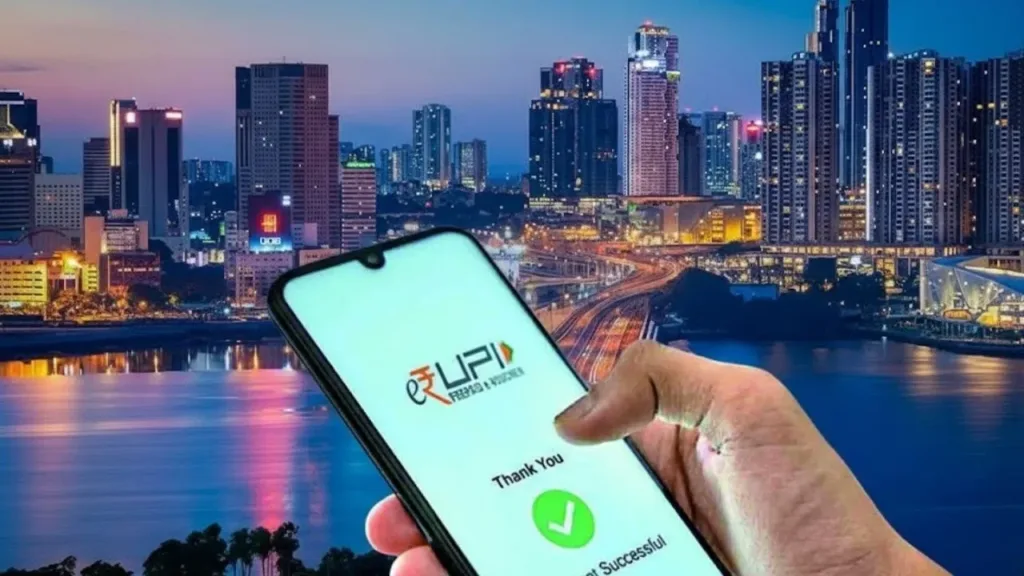
Prime Minister Narendra Modi announced a major milestone during his Malaysia visit on February 7-8, 2026. India’s Unified Payments Interface (UPI) will soon launch in Malaysia, linking with PayNet to enable seamless cross-border transactions. This marks another significant step in India’s mission to export its digital payment infrastructure globally.
UPI Global Expansion Overview
| Status | Countries |
|---|---|
| Live Now | Bhutan, UAE, Singapore, Nepal, Sri Lanka, France, Mauritius, Qatar |
| Launching Soon | Malaysia (PayNet integration) |
| Trials/Next | Japan (trial), Cyprus, Thailand, Cambodia, Maldives |
| Global Share | Nearly 50% of world’s real-time digital payments |
Malaysia Gets UPI: The Big Announcement
Addressing the Indian diaspora in Kuala Lumpur on February 7th, PM Modi revealed that the Malaysia-India Digital Council is enabling UPI integration. The UPI-PayNet linkage will simplify cross-border payments for businesses, students, tourists, and workers.
Malaysian PM Anwar Ibrahim confirmed the integration will make transactions easier and more transparent. The plan originated during his India visit in August 2024, and this announcement marks concrete progress.
Learn about India’s fintech revolution and global impact.
Why UPI Matters Globally
UPI enables instant peer-to-peer and merchant transactions between bank accounts via mobile phones using QR codes, Virtual Payment Addresses, or mobile numbers—all secured through two-factor authentication.
India’s dominance: Nearly 50% of global real-time digital transactions happen in India, processing billions monthly across 400+ banks with zero merchant fees for many transactions.
Where UPI is Already Live
India successfully deployed UPI in eight countries: Bhutan, UAE, Singapore, Nepal, Sri Lanka, France (Eiffel Tower accepts UPI), Mauritius, and Qatar—supporting diaspora communities, tourists, and bilateral trade.
Next wave includes Japan (trial phase), Cyprus, Thailand, Cambodia, and Maldives, expanding beyond South Asia into Southeast Asia and global destinations.
Explore digital payment adoption trends.
Why Malaysia Integration is Strategic
Malaysia is India’s largest ASEAN trading partner with bilateral trade of RM79.49 billion (US$18.59 billion) in 2025. Over 100 Indian IT companies operate there, and the 2+ million Indian diaspora benefits from simplified:
- Student payments and remittances
- Business transactions and supply chains
- Tourist spending without currency exchange
- Worker remittances at lower costs
India’s Digital Public Infrastructure Model
UPI’s global success reflects India’s Digital Public Infrastructure approach—open, interoperable systems creating inclusive digital economies. Unlike proprietary systems, UPI’s architecture integrates seamlessly with national networks like PayNet.
This model attracts international attention, with countries either replicating India’s success or directly integrating UPI.
Strategic Benefits
For India: financial inclusion for diaspora, trade facilitation, technological soft power, and strengthened bilateral relationships.
For partners: proven technology, lower transaction costs, and enhanced connectivity with a major trading partner and tourist source.
PM Modi’s announcement during his first 2026 foreign visit underscores India’s digital payments diplomacy priority. As UPI expands globally, it could reshape cross-border payment infrastructure worldwide.
For digital finance innovations coverage, follow our updates.
Source: The Star Malaysia | Fintech News