Skip the hype — if you haven’t noticed your streaming platform behaving differently in the last three months, you’re not paying close attention. 8K interactive OTT content is no longer a lab experiment. Platforms including Amazon Prime Video, Apple TV+, and a handful of aggressive Indian OTT services are actively deploying personalised, ultra-high-resolution interactive experiences right now. Our deep dive into OTT streaming innovations this year flagged this shift early — and it’s accelerating faster than most analysts predicted.
The Shift Nobody Saw Coming
Twelve months ago, the consensus was simple: 8K streaming was too bandwidth-hungry to matter. Then two things happened simultaneously. First, Wi-Fi 7 adoption crossed a meaningful threshold in urban India, the US, South Korea, and Japan — bringing real-world home speeds above 40 Gbps in tested environments. Second, AI-driven codec compression — specifically next-generation AV1 variants and the emerging VVC (Versatile Video Coding) standard — slashed the bitrate required for 8K delivery by roughly 40% compared to 2024 benchmarks.
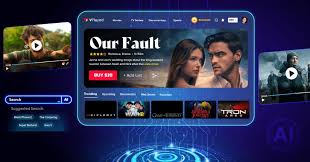
The result? What was a bandwidth nightmare is now, at least for a growing slice of viewers, genuinely viable. And platforms aren’t just delivering sharper pictures. They’re attaching interactive decision layers on top of that resolution — meaning the story you watch, and how it looks, can change based on your choices.
What 8K Interactive Content Actually Looks Like in 2026
Think of it as Netflix’s Bandersnatch — but rebuilt from the ground up with modern infrastructure. Here’s what the current generation actually delivers:
Resolution & delivery specs in active deployments:
- Native 8K (7680×4320) streams at 120fps on flagship titles
- Bitrates ranging from 80–120 Mbps using VVC compression (down from 200+ Mbps with older codecs)
- Latency on interactive decision points reduced to under 200 milliseconds on edge-cached content
- Compatible with Samsung Neo QLED 8K (2025/2026 models), LG OLED 8K evo, and Sony BRAVIA 8K displays
The interactive layer works through what engineers call a “branching asset pipeline” — essentially, multiple 8K scene variants are pre-rendered and cached at edge servers closest to the viewer. When you make a choice, the platform doesn’t buffer a new file. It switches between pre-loaded assets seamlessly. Amazon’s internal testing, reported by The Verge, showed a sub-100ms branch transition in controlled environments — which, for context, is imperceptible to the human eye.
Pricing for access to these premium tiers sits between ₹999–₹1,499/month on Indian platforms and $19.99–$24.99/month internationally.
How Personalisation Engines Are Driving the Change
Here’s the thing — 8K resolution alone isn’t what makes this compelling. The real story is what platforms are doing with viewer behavioural data to shape the experience before you even press play.
Modern OTT personalisation engines in 2026 operate on three layers:
- Content recommendation — this part isn’t new, but it’s significantly smarter now
- Narrative personalisation — the platform uses your watch history, genre preferences, and even pause/rewind patterns to pre-select which story branch you’re most likely to enjoy, then surfaces that path first
- Visual personalisation — genuinely new territory. Some platforms are experimenting with dynamically adjusting colour grading, pacing, and even background score intensity based on inferred viewer mood profiles
Apple TV+ has reportedly filed patents around “adaptive cinematic rendering” — a system where the visual tone of a scene (warmer, cooler, higher contrast) shifts subtly based on the time of day you’re watching and your historical viewing context. Whether that reaches consumers in 2026 or slips to 2027 remains to be seen.
Indian platforms aren’t sitting still either. Our coverage of Indian OTT platform upgrades in 2026 shows JioCinema and ZEE5 both investing heavily in AI personalisation infrastructure, though their 8K interactive rollouts are still in limited beta.
The Real Challenges Still Holding This Back
People Also Ask: Is 8K interactive streaming actually available in India right now?
Technically, yes — but with caveats. A handful of titles are available in 8K interactive format on select platforms, but the device requirements are strict (8K-capable TV or monitor, Wi-Fi 7 or a wired gigabit connection minimum), and the content library is thin. As of March 2026, fewer than 50 titles globally qualify as true 8K interactive productions. Compare that to the thousands of HD and 4K titles available, and the gap is obvious.
The elephant in the room is content production cost. Shooting and post-producing a branching 8K narrative — where multiple scene outcomes need to be rendered at full resolution — is estimated to cost 3–5x more than a comparable linear 8K production. Studios are cautious. Until the addressable audience with compatible hardware scales up meaningfully, most major productions won’t justify the spend.
Variety’s analysis of streaming production budgets in early 2026 noted that only six major studios globally had greenlit dedicated 8K interactive projects, with most others adopting a “wait and see” posture through at least mid-2027.
Hardware penetration is the other bottleneck. 8K TV ownership globally sits below 5% as of early 2026 — a real ceiling on the addressable market, regardless of how good the content gets.
Frequently Asked Questions
Q: Do I need a special internet plan to stream 8K interactive content?
A: Yes. You’ll need a sustained connection of at least 80–100 Mbps — ideally Wi-Fi 7 or a wired gigabit connection — for smooth 8K playback. Standard broadband plans in most Indian cities now offer this, but real-world speeds during peak hours can dip below the threshold.
Q: Which OTT platforms currently offer 8K interactive content?
A: Amazon Prime Video and Apple TV+ have the most active 8K interactive deployments globally as of March 2026. In India, JioCinema and ZEE5 are in limited beta. Netflix has not publicly committed to a full 8K interactive rollout yet, though it has tested the format internally.
Q: Will my existing 4K TV support 8K interactive content?
A: No. You need a native 8K display — models like the Samsung QN900D, LG QNED99, or Sony Z9K series — to see the full benefit. On a 4K TV, the stream will downscale, and you’ll lose the visual advantage entirely, though interactive features may still function.
Q: Is the interactive element genuinely different from older formats like Bandersnatch?
A: Meaningfully so. The branch transitions are near-instant (under 200ms vs. the noticeable buffering in 2018-era interactive content), the resolution is dramatically higher, and the personalisation layer means the platform can guide you toward narrative paths suited to your preferences — rather than presenting a neutral choice menu.