NED
NED OMA
OMA NZ43/1 (4.4/20 ov)
 IND
IND NAM
NAM IRE
IRE PAK
PAK SL
SL SA
SA AUS
AUS Abha
Abha Al Faisaly
 AFG
AFG ZIM
ZIM Sassuolo
 Lazio
Lazio AS Roma
 Cagliari
 Torino
 Como
Como SEV2
SEV2 OSA0
OSA0 PSG2
PSG2 LYON0
LYON0 MBSG1
MBSG1 CFC0
CFC0 Barcelona1
 Real Madrid2
 JER
JER KUW
KUW PNG
PNG QAT
QAT BIK
BIK CHR63/1 (9/20 ov)
 SYL575/4 (167.3 ov)
 KHU
KHU MYMS465/7d
 CHATT424/6 (121 ov)
 RAN402 & 5/0 (2.3 ov)
 BAR443/9d
 SIKM184 (71 ov)
 NAGA187
 JHK
JHK DELHI498/5 (129 ov)
 ODSA194
 SVCS13/0 (5 ov)
 BRODA384/6 (119 ov)
 J & K
J & K BAN
BAN WI
WI IND-W
IND-W ZIM-W
ZIM-W JAB
JAB KAY
KAY DEN
DEN BRB149/5 (16.2/20 ov, target 148)
 MIS147
 MOW107/9
 TOK111/5 (18.4/20 ov, target 108)
 LUL88/3 (9.5/20 ov, target 88)
 SPR87
SPR87 GOA
GOA SC Delhi
 Milan
Milan Bologna
 Parma
Parma Udinese
 Venezia
 Inter Milan
 FLA3
FLA3 CAM2
CAM2
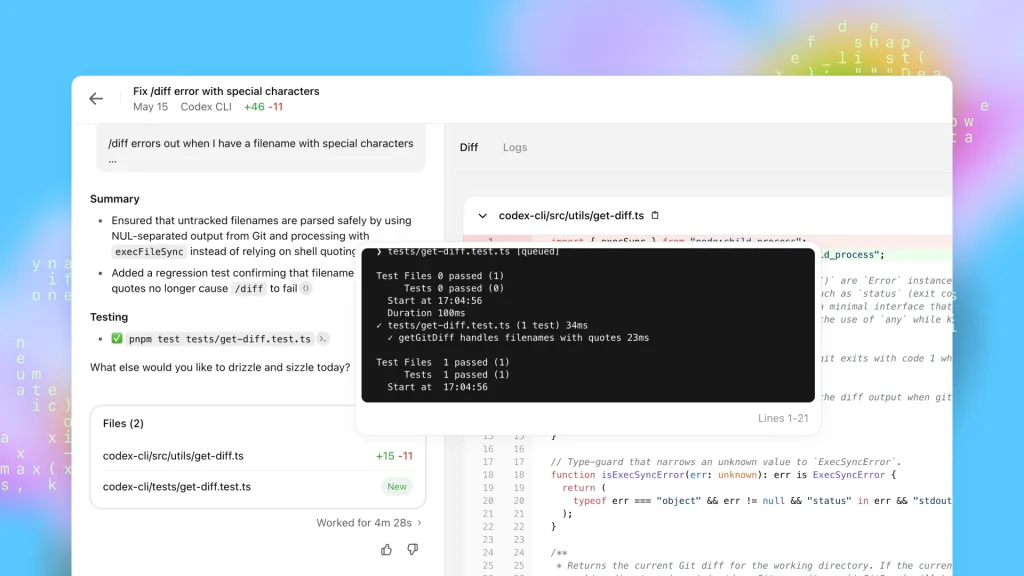
OpenAI announced the enterprise scaling of Codex on March 15, 2026, bringing its AI-powered code generation platform to organizations globally. The enterprise version costs $500 per month per user—a significant move toward mainstream adoption among Fortune 500 firms and mid-market software engineering teams.
OpenAI’s March Announcement Launches Enterprise Codex Rollout at San Francisco Summit
OpenAI announced the enterprise scaling initiative on March 15, 2026, with the official product launch happening at the Tech Innovation Summit in San Francisco on April 10, 2026. This two-phase rollout gave enterprise customers time to prepare infrastructure, security protocols, and team training before full deployment.
Market demand for AI-assisted development tools has been climbing. Over 50 companies are already partnering with OpenAI for the enterprise rollout, including systems integrators like Cognizant and CGI, who’re embedding Codex directly into their enterprise software engineering workflows. These partnerships show real confidence in Codex’s ability to tackle productivity bottlenecks in large-scale development environments.
The enterprise version supports over 12 programming languages, including Python, JavaScript, and Ruby—the dominant languages in modern web, cloud, and data engineering. This broad language coverage matters because it works across heterogeneous tech stacks, something enterprises need when managing legacy systems alongside new cloud-native projects.
Codex can generate contextually relevant code snippets and automate repetitive development tasks. That’s a real multiplier for teams working under tight deadlines or dealing with skill gaps.
Why Enterprise Adoption of Codex Matters: Productivity Gains Meet Legacy Modernization Risks
Benchmarks from competing firms like Infosys reveal something existing coverage often misses. Infosys has documented 35–45% developer velocity gains using similar AI-assisted code generation tools—metrics that line up closely with OpenAI’s reported 40% productivity increase from Codex beta testing.
But those gains hide a real problem: enterprises using Codex for legacy system modernization face significant risks around tribal knowledge loss and regulatory compliance. Legacy systems often embed business logic, workarounds, and institutional knowledge that exist only in code comments or developers’ heads. When Codex generates replacement code automatically, teams might accidentally strip away critical context, creating silent failures in production.
Regulatory-heavy industries—finance, healthcare, defense—face extra scrutiny around AI-generated code provenance, audit trails, and liability. You can’t just tell a regulator, “Codex generated this code,” without clear documentation of human review, testing, and sign-off.
Enterprise adoption really comes down to organizational readiness: mature code review practices, clear AI governance policies, and training that teaches developers when to trust Codex and when to override it. The $500-per-user-per-month price reflects this maturity. It’s not a tool for casual use—it’s a strategic investment in structured development workflows.