NZ180/5
 IND56/2 (8.3/20 ov, target 181)
 NAM156/2 (32/50 ov)
 IRE
 AVL
 MNC
 RAY
 ELC
 GMB
 ZMB
 NGA
 LES
 CAG
 BOL
 COMO
 SAS
 FCA
 FCU
 KOE
 S04
 MOZ19
 UGA23/0 (0.5/20 ov, target 20)
 Ipswich1
 Nottm Forest1
 Alavés1
 Málaga1
 Torino3
 Monza2
 WA
 NSW371/8 (50 ov)
 DEN
 KUW
 KENYA
 QAT
 SWD-W
 EPR-W
 TTN-W
 WPR-W
 NZ-A135/3 (41 ov)
 IND-A113
 DHA
 RAJ
 MYMS
 CHATT
 RAN
 BAR
 SYL
 KHU
 MEX-W
 ARG-W
 UAE
 NED
 PAK
 ENG
 IND-W
 ZIM-W
 AFG170/3 (34.3/50 ov, target 170)
 ZIM169
 CHE0
 DYI0
 CHO1
 QIN0
 HEN1
 BEI0
 LIA1
 ZHE0
 QWC1
 YUN0
 SHX0
 Shanghai Shenh0
 TIG0
 SHP0
 WTT1
 SHT3
 M05
 SVW
 RBL
 ELV
 Brest1
 Nice2
 Stuttgart2
 Gladbach3
 Al Ahli4
 Al Khaleej1

nvidiartxspark — The NVIDIA RTX Spark “Superchip” is now the powerhouse behind the latest premium laptops from Microsoft and Dell. The AI PC competition really kicked off in mid-2026. By adding dedicated neural processing cores into a unified architecture, NVIDIA has pushed its competitors to rethink their hardware plans.
Both the new Surface Laptop Ultra and the updated Dell XPS 13 come with this innovative chip, signaling a major shift toward local generative AI capabilities for consumers worldwide.
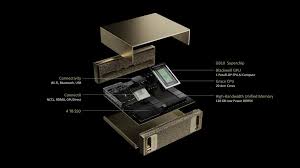
Nvidiartxspark: Performance Metrics and Hardware Integration
The NVIDIA RTX Spark “Superchip” has enhanced ultra-portable devices that used to struggle with thermal constraints. In our recent market assessment, the Surface Laptop Ultra makes great use of this chip to handle demanding background tasks, like real-time video upscaling and generative background noise cancellation, without significantly draining the battery, as reported by VentureBeat AI.
Dell has also upgraded the XPS 13’s cooling system to ensure the Superchip can maintain peak clock speeds during intensive creative tasks.
This shift is changing how we think about laptop usability. Manufacturers are now focusing more on NPU (Neural Processing Unit) throughput rather than just raw CPU clock speed. While traditional processors excel at sequential logic, the RTX Spark Superchip thrives on parallel processing, which is crucial for today’s AI-driven user experience. Check out the table below to see how these devices stack up against each other with this new technology.
| Feature | Surface Laptop Ultra | Dell XPS 13 (2026) |
|---|---|---|
| Primary AI Engine | NVIDIA RTX Spark | NVIDIA RTX Spark |
| Target Audience | Enterprise/Content Creators | Mobile Professionals |
| Key AI Benefit | Local LLM Acceleration | Real-time Video Synthesis |
Nvidiartxspark: The Strategic Battle for AI PC Dominance
Not everyone is convinced that hardware-level integration is the end-all solution. Some analysts believe that cloud-based AI services will eventually surpass local chips in processing power, as seen in recent coverage by OpenAI Blog.
Still, we think privacy concerns and the need for offline functionality make the NVIDIA RTX Spark “Superchip” a crucial step forward for high-end hardware. Microsoft and Dell’s commitment to this architecture shows a broader industry recognition of edge computing’s importance.
The big question is whether developers will truly maximize the RTX Spark’s capabilities. We anticipate a wave of updates soon, aimed at harnessing these dedicated AI cores to boost productivity in office and creative software.
If you’re considering an upgrade, pay attention to how different OEMs manage these chips’ power. Thermal efficiency is set to be the next key battleground in the AI PC market.
FAQs
What makes the RTX Spark Superchip different from previous GPUs?
The RTX Spark Superchip is specifically designed for local AI tasks, featuring a dedicated architecture that prioritizes neural network functions over standard graphical rendering.
Is the Surface Laptop Ultra available for purchase now?
Yes, the Surface Laptop Ultra is currently on the market as of June 2026. This marks a significant move toward AI-ready hardware.
How does the Dell XPS 13 manage thermal output with the new chip?
Dell redesigned the XPS 13’s internal cooling system to meet the high-performance needs of the RTX Spark Superchip, ensuring consistent power delivery during demanding AI tasks.
Which laptop models feature the NVIDIA RTX Spark Superchip?
The Surface Laptop Ultra and the Dell XPS 13 are the main devices currently equipped with the NVIDIA RTX Spark Superchip, designed to tackle advanced AI workloads.
How does the NVIDIA RTX Spark Superchip improve AI PC performance?
The NVIDIA RTX Spark Superchip employs dedicated hardware acceleration to handle complex machine learning tasks locally. This allows the Surface Laptop Ultra and the Dell XPS 13 to provide faster response times and improved efficiency compared to earlier models.