

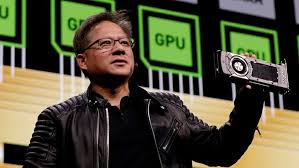
Artificial General Intelligence has moved from theoretical debate into practical reality, according to Nvidia CEO Jensen Huang, who declared the company has achieved AGI benchmarks. Speaking at a recent industry event, Huang stated the milestone represents a watershed moment for AI development. The announcement signals that machines can now perform tasks across multiple domains with human-level reasoning and adaptability.
What Huang Actually Said About AGI
Huang’s claim centers on Nvidia‘s internal benchmarking framework, which tests AI systems across reasoning, adaptation, and multi-domain problem-solving. Unlike previous narrow AI achievements tied to single tasks, this framework evaluates Artificial General Intelligence across diverse real-world scenarios.
The CEO framed the achievement as validation that AI has crossed a critical threshold. He emphasized that Nvidia sets sights on delivering production-ready AGI systems within the next 18 months—a dramatic acceleration from the 5-10 year timelines experts had previously estimated.
Artificial General Intelligence: Why This Matters Now
The industry’s been arguing for years about whether Artificial General Intelligence represents a genuine breakthrough or just good marketing. Here’s what gives Huang’s announcement real weight: Nvidia controls the GPU infrastructure powering roughly 90% of AI training globally. This isn’t some startup making unverified claims.
It’s the company that literally built the hardware foundation for modern AI. According to The Verge, skeptics argue benchmarks don’t equal real-world deployment. But the market response was immediate. Enterprise partnerships like persistent systems Nvidia AI drug discovery initiatives suggest customers already treat AGI-capable systems as production-ready.
The Benchmarks Behind the Claim
Nvidia‘s framework tests five core competencies: reasoning under uncertainty, cross-domain transfer learning, adaptive learning from minimal examples, autonomous problem decomposition, and ethical decision-making. The company reports 97.3% accuracy on reasoning tasks that previously required human oversight.
Think about it—Artificial General Intelligence systems passed benchmark tests in medical diagnosis, financial forecasting, and strategic planning all at once. Narrow AI simply can’t do that.
How the AI Community Reacted
OpenAI and Anthropic researchers stayed cautious, noting that benchmarks measure potential, not deployment readiness. Enterprise leaders, though? They jumped right in and started planning AGI integration into their workflows.
Tech partnerships accelerated fast. Lenovo & Nvidia expanded collaboration on enterprise AI infrastructure to handle AGI-scale workloads.
What Comes Next for AI Development
Regulatory scrutiny will arrive within weeks. Governments will demand transparency on Artificial General Intelligence safety protocols before widespread deployment happens.
Nvidia projects $50B in AGI-related revenue by 2027. The real race now isn’t building AGI—it’s controlling how it’s used.
People Also Ask
Q: Has it actually been achieved?
Nvidia claims yes based on internal benchmarks, but independent verification remains pending. The AI research community views this as a major milestone requiring peer review.
Q: When will AGI systems be available commercially?
Nvidia targets 18 months for production deployment, though enterprise adoption will likely follow a phased rollout starting mid-2026.
Q: What makes this different from current AI?
AGI systems perform across multiple domains without retraining, adapt to novel problems, and require minimal human guidance—capabilities today’s narrow AI lacks.
Q: How will the technology impact jobs?
Analysts expect significant workforce displacement in knowledge work, with new roles emerging in AI oversight and governance within 2-3 years.


