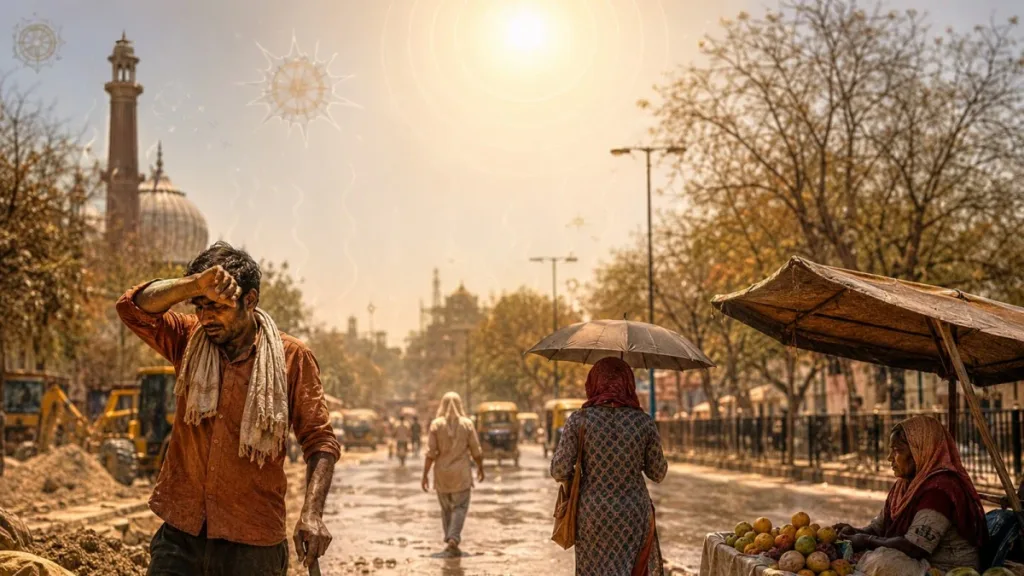
Every year, as May draws to a close, north and central India brace for Nautapa — a nine-day stretch of intense, relentless heat. In 2026, forecasters warn it could be fiercer than usual. Here’s everything you need to know.
What Is Nautapa?
Derived from the Hindi words Nau (nine) and Tapa (heat), Nautapa marks the sun’s transit through the Rohini Nakshatra, a period deeply embedded in the agrarian folklore of Rajasthan and the broader Indo-Gangetic belt. Farmers historically tracked this period to anticipate monsoon behaviour — intense Nautapa heat was believed to signal stronger monsoon winds.
Nautapa 2026 : Overview
| Factor | Details |
|---|---|
| Duration | ~9 days (late May) |
| Affected Regions | Punjab, Haryana, Delhi-NCR, UP, Rajasthan |
| Expected Temperatures | 40–46°C; peaks touching 47–48°C |
| Key Weather Feature | Hot dry winds (Loo), low humidity |
| Relief Possible? | Isolated pre-monsoon showers in select areas |
Why Does North India Burn This Hard?
The sun’s position during this window causes maximum land heating across the Indo-Gangetic plains and arid Rajasthan. Clear skies, dry continental winds, and near-zero moisture create a heat trap. The famous Loo winds intensify, and nights offer little relief. This extreme heating, experts note, also builds the low-pressure systems that eventually draw in the southwest monsoon — so Nautapa is, in a way, the price India pays before the rains arrive.
What Happens Inside Your Body During Prolonged Heat?
According to Dr Palleti Siva Karthik Reddy, Consultant Physician at Elite Care Clinic, sustained heat forces the body to work overtime — increasing sweating, straining the cardiovascular system, and gradually depleting electrolytes. After several consecutive hot days, the body’s cooling mechanisms begin to fatigue. The risk ladder climbs fast: dehydration → electrolyte imbalance → heat exhaustion → heatstroke.
Even healthy individuals are not immune. Want to know more about protecting yourself during Indian summers? Check out our health and lifestyle guides on TechnoSports.
Practical Protection Tips
- Hydrate consistently — don’t wait for thirst
- Elderly and children must stay in shaded, ventilated spaces
- Outdoor workers: schedule cooling breaks and replenish electrolytes
- Avoid heavy meals, caffeine, and alcohol during heatwaves
- Watch for confusion, weakness, or behavioural changes in vulnerable people — heat illness escalates quickly
FAQs
Q. Does a severe Nautapa guarantee a good monsoon?
Q. Who is most at risk during Nautapa?
.