SA329 (82.3 ov)
 AUS
AUS BAN96/2 (29 ov)
 WI
WI IND-W
IND-W ZIM-W
ZIM-W GOA
GOA SC Delhi
 Milan
Milan Bologna
 Parma
Parma Udinese
 Venezia
 Inter Milan
 Genoa
Genoa Juventus
 Monza
Monza Napoli
 UAE
UAE OMA
OMA ROMA4
ROMA4 CAG2
CAG2 TOR1
TOR1 COMO3
COMO3 SAS2
SAS2 LAZ6
LAZ6 AFG177
 ZIM140 (19.1/20 ov, target 178)
 AUCK
AUCK CANT
CANT SIKM184
 NAGA187 & 127/6 (66 ov)
 JHK131/4 (47 ov)
 DELHI515/5d
 ODSA194
 SVCS13/0 (5 ov)
 BRODA616
 J & K16/0 (10 ov)
 CHD685/5d
 HP95/0 (31 ov)
 CGR216/8 (95 ov)
 AP231
AP231 HYD193/2 (54 ov)
 PNJB431
 KNTKA297/7 (95 ov)
 TPURA194
 KER141 (51.3 ov)
 BENG350
 ENG
ENG SL
SL DEN
DEN QAT
QAT KENYA
KENYA KUW
KUW POA
POA SPR
SPR BRB
BRB VAG
VAG PAK110
 NAM316/7
 IRE253 (44.5/50 ov, target 317)
 NZ198/3
 IND199/4 (13.2/20 ov, target 199)
 NED371/5
 CD341 (44.2/50 ov, target 404)
 ND403/6
 Al Khaleej
 Al Hazem
 Frosinone
 Lecce
Lecce ABH0
ABH0 ALF1
ALF1 Sevilla2
 Osasuna0
 PSG2
PSG2 Lyon0
Lyon0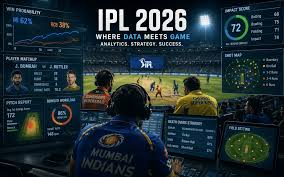
Over 200,000 data points get generated during a single modern cricket match, and mumbai indians are currently leading the way in using this information to dominate the league. By tapping into sophisticated data analytics strategies, the franchise has transformed from a traditional team into a technology-driven powerhouse.
This shift ensures that every ball bowled and every shot played is part of a calculated move, setting a new standard for competitive excellence in the IPL.
Monte Carlo Simulations and the Science of Squad Construction
The foundation of Mumbai Indians’ current success comes down to their rigorous recruitment process. Before the upcoming season even starts, the team runs advanced Monte Carlo Simulations to test their squad composition under different scenarios. They assign a “Complementary Score” to potential signings, making sure that a bowler’s release point matches up perfectly with a wicket-keeper’s agility.

This kind of precision helps them spot market inefficiencies that other franchises miss entirely.
Rather than chasing expensive big-name players, their analytics department hunts for undervalued domestic talent. These players often deliver the same value at a fraction of the cost, freeing up money to land anchor players who define the team’s identity.
The strategy works. Data-driven teams see a 25–30% improvement in decision-making efficiency, according to the Boston Institute of Analytics. It’s not just about raw talent—it’s about the mathematical probability of success.
Pre-Game and In-Game Phases: The Role of L Varun
L Varun, the team’s Data and Video Analyst, does way more than just work the auction room. He runs a complete infrastructure that breaks down into three phases: pre-game, in-game, and post-game. Before the match, players get custom insights through a proprietary app that lets them study how the opposition plays and what the pitch will do.
This preparation means every player walks onto the field with a clear, data-backed game plan.
Once the match starts, the team tracks player positioning and shot selection against live data. If a batter struggles against certain seam movement, the dugout gets an instant alert to shift the bowling strategy. This real-time feedback loop is what separates the best from everyone else.
As ESPN Cricinfo has reported, this commitment to continuous improvement through data has made the franchise a model that other sports organizations worldwide are studying.
FAQs
How do Mumbai Indians use data during the IPL auction?
The team runs Monte Carlo Simulations to model squad building, balancing risk and return. They use a “Complementary Score” metric to make sure new recruits fit perfectly with the existing team’s tactical needs.
Who oversees the data strategy for the team?
L Varun is the Data and Video Analyst for the franchise. He manages a custom app that delivers pre-game, in-game, and post-game insights to coaching staff and players.
Does this data-driven approach improve team performance?
Absolutely. Analytics-focused teams like Mumbai Indians report a 25–30% improvement in decision-making efficiency. This allows them to find hidden talent and optimize strategies using over 10 seasons of historical match data.
What role does data analytics play in Mumbai Indians’ strategy for IPL 2026?
Data analytics helps them assess player performance, study opponent strategies, and read match conditions. That information guides team selection and game tactics.
How has this gained a 30% edge using data analytics?
By using advanced algorithms and AI, they can predict match outcomes, optimize player performance, and sharpen their overall game strategy—creating a real competitive advantage.
What specific technologies are used in their data analytics approach?
They use machine learning algorithms, predictive modeling, and real-time data analysis tools to assess player metrics and game scenarios effectively.
How does data analytics impact player selection for the team?
Data analytics reveals player strengths and weaknesses, helping management make informed decisions during auctions and trades to build a balanced squad.
Can other IPL teams adopt similar data analytics strategies?
Yes, other IPL teams can implement similar data analytics frameworks, but results depend on data quality, technology, and the analytics team’s expertise. To really understand mumbai indians means staying on top of these developments.