
 SA329 (82.3 ov)
 AUS
AUS BAN
BAN WI
WI IND-W
IND-W ZIM-W
ZIM-W GOA
GOA SC Delhi
 Milan
Milan Bologna
 Parma
Parma Udinese
 Venezia
 Inter Milan
 Genoa
Genoa Juventus
 Monza
Monza Napoli
 ROMA4
ROMA4 CAG2
CAG2 TOR1
TOR1 COMO3
COMO3 SAS2
SAS2 LAZ6
LAZ6 AFG177
 ZIM140 (19.1/20 ov, target 178)
 AUCK
AUCK CANT
CANT CD
CD ND
ND SIKM184
 NAGA187 & 46/4 (34 ov)
 JHK131/4 (47 ov)
 DELHI515/5d
 ODSA194
 SVCS13/0 (5 ov)
 BRODA616
 J & K6/0 (4 ov)
 CHD685/5d
 HP49/0 (14 ov)
 CGR216/8 (95 ov)
 AP231
AP231 HYD193/2 (54 ov)
 PNJB431
 KNTKA297/7 (95 ov)
 TPURA194
 KER101/6 (35 ov)
 BENG350
 UAE
UAE OMA
OMA ENG
ENG SL
SL DEN
DEN QAT
QAT KENYA
KENYA KUW
KUW POA
POA SPR
SPR BRB
BRB VAG
VAG PAK110
 NAM316/7
 IRE253 (44.5/50 ov, target 317)
 NZ198/3
 IND199/4 (13.2/20 ov, target 199)
 NED371/5
 JAB113 (19.3/20 ov, target 133)
 KAY132/9
 Gamba Osaka
 Buriram
 Kashima
 Pohang Steelers
 ABH0
ABH0 ALF1
ALF1 Sevilla2
 Osasuna0
 PSG2
PSG2 Lyon0
Lyon0
Multi-agent workflows using Lang Chain form the essential framework for expanding AI applications beyond basic prompt-response tasks. As of July 6, 2026, developers are shifting their focus away from isolated LLM calls to orchestrated systems.
What makes this approach work well is the clear delegation of tasks. Instead of relying on a single model to handle research, coding, and quality assurance, we assign specific agents to each area. This isn’t just about stringing prompts together; it requires managing state, memory, and tool usage within a distributed logic graph. We’ve noticed that the most effective implementations utilize recent breakthroughs in autonomous agent reasoning to transfer tasks without needing constant human oversight.
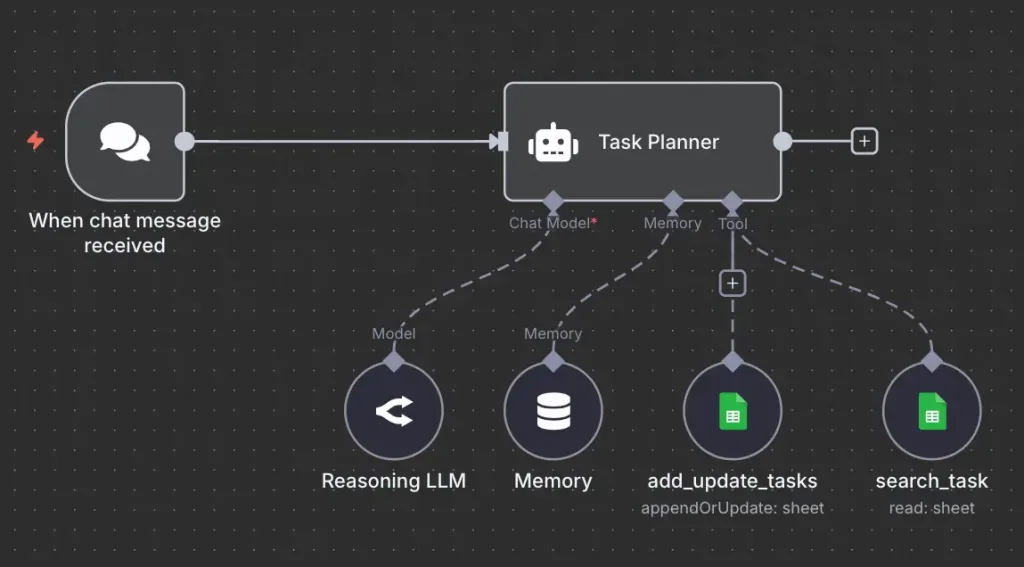
Multi-agent workflows: Implementing Agent Coordination and State Management
Building these systems starts with defining each agent’s identity and their toolsets. You need to ensure every agent has a limited scope, which helps reduce the risk of hallucinations and keeps the reasoning process targeted. In Lang Chain, this typically involves using the LangGraph library, which supports stateful, multi-actor applications.
- Define the Graph State: Create a schema that tracks the current task’s status, conversation history, and any outputs generated by agents.
- Create Specialized Nodes: Develop specific functions or agents that take on distinct roles, such as a “Researcher” agent that gathers web data and a “Writer” agent that compiles findings.
- Configure Conditional Edges: Set up the routing logic that determines which agent acts next based on the current state, ensuring smooth information flow.
- Implement Human-in-the-Loop Interventions: For critical workflows, include checkpoints where the system pauses for human approval before moving to the next execution stage.
We think managing memory is the biggest challenge in multi-agent orchestration. If agents lose sight of the overall goal, the workflow can quickly fall apart. By using shared memory buffers, you ensure that each participant in the workflow has access to the same context, which cuts down on redundancy and sync issues.
Scaling Workflows for Enterprise Requirements
Scaling your complex workflows with Lang Chain requires a focus on performance and observability. As you add more agents, the latency and cost of each transaction can rise, making efficient tool selection crucial. There is no confirmed
| Component | Functionality | Best Practice | | :— | :— | :— | | Orchestrator | Manages task delegation | Use deterministic routing | | Memory Buffer | Stores shared state | Implement periodic pruning | | Tool Interface | Connects agents to APIs | Validate all inputs strictly | | Feedback Loop | Validates agent output | Enforce human-in-the-loop |
What happens if one agent stops responding? Effective error handling is a must. We suggest implementing retry logic with exponential backoff and fallback mechanisms that kick in if an agent hits its token limit or fails to interpret a tool response. When building with Lang Chain, prioritize transparency by logging every transition between agents. This audit trail is key for debugging enterprise-grade AI systems when reasoning chains stumble.
The trend in this area is moving toward dynamic agent creation, where the system decides how many agents are needed for a specific query. By the end of 2026, we expect to see more frameworks that automate breaking down complex tasks into manageable sub-goals.
FAQs
How does LangGraph improve multi-agent workflows?
LangGraph enables cyclic, stateful graphs that allow agents to iterate on tasks and collaborate in ways that simple linear chains can’t support.
What’s the biggest challenge when designing multi-agent systems?
The main challenge is keeping state consistent and avoiding “agent drift,” where individual agents lose sight of the overall goal during extended tasks.
Are there specific hardware requirements for these workflows?
No specific official specs are set for running these architectures, as they are mainly software-defined and depend on the performance of the underlying LLM API. Multi-agent workflows.


