NAM321/6 (50 ov)
 IRE
 AVL
 MNC
 RAY
 ELC
 GMB
 ZMB
 NGA
 LES
 CAG
 BOL
 COMO
 SAS
 FCA
 FCU
 KOE
 S04
 MOZ19
 UGA23/0 (0.5/20 ov, target 20)
 NZ180/5
 IND181/6 (19.5/20 ov, target 181)
 Ipswich1
 Nottm Forest1
 Alavés1
 Málaga1
 WA105/3 (18.5/50 ov, target 372)
 NSW371/8
 DEN
 KUW
 KENYA
 QAT
 SWD-W
 EPR-W
 TTN-W
 WPR-W
 BOR
 WAR15/1 (2.5/20 ov)
 LIONS
 Limpo21/1 (2.5/20 ov)
 NZ-A135/3 (41 ov)
 IND-A113
 DHA293/3 (84.1 ov)
 RAJ
 MYMS
 CHATT
 RAN320/5 (80 ov)
 BAR
 MEX-W
 ARG-W
 UAE
 NED
 PAK
 ENG
 IND-W
 ZIM-W
 AFG170/3 (34.3/50 ov, target 170)
 ZIM169
 CHE0
 DYI0
 CHO1
 QIN0
 HEN1
 BEI0
 LIA1
 ZHE0
 QWC1
 YUN0
 SHX0
 Shanghai Shenh0
 TIG0
 SHP0
 WTT1
 SHT3
 M05
 SVW
 RBL
 ELV
 Torino3
 Monza2
 Brest1
 Nice2
 Stuttgart2
 Gladbach3
 Al Ahli4
 Al Khaleej1

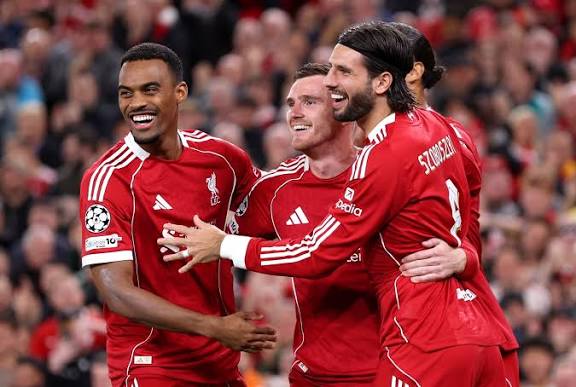
Imagine a crowded stadium where every fan pulls out their phone. Instead of cheering for a goal, they are scrolling through clips, sharing moments, and engaging with a brand that feels bigger than just ninety minutes of football. That is exactly what Liverpool Football Club is doing right now.
While rivals chase silverware, Liverpool is quietly building a massive digital empire. Independent research has suggested that Liverpool are the top club in Europe, surpassing historic heavyweights like Real Madrid and Barcelona. Here is what the numbers reveal.
What Is Driving Liverpool’s New Dominance?
A recent independent study surveyed multiple international markets to measure cultural relevance in global football. The results placed Liverpool firmly at number one, pushing aside traditional giants like Manchester United, Arsenal, Chelsea, and Real Madrid. A significant share of participants specifically named Liverpool as a major cultural force.
This metric goes beyond matchday attendance or league standings; it measures how deeply a club resonates with everyday fans across different demographics. We note that this identity has successfully translated into modern digital language, captivating audiences who might not follow the sport closely. Worth noting: achieving such high recall in a fragmented media landscape indicates a fundamental shift in how football brands operate. But how does this massive reach compare to the engagement levels of other top-tier European teams?
How Does the Data Compare to European Giants?
Liverpool has generated billions of views across social media platforms over the past twelve months alone. This represents a staggering increase compared to previous reporting periods. Managing this scale requires a complex operational framework demanding precise strategy.
On the pitch, manager Arne Slot has overseen a transitional period marked by mixed early results, including draws and a victory. Even as the squad adapts to new tactical systems, the off-field momentum remains completely uninterrupted. These impressive metrics highlight a growing gap between Liverpool and its closest competitors. That said, the sheer volume of content requires sophisticated backend infrastructure to process and distribute globally across a range of devices. With this level of visibility secured, what are the implications for the future of football business?
What Does This Mean for Football Business and Branding?
The club has said that this ranking reflects their expanding influence across broadcasting, social media, and digital platforms. Their reach is particularly strong in emerging markets and key regions like the United States. For brands seeking exposure, partnering with Liverpool offers access to a highly engaged, borderless audience.
This success redefines modern sports management, proving that cultural relevance can be cultivated independently of domestic trophies. Companies investing in digital infrastructure and cross-border marketing strategies are witnessing these exact returns. Digital campaigns mirror modern engagement loops, driving sustained viewer retention.
Sponsorships utilize complex data-driven loyalty programs, reflecting broader shifts in consumer behavior. Much like market corrections in traditional industries, Liverpool’s surge fundamentally alters football economics. Here’s the thing: adopting Netflix-style storytelling techniques allows clubs to retain casual viewers even when match results are inconsistent.
| Metric | Liverpool | Competitors (Avg) |
|---|---|---|
| Social Views (Past Year) | Billions | Lower |
| Cultural Relevance Score | #1 Globally | Ranked Lower |
| International Markets Surveyed | Multiple | N/A |
The bottom line is clear. Liverpool has mastered the art of translating club heritage into continuous digital engagement. By prioritizing storytelling and fan interaction over purely trophy-driven narratives, they have built a resilient global brand. This approach ensures long-term commercial viability even during transitional sporting seasons.
Clubs everywhere are now forced to ask themselves whether they are truly competing in the modern era.
Who conducted the survey that ranked Liverpool as the top club?
The research was independently conducted, covering multiple international markets to measure cultural relevance.
How many social media views did Liverpool generate recently?
Over the past twelve months, the club accumulated billions of views across various social media platforms globally.
Which clubs did Liverpool surpass in the cultural relevance rankings?
Liverpool placed above major European rivals including Real Madrid, Barcelona, Manchester United, Arsenal, and Chelsea.
What were Liverpool’s early season results under Arne Slot?
The team experienced mixed early results, with draws and a victory.
Related Articles
- LM Studio Guide: Run Any Open AI Model Locally With a Chat GUI
- The BEST Google Play Redeem Codes as of September 2026
- Midas buy Redeem Codes Free UC and Skins in 2026: Check Out All Details
Was this article helpful?
Your feedback directly improves future articles on this site.