NZ113/3 (14.4 ov)
 IND
IND NAM321/6
 IRE208/5 (37.3/50 ov, target 322)
 MEX-W
MEX-W ARG-W
ARG-W ARS
ARS EVE
EVE COV
COV FUL
FUL OFC
OFC NEU
NEU NEOM
NEOM ABH
ABH RAC
RAC ESP
ESP KHO
KHO ETT
ETT NAP
NAP ROMA
ROMA MOZ19
MOZ19 UGA23/0 (0.5/20 ov, target 20)
 Ipswich1
 Nottm Forest1
 Alavés1
 Málaga1
 Torino3
 Monza2
 KENYA
KENYA QAT
QAT SWD-W
SWD-W EPR-W
EPR-W TTN-W
TTN-W WPR-W
WPR-W BOR135/3 (18/20 ov, target 137)
 WAR136/8
 NZ-A135/3 (41 ov)
 IND-A113
 DHA293/3 (84.1 ov)
 RAJ
RAJ MYMS299/4 (87 ov)
 CHATT
CHATT RAN320/5 (80 ov)
 BAR
BAR SYL
SYL KHU
KHU UAE
UAE NED
NED PAK
PAK ENG
ENG IND-W
IND-W ZIM-W
ZIM-W GMB
GMB LES
LES ZMB
ZMB NGA
NGA AFG170/3 (34.3/50 ov, target 170)
 ZIM169
 CHE
CHE TOT
TOT Brest1
 Nice2
Nice2 Stuttgart2
 Gladbach3
 Al Ahli4
 Al Khaleej1
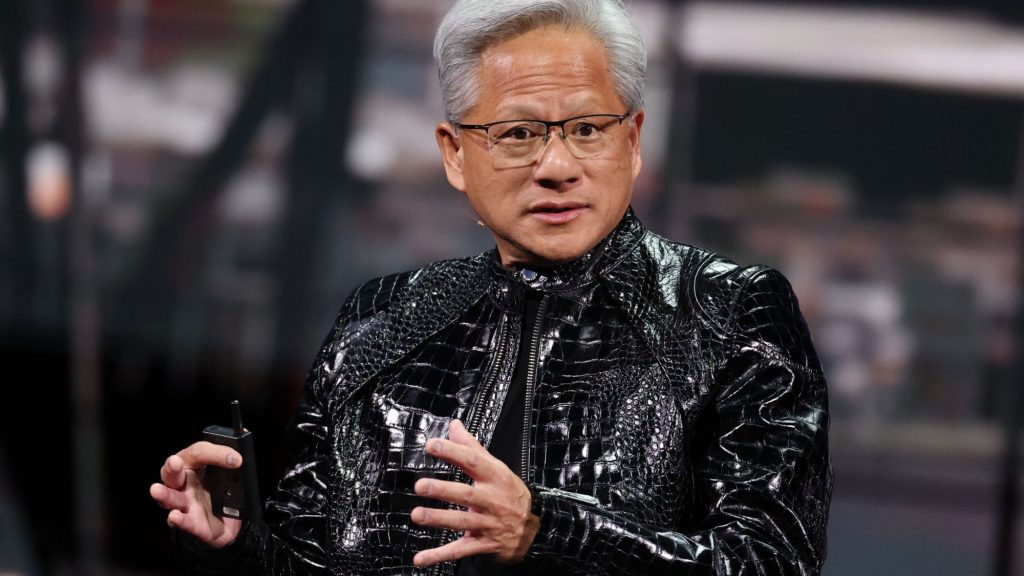
Nvidia’s CEO, Jensen Huang, skipped small talk entirely. His very first post is a direct plea to US lawmakers about the future of AI.
Nvidia CEO Jensen Huang has joined X for the first time, and unlike most executives who ease in with an introduction, his debut post goes straight into policy. Huang used it to share a joint industry letter — signed by Nvidia and 24 other major companies — arguing that open-weight AI models are essential to preserving America’s lead in artificial intelligence, and urging policymakers not to restrict them.
This adds a notable voice to the AI policy conversation TechnoSports has been following as the industry increasingly clashes with regulators over how AI should be governed globally.
What the Letter Actually Argues
Titled “Open Weights and American AI Leadership,” the letter makes the case that US dominance in AI shouldn’t hinge on any single company building the most powerful closed model. Instead, it argues real leadership comes from a broad, open ecosystem — one where businesses, universities, startups, and public institutions can download, inspect, modify, and run advanced AI models on their own infrastructure. The signatories say this reduces dependence on any one cloud or model provider while letting organizations keep control over their own data.
Who Signed It
| Category | Notable Signatories |
|---|---|
| Chipmakers | Nvidia, Dell |
| AI Labs | Meta, Microsoft, Mistral, Hugging Face |
| Application Companies | Perplexity, Replit, Box, ServiceNow, Palantir, CrowdStrike |
| Investment Firms | Andreessen Horowitz, Y Combinator, Emergence Capital |
| Industry Bodies | The Linux Foundation, Mozilla, IBM |
Notably absent: OpenAI and Anthropic, both of which build primarily closed models — a distinction that underscores exactly what’s at stake in this debate.
The Bigger Context: Distillation and China
Jensen Huang’s post comes just days after he told Axios that American companies should be free to use Chinese AI models, and after he separately described Chinese AI systems as “excellent” rather than a threat. That stance puts him at odds with US Treasury Secretary Scott Bessent, who warned this week that Chinese AI firms could face sanctions over “industrial-scale distillation” — a technique where a new model learns by training on the outputs of an existing one. The signatories defend distillation as a legitimate, standard part of AI development, arguing that policymakers should target actual intellectual property theft directly rather than broadly restricting open-weight models.
Why Huang Chose This Moment
The letter frames the current debate as echoing an old fear from the 1980s software industry, when some worried openly shared code would undermine American competitiveness — a fear that, in hindsight, didn’t play out the way critics expected. Huang and his co-signatories are betting the same logic applies to AI: that restricting open models would slow innovation and diffusion across industries more than it would protect national security, and that a healthy AI industry needs both frontier closed models and frontier open ones, not just one or the other.
Bottom Line
For a company as visible as Nvidia, having its CEO stay off X for this long was unusual — Intel’s and AMD’s chiefs have both been active there for years. That Jensen Huang chose to break his silence with a policy letter rather than a product tease or a casual introduction says a lot about how seriously Nvidia is treating the open-weight AI debate right now, at a moment when Washington’s next moves on AI regulation could shape the industry for years.
Based on reporting from VideoCardz, TipRanks, Fortune, and other outlets covering Jensen Huang’s official statements on X.