NZ
NZ IND
IND NAM
NAM IRE
IRE MOZ
MOZ UGA
UGA Aston Villa
 Man City
 Rayo
Rayo Elche
Elche GMB
GMB ZMB
ZMB NGA
NGA LES
LES Cagliari
 Bologna
 IPS1
IPS1 NFO1
NFO1 ALA1
ALA1 MCF1
MCF1 TOR3
TOR3 MON2
MON2 BRE1
BRE1 NICE2
NICE2 TAS53/4 (13/50 ov, target 305)
 VIC304/7
 NZ-A96/0 (31 ov)
 IND-A113
 DHA
DHA RAJ
RAJ MYMS
MYMS CHATT
CHATT RAN
RAN BAR
BAR SYL
SYL KHU
KHU UAE
UAE NED
NED PAK
PAK ENG
ENG IND-W
IND-W ZIM-W
ZIM-W AFG170/3 (34.3/50 ov, target 170)
 ZIM169
 DOLPH56/0 (3.5/8 ov, target 56)
 SWD51/4 (8/8 ov)
 WSW1
WSW1 BRI1
BRI1 Como
Como Sassuolo
 Augsburg
 Union Berlin
 Cologne
 Schalke
 Mainz
Mainz Bremen
 RB Leipzig
 Elversberg
 VFB2
VFB2 BMG3
BMG3 AHL4
AHL4 KHA1
KHA1
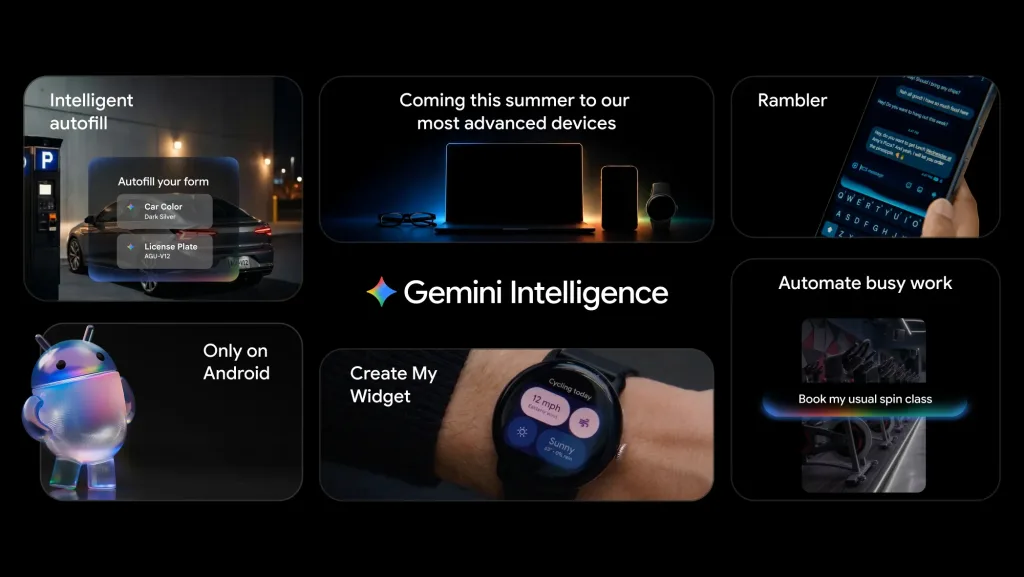
Google aired the highly anticipated Android Show I/O Edition and announced Gemini Intelligence as the centrepiece of Android 17 — but it comes with system requirements so demanding that millions of relatively recent premium smartphones are locked out from the start. Here is the complete supported device list, the hardware bar you need to clear, and which flagship phones are being left behind.
The Three Requirements You Must Meet
To run Gemini Intelligence, a device must fulfil all of the following: a flagship-tier processor, a minimum of 12GB of RAM, native support for Google’s AI Core and Gemini Nano v3 or newer, a commitment to five or more major Android OS updates plus six years of security patches, and compliance with defined device stability and crash rate standards.
Of those, the most significant hurdle is not processing power but the specific version of Google’s on-device AI model. Gemini Intelligence requires Gemini Nano v3 — and devices as recent as the Pixel 9 series and Samsung Galaxy Z Fold 7 are still on Nano v2, meaning they will not meet the criteria unless Google pushes a software update.
Full Supported Device List (Gemini Nano v3)
Google’s developer documentation lists the following devices as currently Gemini Nano v3 compatible:
| Brand | Supported Models |
|---|---|
| Pixel 10, Pixel 10 Pro, Pixel 10 Pro XL, Pixel 10 Pro Fold | |
| Samsung | Galaxy S26, Galaxy S26+, Galaxy S26 Ultra |
| OPPO | Find X9, Find X9 Pro, Find X8, Find X8 Pro, Reno 14 Pro 5G, Reno 15 Pro 5G, Reno 15 Pro Mini 5G, Reno 15 Pro Max 5G |
| OnePlus | OnePlus 15, OnePlus 15R |
| vivo | X200T, X200, X200 Pro, X300, X300 Pro |
| Xiaomi | 14T Pro, 15, 15T, 15T Pro, 15 Ultra, 17, 17 Ultra, Pad Mini |
| Motorola | Signature |
| Honor | Magic 8 Pro |
| iQOO | iQOO 15 |
| Realme | GT 7T |
Who Is Locked Out — Despite Paying Flagship Prices
This is the uncomfortable part. The Pixel 9 series, Galaxy Z Fold 7, Galaxy Z TriFold, OnePlus 13, Honor Magic 7 Pro, and Xiaomi 17 series are all on Nano v2 and currently do not qualify for Gemini Intelligence — regardless of their RAM or chipset.
Google’s developer page listing Nano v3-compatible devices shows almost exclusively 2026 releases, with the Pixel 10 series and OPPO Find X9 series being notable exceptions as devices that made the cut. That means the Galaxy S25 Ultra, Pixel 9 Pro, and Z Fold 7 — all premium 2025 flagships — are currently blocked not by their RAM or chipset but simply by which version of an AI model runs on their infrastructure.
Whether Google updates those devices to Nano v3 via software is the open question nobody has answered yet.

The Pixel 11 Problem
Google’s 12GB RAM floor creates an uncomfortable situation for its own next device. Leaks suggest the base Pixel 11 may ship with only 8GB of RAM — which would exclude Google’s own next entry-level flagship from Google’s own marquee AI feature. That would be a deeply strange outcome for a company whose main product pitch in 2026 is Gemini Intelligence.
When Does Gemini Intelligence Actually Arrive?
The Galaxy Z Fold 8, expected in July 2026, is set to be the first device to publicly debut Gemini Intelligence features. The Galaxy S26 series and Pixel 10 series follow this summer. Beyond that, any 2026 flagship shipping with Nano v3 support, 12GB of RAM, and meeting Google’s quality standards joins the rollout.
For Indian buyers, devices like the OPPO Find X9s, OnePlus 15, and Samsung Galaxy S26 are confirmed Gemini Intelligence-ready. If Gemini Intelligence is on your priority list when choosing a phone in 2026, these are the devices to shortlist.
The Bottom Line
Beyond the chip architecture, memory has become a critical bottleneck. The 12GB minimum is not arbitrary — Gemini Nano v3 is large enough that running multi-step app automation entirely on-device requires meaningful headroom. Gemini Intelligence is effectively an ultra-premium Android feature — and for now, the list of qualifying devices is shorter than most Android users would hope.
Stay tuned to TechnoSports for all Android 17, Gemini Intelligence rollout updates, and India device compatibility news.