India’s online shopping story isn’t just growing — it’s being completely rewritten. A landmark report by Google and Deloitte, titled ‘The $250 Billion Commerce Frontier’, lays out exactly how India’s e-commerce market will nearly triple from $90 billion today to $250 billion by 2030. The forces driving this shift are more structural than cyclical — and businesses that don’t adapt risk being left behind.
India E-Commerce 2030: Key Numbers at a Glance
| Metric | Projection |
|---|---|
| E-Commerce Market Size by 2030 | $250 billion |
| Current Market Size | $90 billion |
| New Digital Shoppers | 150 million |
| Gen Z Online Spend Share | 45% |
| Creator Influence on Retail Spend | 30% |
| Live Commerce Market Size | $8 billion |
| Quick Commerce Market Size | $50 billion |
| Quick Commerce Shopper Base | 70 million (doubled) |
| AI-Driven Retail Profitability Boost | 30–35% |
| Shoppers Preferring Virtual Try-On | 1 in 3 |
Four Forces That Will Add $100 Billion to Indian Commerce
The report identifies four critical pillars — Inspired, Intelligent, Instant, and Immersive — projected to collectively contribute $100 billion to commerce growth by 2030. Each addresses a different dimension of how India’s next generation of shoppers discovers, decides, and buys.

A 220-million-strong Gen Z cohort is central to this shift. These consumers don’t just want products — they want experiences anchored in storytelling, validated by creators they trust, fulfilled instantly, and enhanced by technology that feels personal.
Creators: From Influencers to Commerce Engines
By 2030, creators will influence 30% of all retail spend in India — and one in ten online purchases will be directly traced to a creator storefront. This isn’t soft influence; it’s measurable commerce.
Live Commerce is set to become an $8 billion sector, powered predominantly by Gen Z. The impact will be strongest in Tier 2+ markets, where creators are expected to onboard 60 million first-time online buyers — people who trust a familiar face over a brand advertisement.
To accelerate this, YouTube has onboarded Tira (Reliance Retail’s beauty platform) into its YouTube Shopping Affiliate Program. This joins existing merchant partners — Flipkart, Myntra, Nykaa, and Purplle — and opens the program to eligible creators with at least 500 subscribers. The gap between creator-led inspiration and actual purchase is closing fast.
Quick Commerce: Beyond Blinkit and Zepto’s Backyard
Quick Commerce is no longer just a metro convenience story. The sector is maturing into a $50 billion powerhouse with its shopper base doubling to 70 million users. Critically, Tier 2+ cities will drive 30% of that market as infrastructure catches up.
What’s changing the game further is category expansion. Beauty, Fashion, and Electronics will account for 45% of Quick Commerce spend by 2030 — a $10 billion opportunity for vertical specialists. Hybrid models that integrate offline branded retail inventory into digital quick-commerce networks could unlock an additional $20 billion in spending.
AI: Google’s Biggest Bet on Indian Retail
Google is embedding AI into every step of the purchase journey. New shopping features in the Gemini app let users go from brainstorming a purchase to actively browsing — all within a chat interface. The company has also rolled out its biggest upgrade to shopping in AI Mode in Search for India, making the experience more conversational and contextual.
Combined with Circle to Search and Virtual Try-On tools, Google is building a pipeline where AI acts as both a discovery engine and a trusted advisor — particularly valuable for India’s price-conscious, research-heavy shoppers.
The payoff for retailers using AI across front-end personalisation and back-end logistics? A projected 30–35% profitability boost.
Immersive Tech Is Redefining the Store Itself
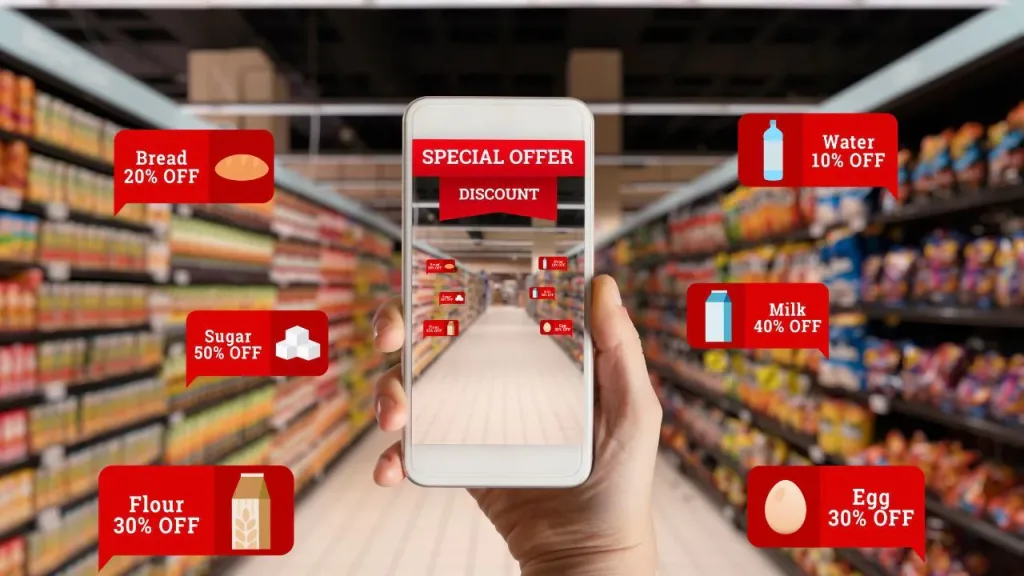
89% of Indian shoppers now want a unified cart that follows them from phone to physical store. AR and virtual try-on features are already moving the needle — 1 in 3 Indian shoppers now prefer virtual trials, with half of those users increasing their online spend as a result. Understand more about how e-commerce technology has evolved globally to appreciate just how fast India is catching up.
For more in-depth coverage on India’s tech, e-commerce, and digital innovation landscape, head over to Technosports — your go-to source for everything at the intersection of technology and consumer culture.
FAQs
Q: What is India’s projected e-commerce market size by 2030?
Q: How will Gen Z shape India’s online shopping future?
A 220-million-strong Gen Z cohort is expected to command 45% of online spend by 2030, demanding AI-powered, creator-led, and immersive shopping experiences.