NAM321/6 (50 ov)
 IRE
IRE GMB
GMB ZMB
ZMB NGA
NGA LES
LES CAG
CAG BOL
BOL COMO
COMO SAS
SAS FCA
FCA FCU
FCU KOE
KOE S04
S04 M05
M05 SVW
SVW RBL
RBL ELV
ELV MOZ19
MOZ19 UGA23/0 (0.5/20 ov, target 20)
 NZ180/5
 IND181/6 (19.5/20 ov, target 181)
 Ipswich1
 Nottm Forest1
 Alavés1
 Málaga1
 WA105/3 (18.5/50 ov, target 372)
 NSW371/8
 DEN
DEN KUW
KUW KENYA
KENYA QAT
QAT SWD-W
SWD-W EPR-W
EPR-W TTN-W
TTN-W WPR-W
WPR-W BOR
BOR WAR15/1 (2.5/20 ov)
 LIONS
LIONS Limpo21/1 (2.5/20 ov)
 NZ-A135/3 (41 ov)
 IND-A113
 DHA293/3 (84.1 ov)
 RAJ
RAJ MYMS
MYMS CHATT
CHATT RAN320/5 (80 ov)
 BAR
BAR MEX-W
MEX-W ARG-W
ARG-W UAE
UAE NED
NED PAK
PAK ENG
ENG IND-W
IND-W ZIM-W
ZIM-W AFG170/3 (34.3/50 ov, target 170)
 ZIM169
 SCP
SCP HSV
HSV ARS
ARS EVE
EVE Torino3
 Monza2
 Brest1
 Nice2
Nice2 Stuttgart2
 Gladbach3
 Al Ahli4
 Al Khaleej1
India’s cloud gaming cafe sector is hitting a critical turning point. Power consumption at gaming venues has become the single biggest operational cost, with a typical 50-machine setup burning through ₹2,50,000 to ₹4,00,000 monthly in electricity bills alone. But here’s what’s changed: cafe owners across Bangalore, Delhi, Mumbai, and Pune are now ditching grid dependency entirely.
Solar panels, battery storage systems, and hybrid renewable setups are becoming the competitive edge that separates thriving venues from struggling ones. This isn’t just about saving money—it’s about future-proofing businesses in a market where energy costs keep climbing and environmental regulations tighten every quarter.
Why Power Costs Are Strangling Gaming Cafes Right Now
Gaming cafes operate 24/7 in most metros. Each high-end gaming PC pulls between 300-500 watts continuously. Multiply that across 40-50 machines, add air conditioning, lighting, and server infrastructure, and you’re looking at a facility consuming 20-30 kilowatts during peak hours. In Delhi, electricity tariffs sit at ₹8-10 per unit for commercial establishments. A single gaming cafe running 18 hours daily spends approximately ₹3,60,000 monthly just on power. That’s before rent, internet, staff, and maintenance.

The problem compounds during summer. Air conditioning demand spikes, pushing monthly bills to ₹5,00,000+. Many cafe owners report that electricity represents 35-40% of their total operating expenses. Margins in the gaming cafe business hover between 15-25%, so when power costs surge, profitability evaporates instantly. This is why renewable energy solutions have stopped being optional—they’re now existential.
Solar Panel Systems: The Dominant Choice for Gaming Cafes
Solar installations dominate the renewable energy conversation in India’s gaming cafe sector right now. A 10 kilowatt (kW) rooftop solar system costs between ₹4,00,000 to ₹6,00,000 installed, with panels rated at 6-7 kWh daily output depending on location and season. For a gaming cafe running 18 hours, this covers roughly 40-50% of daytime power needs.
What matters most: payback periods. With ₹3,60,000 annual savings on electricity, a ₹5,00,000 solar installation breaks even in 16-18 months. After that, it’s pure profit. Several Delhi-based gaming cafes like GameZone Delhi and Pixel Cafe Bangalore installed 15kW systems in 2024 and reported 45-60% reductions in grid dependency by mid-2025.
The real advantage? Net metering. States like Karnataka, Tamil Nadu, and Maharashtra allow cafes to feed excess solar power back to the grid and earn credits. A gaming cafe generating surplus power during off-peak hours can offset evening and night consumption. Tier-1 solar panel brands like Adani Solar, Vikram Solar, and Luminous now offer 25-year warranties and financing options through banks at 8-10% interest rates. Monthly EMI on a ₹5,00,000 system runs ₹12,000-15,000, which most cafes recover within 3-4 months of energy savings.
Installation takes 2-4 weeks. Structural assessment, electrical integration, and grid synchronization are the main steps. Cafes don’t lose operational hours during installation if planned correctly.
Hybrid Systems and Battery Storage: The Game-Changer for 24/7 Operations
Here’s the thing: solar alone doesn’t work for night gaming sessions. Battery storage solves this. A 50kWh lithium-ion battery system costs ₹8,00,000-10,00,000 but stores solar energy generated during the day for use at night. This creates true energy independence.
Hybrid setups combine solar + battery + grid connection. During the day, solar powers the cafe and charges batteries. At night, batteries kick in. Grid acts as backup only when both are depleted. This reduces grid consumption by 70-80% monthly. Real-world example: Nexus Gaming Cafe in Hyderabad installed a 12kW solar + 40kWh battery system in Q3 2025. Their monthly electricity bill dropped from ₹3,80,000 to ₹95,000. That’s ₹2,85,000 monthly savings—₹34,20,000 annually.
Battery costs are dropping fast. Lithium-ion prices fell 35% between 2024-2025. LiFePO4 chemistry (safer, longer-lasting) now costs ₹12,000-15,000 per kWh. A 50kWh system runs ₹6,00,000-7,50,000 today. Add solar panels and inverters, and a complete hybrid setup lands at ₹12,00,000-15,00,000. Financing spreads this across 5-7 years at ₹20,000-25,000 monthly—easily covered by energy savings.
What’s critical: battery management systems. Smart inverters automatically switch between solar, battery, and grid based on demand and pricing. During peak tariff hours (6 PM-10 PM in most metros), the system uses stored battery power instead of expensive grid electricity. This arbitrage alone saves 15-20% monthly.
People Also Ask: Do Solar Systems Reduce Gaming Cafe Revenue by Requiring Downtime?
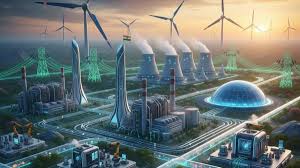
No. Modern solar installations don’t require operational shutdowns. Professional installers work in phases—roof preparation happens first, then panels and wiring are installed, and finally grid synchronization occurs. Most cafes stay open throughout. If structural work is needed (rare), it happens during off-peak hours or closed days. The entire process takes 2-4 weeks, and cafes lose minimal revenue. Some owners schedule installations during monsoon season when footfall drops anyway. The upside? Cafes can market themselves as “eco-friendly gaming venues” and attract environmentally conscious players, potentially increasing revenue by 10-15%.
Government Incentives Making Renewable Energy Affordable
India’s central government offers MNRE (Ministry of New and Renewable Energy) subsidies covering 30-40% of solar installation costs for commercial establishments. Several state governments add additional rebates. In Tamil Nadu, the subsidy reaches 50%. In Karnataka, it’s 40%. This dramatically reduces out-of-pocket expenses.
Additionally, the Pradhan Mantri Surya Ghar Yojana and PM-KUSUM schemes provide financing at 5-6% interest rates—lower than commercial loans. A cafe owner needing ₹10,00,000 for a hybrid system might secure ₹4,00,000 in subsidies, leaving ₹6,00,000 to finance at 5.5% over 7 years—roughly ₹9,500 monthly EMI. Energy savings of ₹2,50,000-3,00,000 monthly make this highly profitable.
E-Waste Management and Circular Economy Models
Here’s where it gets interesting: gaming cafes generate massive electronic waste. Old gaming PCs, monitors, cooling systems, and power supplies accumulate fast. Responsible disposal costs ₹50,000-1,00,000 annually per cafe. But forward-thinking venues are partnering with e-waste recyclers certified under SPCB (State Pollution Control Board) guidelines.
Companies like E-Waste Recyclers India and Attero Recycling now offer take-back programs where they collect old hardware, extract precious metals (gold, copper, rare earths), and refund 20-30% of the original purchase value. A 5-year-old gaming PC worth ₹80,000 originally might fetch ₹15,000-20,000 in recycling credits. Over a year, a cafe replacing 8-10 PCs can recover ₹1,20,000-2,00,000 through recycling.
More importantly, certified e-waste management aligns with ISO 14001 environmental standards. Cafes achieving this certification can market themselves as sustainable venues—a competitive advantage in metro cities where 30-40% of gamers care about environmental impact. Some cafes have started offering “green gaming” memberships at 10-15% premiums, with proceeds funding renewable energy expansion.
Quick Comparison
| System Type | Capacity | Installation Cost (INR) | Monthly Savings | Payback Period | Best For |
|---|---|---|---|---|---|
| Solar Only | 10kW | ₹5,00,000 | ₹1,50,000-1,80,000 | 28-33 months | Daytime-heavy operations |
| Solar + Battery | 12kW + 40kWh | ₹13,00,000 | ₹2,50,000-3,00,000 | 43-52 months | 24/7 gaming cafes |
| Hybrid (Solar + Battery + Grid) | 15kW + 50kWh | ₹15,00,000 | ₹3,00,000-3,50,000 | 42-50 months | Maximum independence |
| Grid Only (Baseline) | N/A | ₹0 | ₹0 | N/A | High-cost operations |
Pros and Cons
| Pros | Cons |
|---|---|
| Reduces electricity bills by 60-80% monthly | High upfront capital (₹5,00,000-15,00,000) |
| Payback within 3-4 years; then pure profit | Weather dependency affects solar generation |
| Government subsidies cover 30-50% costs | Requires roof space and structural assessment |
| Attracts eco-conscious gamers; premium pricing possible | Battery replacement needed every 10-12 years |
| Net metering allows selling excess power back | Maintenance costs for inverters and batteries |
| Qualifies for ISO 14001 environmental certification | Installation takes 2-4 weeks; planning needed |
| 24/7 energy independence with battery systems | Monsoon season reduces solar output by 40-50% |
The Infrastructure Shift Reshaping Gaming Cafe Economics
What’s happening across India’s gaming cafe sector right now is a fundamental infrastructure shift. Owners who invested in renewables 12-18 months ago are now undercutting competitors on pricing while maintaining higher margins. A cafe in Bangalore offering ₹20/hour rates (powered by renewable energy) undercuts grid-dependent competitors at ₹30/hour while earning identical profits. This creates a competitive moat.
Larger cafe chains are moving faster. Nodwin Gaming’s affiliated gaming venues and ESL Pro League partners are rolling out solar + battery systems across their locations. Smaller independent cafes are following. By end of 2026, expect 40-50% of Tier-1 city gaming cafes to have renewable energy installed. Tier-2 cities will follow in 2027-2028.
The broader implication? Gaming cafes are transitioning from pure real estate plays to energy-efficient infrastructure businesses. Investors now evaluate cafes based on energy independence metrics, not just footfall. This attracts institutional capital and makes exits easier.
Regulatory Pressure and Voluntary Standards
India’s National Action Plan on Climate Change now incentivizes businesses reducing carbon footprint. Commercial establishments consuming over 100kWh daily must file energy audits. Gaming cafes typically exceed this. Audit findings often recommend renewable energy as the primary mitigation strategy.
Several states—Karnataka, Tamil Nadu, Telangana—are moving toward mandatory renewable energy targets for commercial establishments by 2027-2028. Early adopters get tax breaks and subsidies. Late movers face penalties. This regulatory backdrop is accelerating adoption.
Voluntary certifications like GRIHA (Green Rating for Integrated Habitat Assessment) and IGBC (Indian Green Building Council) now rate gaming venues. A GRIHA-certified cafe can charge 15-20% premium on gaming rates and attract corporate team-building events. This revenue diversification justifies renewable energy investment.
What This Means for Players in March 2026
Gamers benefit directly. Gaming cafes with renewable energy systems pass cost savings to players through competitive pricing. You’re seeing ₹15-20/hour rates in major metros now, down from ₹25-30/hour two years ago. Better yet, renewable-powered cafes maintain superior cooling and power stability—no voltage fluctuations, no brownouts, consistent 240V power delivery. This translates to better gaming performance, especially in competitive titles where frame consistency matters.
If you’re a serious BGMI or Valorant player, check whether your local cafe uses renewable energy. Stable power = stable FPS = better ranking. You can also find tips for improving your gameplay in our comprehensive guide to boosting your BGMI performance, and stay updated with the latest BGMI redeem codes for March 2026 to maximize your in-game resources.
Some cafes now market “eco-gaming” experiences, offering discounts to players who bring reusable water bottles or use public transit. It’s a small trend, but it’s growing. The broader point: renewable energy adoption is making gaming cafes more sustainable, cheaper, and technically superior.
Conclusion
Indian cloud gaming cafes should prioritize hybrid solar + battery systems over solar-only setups if they operate beyond 12 hours daily. The upfront cost of ₹12,00,000-15,00,000 seems steep, but 3-year payback periods and 25-year system lifespans make this a no-brainer investment. Government subsidies covering 30-50% of costs further sweeten the deal. Smaller cafes with limited roof space should start with 10kW solar systems (₹5,00,000) and add battery storage within 2-3 years as cash flow improves.
The competitive advantage is real. Renewable-powered cafes undercut grid-dependent competitors while maintaining healthier margins. They also attract environmentally conscious gamers and qualify for premium certifications that unlock corporate bookings. For cafe owners still on the fence, the math is simple: invest now in renewable energy, or watch competitors steal your market share. The transition is happening. The question isn’t whether to go renewable—it’s how quickly you can move. Start with a professional energy audit (₹10,000-15,000), apply for government subsidies, and lock in financing at current rates. By Q3 2026, you’ll wonder why you waited so long.
For the latest updates on gaming infrastructure and industry trends, follow our gaming news section for breaking developments in India’s esports ecosystem.