The Indian Institute of Technology (IIT) Delhi has announced a strategic collaboration with a domestic startup to develop a heat-resistant designed to withstand extreme temperatures.
Officially announced on May 11, 2026, this partnership aims to address the challenges posed by rising global temperatures and improve cooling efficiency across high-heat urban environments. While specific technical details remain under wraps, the initiative represents a significant step in developing localized climate-resilient hardware solutions for the Indian market. Airconditioner, in particular, deserves more attention than the headline suggests.
Airconditioner: Engineering Efficiency in the New Heat-Resistant
The collaborative project focuses on creating next-generation cooling units capable of maintaining peak performance even when ambient temperatures surge toward 50°C. Standard systems often face significant performance degradation in extreme heat, leading to higher energy consumption and potential mechanical failure. By optimizing the thermodynamic cycle, the developers hope to ensure consistent output without the massive power drain typically seen in existing commercial models. The team is integrating advanced material science to handle thermal stress, which is a major departure from traditional HVAC designs currently found in the region. This work builds on broader academic efforts, much like the innovative research seen at other top-tier institutes, to build sustainable infrastructure for a warming planet. While technical specifications such as processor types or storage remain undisclosed, the focus is clearly on hardware durability and energy efficiency.
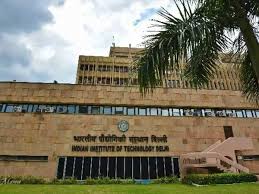
Airconditioner: Scaling Sustainable Cooling Solutions and Future Deployment
This partnership highlights the growing need for climate-adaptive technology in the HVAC industry. By leveraging the research capabilities of IIT Delhi and the agile development cycles of a specialized startup, the project intends to bring a durable to market that can endure the harsh Indian summer. Current reports suggest that while the official launch date is still unconfirmed, industry observers expect a potential rollout between late 2026 and early 2027. This initiative fits into a larger trend of tech-driven sustainability, where organizations are prioritizing energy-efficient hardware to mitigate the environmental impact of increased cooling usage. As infrastructure needs evolve, such collaborations provide the necessary R&D backing to transition from conceptual prototypes to reliable consumer products. The project remains a critical area of study for researchers, as documented in various advanced engineering archives tracking climate-tech progress.
Strategic Adoption for Enterprises and Residential Users
The primary beneficiaries of this innovation will be households and data centers located in regions experiencing extreme heatwaves. By minimizing performance dips during high-temperature spikes, this hardware offers a more reliable cooling solution for both residential and commercial sectors.
Organizations looking for long-term energy savings and system stability should watch this space closely as the product moves toward final testing phases. Airconditioner, specifically, plays a bigger role than most coverage suggests.
FAQs
What makes the new airconditioner developed by IIT Delhi and the startup heat-resistant?
The airconditioner incorporates advanced materials and innovative cooling technology designed to withstand and operate efficiently at higher ambient temperatures, making it more durable and effective in extreme heat conditions.
How does this heat-resistant airconditioner benefit consumers in areas with rising global temperatures?
This airconditioner ensures reliable cooling performance even during heatwaves, reducing energy consumption and maintenance costs, while providing comfort in regions experiencing increased temperature extremes.
Is the new airconditioner environmentally friendly compared to traditional models?
Yes, the design focuses on energy efficiency and uses eco-friendly refrigerants, which helps lower greenhouse gas emissions and reduces the overall environmental impact compared to conventional airconditioners.
When will the heat-resistant airconditioner be available for commercial use?
The IIT Delhi team and their startup partner aim to launch the product within the next 1-2 years, following successful testing and scaling of production to meet market demand.