NZ
NZ IND
IND NAM
NAM IRE
IRE MOZ
MOZ UGA
UGA Aston Villa
 Man City
 Rayo
Rayo Elche
Elche GMB
GMB ZMB
ZMB NGA
NGA LES
LES Cagliari
 Bologna
 IPS1
IPS1 NFO1
NFO1 ALA1
ALA1 MCF1
MCF1 TOR3
TOR3 MON2
MON2 BRE1
BRE1 NICE2
NICE2 TAS103/5 (20.2/35 ov, target 276)
 VIC304/7 (50 ov)
 WA
WA NSW22/1 (4.2/50 ov)
 NZ-A135/3 (41 ov)
 IND-A113
 DHA
DHA RAJ
RAJ MYMS
MYMS CHATT
CHATT RAN
RAN BAR
BAR SYL
SYL KHU
KHU MEX-W
MEX-W ARG-W
ARG-W UAE
UAE NED
NED AFG170/3 (34.3/50 ov, target 170)
 ZIM169
 IND-W200/1 (27.1/50 ov, target 198)
 ZIM-W197
 DOLPH56/0 (3.5/8 ov, target 56)
 SWD51/4 (8/8 ov)
 WSW1
WSW1 BRI1
BRI1 Como
Como Sassuolo
 Augsburg
 Union Berlin
 Cologne
 Schalke
 Mainz
Mainz Bremen
 RB Leipzig
 Elversberg
 VFB2
VFB2 BMG3
BMG3 AHL4
AHL4 KHA1
KHA1Sometimes the biggest breakthroughs happen in the parts nobody outside the industry ever thinks about — like the tiny optical engines quietly powering massive AI computing systems.
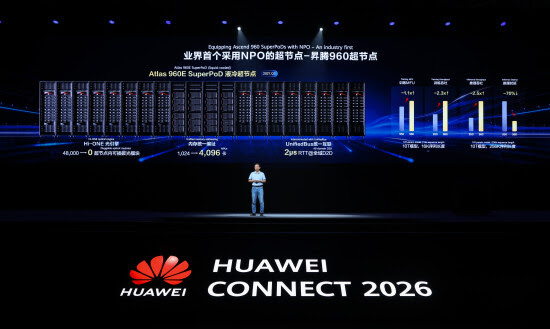
At HUAWEI CONNECT 2026, Huawei unveiled Hi-ONE, the industry’s first NPO optical engine with a built-in light source, marking a major leap in high-speed optical interconnect technology and positioning Huawei as the first company to mass-produce this kind of engine.
What Makes Huawei Hi-ONE?
| Specification | Detail |
|---|---|
| Total Capacity | 7.2 TB/s per optical engine |
| Architecture | Built-in light source (industry first) |
| Reliability Improvement | 10x more reliable |
| Power Consumption Cut | ~66% reduction |
| Latency Reduction | ~90% reduction |
| Deployed In | Ascend 960 SuperPoD |
| Optical Modules Eliminated | 48,000 fewer 800G modules per SuperPoD |
How Hi-ONE Actually Works?
Traditional optical engines rely on external, discrete components to manage light transmission — which adds complexity, increases failure points, and drives up power consumption. Hi-ONE flips that approach by integrating 36 channels of optical transceivers directly into a single engine, combining compound optical chips, silicon photonic chips, and optoelectronic RF chips into one tightly balanced system.
This integration isn’t just about compactness — it directly translates into real-world performance gains. By adopting a linear direct-drive architecture, Hi-ONE eliminates the need for high-power oDSP chips entirely, which is where most of the power savings and latency reduction come from.
Real Impact: The Ascend 960 SuperPoD
Hi-ONE isn’t just a lab breakthrough — it’s already powering Huawei’s Ascend 960 SuperPoD, built on what the company calls the “UnifiedBus plus Hi-ONE” architecture. The results speak for themselves: 48,000 fewer 800G optical modules needed within the SuperPoD, a significant drop in system-wide power consumption, and notably improved reliability for long-duration AI training workloads — exactly the kind of demanding, always-on tasks that modern AI infrastructure depends on.
Why NPO Technology Matters for the Bigger Picture
NPO (Near-Packaged Optics) technology is designed to strike a careful balance — keeping optical engines physically close to switching chips to shorten transmission distances, while still preserving the independence of the optical engine itself. This approach protects existing industry ecosystems and customer workflows, rather than forcing a disruptive overhaul.
That balance is part of why NPO has been gaining serious industry traction. In May 2026, a standard proposal for a 12.8 TB/s NPO Module — jointly submitted by the China Academy of Information and Communications Technology (CAICT), Huawei, and other companies — was formally initiated by the Optical Internetworking Forum, drawing support from more than 40 global industry vendors. That level of backing signals NPO is moving well beyond a single-company initiative into genuine industry consensus.
What This Means Going Forward
Huawei’s progress here spans the full innovation pipeline — from core technological breakthroughs, to real product deployment, to shaping international standards. As AI training workloads continue scaling rapidly, the pressure on data center infrastructure to move faster while consuming less power keeps intensifying. Hi-ONE positions Huawei to directly address that pressure, while its standards work suggests the company is playing a long game aimed at shaping the broader AI computing landscape rather than just selling isolated hardware.
For more tech innovation news, enterprise AI updates, and industry breakthroughs, check out the latest coverage on technosports.co.in.
FAQs
Q1: What is NPO technology?
NPO (Near-Packaged Optics) keeps optical engines close to switching chips, reducing signal transmission distance while preserving the optical engine’s independence.
Q2: What makes Hi-ONE different from other optical engines?
Hi-ONE is the first NPO optical engine with a built-in light source, offering 7.2 TB/s capacity with significantly lower power consumption and latency.