NZ113/3 (14.4 ov)
 IND
IND NAM321/6
 IRE208/5 (37.3/50 ov, target 322)
 KHO
KHO ETT
ETT NAP
NAP ROMA
ROMA CHE
CHE TOT
TOT VAL
VAL VIL
VIL DOR
DOR SGE
SGE RIY
RIY TAA
TAA LAZ
LAZ PAR
PAR RCL
RCL PAR
PAR MOZ19
MOZ19 UGA23/0 (0.5/20 ov, target 20)
 Ipswich1
 Nottm Forest1
 Alavés1
 Málaga1
 Torino3
 Monza2
 KENYA
KENYA QAT
QAT SWD-W
SWD-W EPR-W
EPR-W TTN-W
TTN-W WPR-W
WPR-W BOR135/3 (18/20 ov, target 137)
 WAR136/8
 NZ-A135/3 (41 ov)
 IND-A113
 DHA293/3 (84.1 ov)
 RAJ
RAJ MYMS299/4 (87 ov)
 CHATT
CHATT RAN320/5 (80 ov)
 BAR
BAR SYL
SYL KHU
KHU MEX-W
MEX-W ARG-W
ARG-W UAE
UAE NED
NED PAK
PAK ENG
ENG IND-W
IND-W ZIM-W
ZIM-W GMB
GMB LES
LES ZMB
ZMB NGA
NGA AFG170/3 (34.3/50 ov, target 170)
 ZIM169
 Brest1
 Nice2
Nice2 Stuttgart2
 Gladbach3
 Al Ahli4
 Al Khaleej1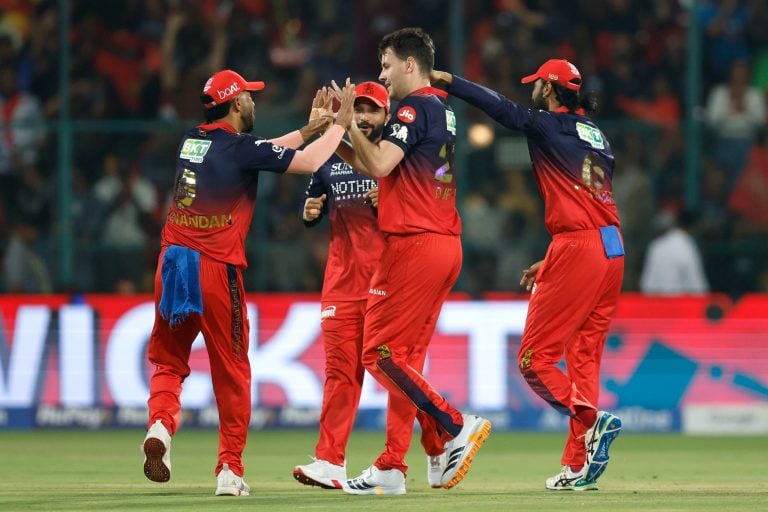
During an emotional victory address after Royal Challengers Bengaluru won their maiden IPL title last year, director of cricket Mo Bobat delivered a message that was brief, deliberate, and pointed: “Let’s be like the hunters.”
Eleven months on, RCB are on the cusp of another final. Bobat has had time to reflect on why he chose those words so carefully.
“Because it was such a long wait for us to win that first title, I didn’t want it to feel like we had climbed our Everest,” Bobat said at the RCB Innovation Lab Indian Sports Summit last week. “I want us to feel like we’re not clinging on to anything. We wanted to just keep climbing, keep hunting.”
Which is why, when the squad regrouped ahead of this season, Bobat threw a challenge: “Why can’t we be the third team to do it?“
Only two sides in IPL history — Chennai Super Kings in 2011 and Mumbai Indians in 2020 — had successfully defended their title. Bobat wanted RCB to believe they could join that list. Seventeen games into IPL 2026, the belief appears entirely justified.
The Foundation: Where the Confidence Was Built
The conviction driving RCB’s push for back-to-back titles did not arrive with the trophy. It was built during the second half of IPL 2024 — Bobat and head coach Andy Flower’s first season together at the helm.
Flower arrived with one of the strongest T20 coaching résumés in the world. He was offered more money elsewhere but chose RCB for the challenge of helping them achieve what they hadn’t. Eight games into that first campaign, the decision looked like a mistake. One win from eight matches. Rock bottom.
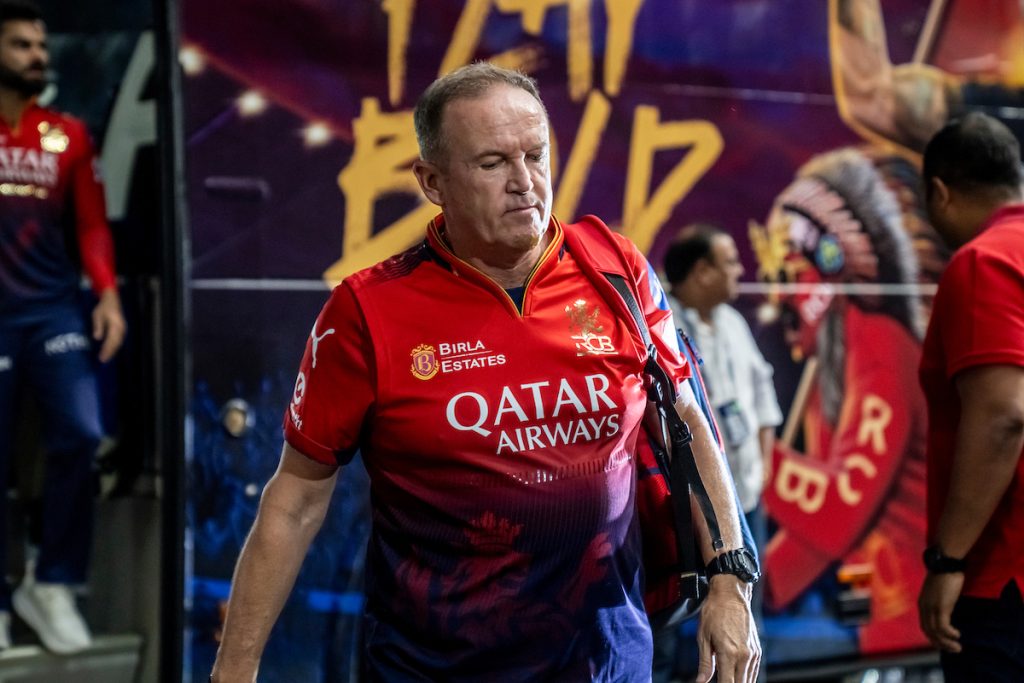
“There were questions asked,” CEO Rajesh Menon remembers. “Do we have the right team? Do we have the right staff? I said the culture is good. The players are good. It’s just a matter of time.”
It was. RCB won six consecutive games to make the playoffs. While they fell in the Eliminator, they emerged with something they had lacked: a genuine identity.
“One of the first things that struck me when I got involved with RCB was a phrase used about the England football team — the shirt weighs heavy,” Bobat explained. “One of the key tasks was really unburdening them as much as you can, taking that weight off them. Instead of thinking, ‘when are we going to win this?’, the narrative changed to: ‘why not us?'”
The Kohli Reinvention: From Anchor to Aggressor
The tactical turning point that reshaped RCB’s batting identity came from a defeat — a thrashing of 287 by Sunrisers Hyderabad during IPL 2024. RCB responded with 262. Bobat and Flower immediately recognised this as the batting template the team needed.
Convincing Virat Kohli to embrace it was not difficult. During the first half of IPL 2024, Kohli had played primarily in the classic anchor mould. From the SRH game onwards, he consciously traded security for impact. His strike rate jumped from 141 in RCB’s first six matches to 166 across the rest of that campaign.
| Kohli’s Strike Rate Evolution | Period | Strike Rate |
|---|---|---|
| IPL 2024 — first six matches | Pre-SRH game | 141 |
| IPL 2024 — remainder of season | Post-SRH game | 166 |
| IPL 2025 | Full season | ~150 |
| IPL 2026 | Current season | ~164 (best of career) |

The progression has been consistent. In IPL 2026, Kohli has scored 557 runs at close to 164 — his best strike rate in an IPL season. Critically, RCB have won each of the seven games where he has batted beyond the powerplay. His reinvention has set the tone for the batting culture that defines the current side.
Padikkal’s Transformation: The Unlikely Centrepiece
No player in the current RCB squad embodies the cultural shift more starkly than Devdutt Padikkal.
When RCB signed him at the mega auction for INR 2 crore, he was recovering from a disastrous stint with Lucknow Super Giants — 38 runs in seven innings. By his own admission, he was unsure whether franchises still considered him a serious T20 option.
The signing itself was a product of missed opportunity turning into fortunate circumstance. RCB had pursued Venkatesh Iyer aggressively, willing to go up to INR 23 crore, only for KKR to outbid them. Missing out allowed them to redirect that budget.
| RCB’s Redirected Spending After Missing Venkatesh Iyer | Player | Cost |
|---|---|---|
| Josh Hazlewood | INR 12.50 crore | |
| Bhuvneshwar Kumar | INR 10.75 crore | |
| Devdutt Padikkal | INR 2 crore | |
| Combined total | INR 25.25 crore |
Three players who have become central to RCB’s plans, secured for roughly the same price as one.
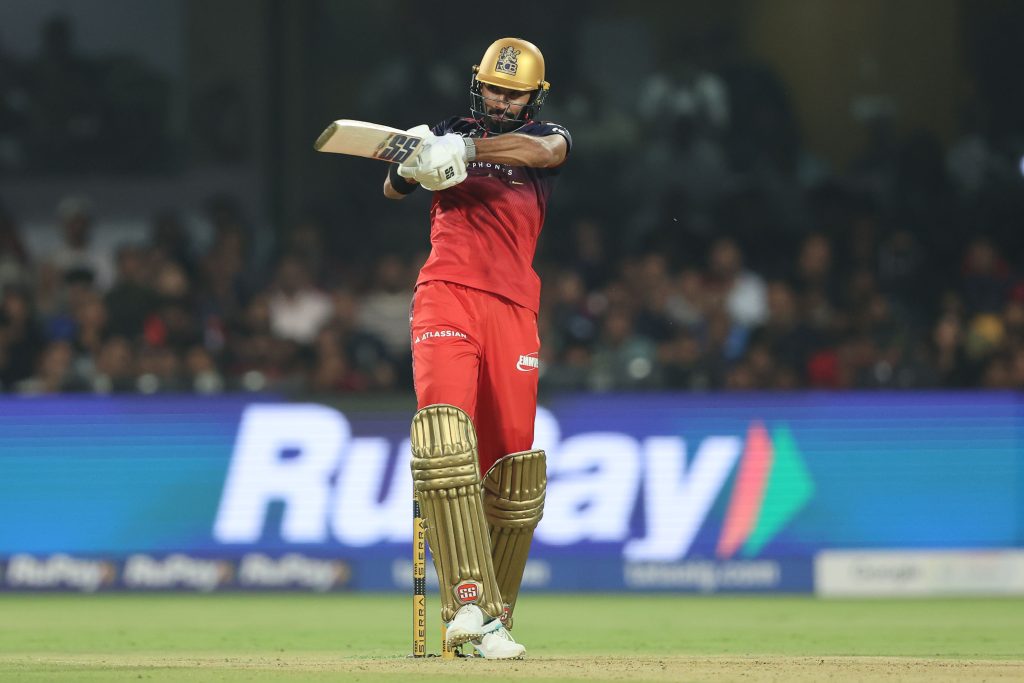
Padikkal’s numbers tell a story of dramatic transformation.
| Padikkal’s IPL Strike Rate Evolution | Period | Strike Rate |
|---|---|---|
| Career before 2025 | — | 123 |
| IPL 2025 | — | ~150+ |
| IPL 2026 | — | ~172 (career best) |
In IPL 2026, he has scored 433 runs at a strike rate touching 172 — by far the most impactful campaign of his IPL career.
Padikkal credited off-season work with batting mentor Dinesh Karthik and the trust extended by the management as the drivers of change. “Because it’s such a major shift, it’s very easy to accept maybe that’s not your game,” he said. “But the conversations were mainly about them giving me the belief that I’m capable of doing that. I’m not really trying to focus on strike rate. It’s about making sure I have that intent from ball one.”
The Captaincy Question: Patidar’s Unique Leadership
Rajat Patidar, meanwhile, has settled into the captaincy in a manner that suits both his personality and the team’s needs.
Where predecessor Faf du Plessis was deeply involved in almost every aspect of the operation — from auction planning to squad culture — Patidar leads differently. “Rajat’s quite a unique character,” Bobat said. “I don’t know anyone quite like him.”
Patidar is hands-off away from the field, trusting the management to build the environment around him. But once the game starts, the dynamic reverses entirely.
“He wants to have an input on the team that takes the field,” Bobat explained, “and then he thinks that when he crosses the line, that’s when his job starts.”
The results speak clearly. Freed of the captaincy burden that complicated his earlier campaigns, Patidar has made close to 400 runs this season at a strike rate of 184. And his decision-making — on tactics and bowling changes — has visibly matured.

“He’s got a stronger sense now of how he wants the team to play,” Bobat said. “He is certainly becoming an even better decision-maker out in the middle.“
The Bowling Leadership: Old Foes Become Pillars
Bhuvneshwar Kumar inflicted heartbreak on RCB in the 2016 final when he was playing for Sunrisers Hyderabad. Now he leads their bowling attack, and his performances this season have revived genuine talk of an India recall at 36.
Alongside him, Krunal Pandya has developed into one of the most reliable all-round performers in the competition. The standout moment of his IPL 2026 campaign came against MI in Raipur, where he contributed a match-winning 73 through cramps and exhaustion — the kind of innings that define tournament runs.
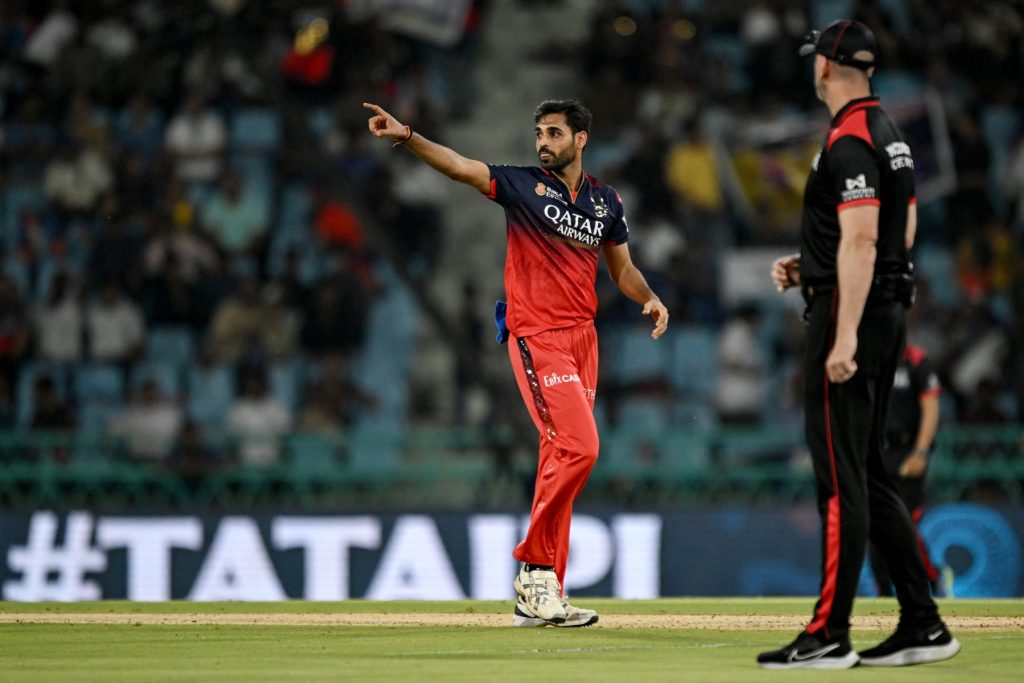
Since the start of IPL 2025, no left-arm finger spinner in the IPL has bowled as many balls to left-hand batters as Krunal, or taken more wickets against them — all while maintaining an economy rate under 10. His victims include Priyansh Arya, Venkatesh Iyer, Rinku Singh, Vaibhav Sooryavanshi and Shimron Hetmyer.
The bowling has also absorbed significant disruption. Yash Dayal — a key part of the title-winning pace attack — was pulled from this season due to legal issues, leaving RCB effectively operating a resource short. Jacob Duffy stepped in as cover for the unavailable Josh Hazlewood and took 3 for 22 in his very first game against SRH, earning Player of the Match. Rasikh Salam, identified as a Dayal back-up last year, has already surpassed Dayal’s tally of 13 wickets from the 2025 title season across 10 matches.
The franchise invested meaningfully in Salam’s development — Krunal even facilitated a move from Jammu & Kashmir to Baroda to increase his competitive opportunities.
The Auction Philosophy That Made It All Possible
The squad depth that has absorbed these disruptions did not happen by accident. It was the product of a deliberate philosophical shift at the RCB auction table.
While teams like MI, CSK and SRH retained established match-winners for combined fees approaching INR 75 crore ahead of the mega auction, RCB chose a controlled reset. They retained only Kohli and Patidar as match-winners for a combined INR 32 crore (with Dayal as the third retention). The flexibility this created was substantial.
Their four biggest buys — Hazlewood, Salt, Jitesh Sharma, and Bhuvneshwar — cost a combined INR 45.75 crore, with proven performers like Krunal, Tim David, and Padikkal added within the remaining budget.
“RCB had a history of always having a small number of icon players, and the performance of the team was kind of contingent on those few players doing well,” Bobat said. “We wanted to have a more even distribution of talent, even distribution of experience, to give ourselves a better chance of having a championship-winning team.”
Venkatesh Iyer, eventually signed as a back-up batter for INR 7 crore — a fraction of what RCB were willing to spend on him in 2025 — embodied the philosophy perfectly. He spent large parts of the season outside the XII without complaint, but delivered when called upon: 73 not out in 40 balls in a win over PBKS, and 44 in 19 balls in their final league game, helping manage a calculated run-rate chase rather than a genuine pursuit of 256.

“RCB is the champion side,” Venkatesh said. “To tinker with a combination that has won you a championship is not always the smartest move. As someone who places the team above everything else, it’s my duty to adhere to the environment.”
Winning Everywhere: The Home Advantage Myth Dismantled
Perhaps the most instructive evolution in RCB’s thinking concerns the question of home advantage — a concept long considered essential to IPL success.
Last season, RCB won only two home games. They compensated by winning nine away from Bengaluru. This season brought a fresh challenge: scheduling changes meant they played only five league games at the Chinnaswamy, with two home fixtures relocated to Raipur — a venue without an IPL game since 2016.
Against MI at Raipur, RCB arrived directly off a flight while MI had already trained at the venue twice. RCB’s preparation included analysing scorecards from Chhattisgarh Premier League matches to understand surface behaviour.
Bobat admitted his early instinct had been to view the Chinnaswamy simply as a high-scoring ground where teams “fill their boots.” It took time to recognise that home advantage had historically been elusive for RCB even there.
“A lot of people said if you’re not dominant at home, you won’t win the IPL,” he said. “Part of me thought, well, let’s just win all our away games then.”
That mentality — stop obsessing over where wins come from, adapt to every environment, and build a squad flexible enough to succeed anywhere — has produced results. RCB have won six of seven home games this season, including both Raipur fixtures, while continuing to adapt in venues as challenging as Dharamsala.
What Comes Next
When organisations spend a generation waiting for a title, the first one often feels like the destination. RCB have consciously, deliberately refused to treat it that way.
The squad is deeper. The batting identity is clearer. The captaincy is settled. The bowling has absorbed injuries and disruptions without unravelling. The auction philosophy has created the distribution of quality that previous RCB sides always lacked.
Almost a year after Bobat told his players to be hunters, they are back on the cusp of the final — still climbing.
Read More: What Went Wrong for Jasprit Bumrah in IPL 2026? Inside His Most Difficult Season Yet