EST0
 ALS0
 WI-A
 LIONS
 GAL
 VFB
 SHK
 SCP
 ATM
 MUN
 BAR
 AVL
 BODO
 LILL
 FEY
 INT
 LAS
 SLB
 Newcastle0
 Everton1
 Deportivo2
 Osasuna1
 Atalanta0
 Parma3
 Lorient0
 Brest2
 DOLPH
 WPR
 ASSAM135
 KNTKA496/5 (117 ov)
 MEGHA144
 NAGA254 & 73/3 (25 ov)
 TPURA268 & 54/4 (22 ov)
 SAU118
 BENG143
 MAHA207/9 (79 ov)
 ODSA
 JHK258/5 (108 ov)
 CHD49/3 (20 ov)
 TN571/7d
 CGR284
 HYD275/9 (83 ov)
 DELHI299/6 (90 ov)
 SVCS266
 GOA397
 BIHAR107 & 63/3 (22 ov) (f/o)
 GUJ534/9d
 KER74/3 (23 ov)
 HP153
 RAJ78 & 297/4 (87 ov)
 NZ
 IND
 UAE
 OMA
 BAN
 WI
 HH-W
 MR-W
 CD
 AUCK
 OTAGO
 CANT
 NED183/3 (36/50 ov, target 183)
 MS-W109 (18.1/20 ov, target 125)
 PS-W124/9
 LUL98/2 (11.4/20 ov, target 98)
 POA97/9
 BIK174/3
 JAB172/7 (20 ov, target 175)
 CHR129/6
 SPR131/5 (16.4/20 ov, target 130)
 KAY180/6
 KAG181/6 (19.4/20 ov, target 181)
 ALH0
 SHO1
 MAN
 ROMA
 Sassuolo2
 Fiorentina4
 CAHN0
 KYO0
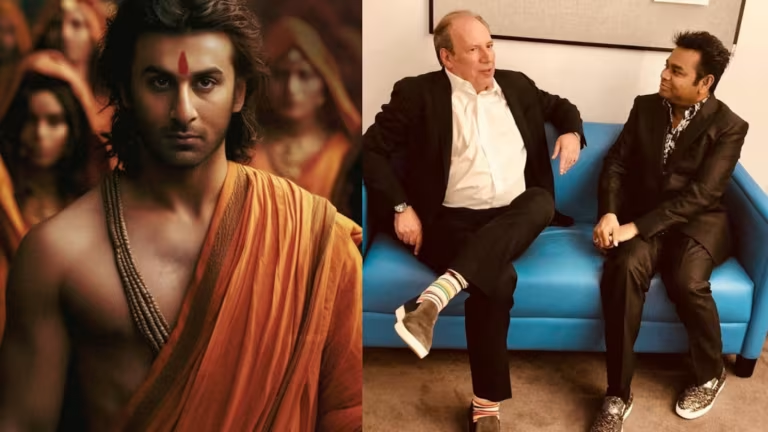
Hans Zimmer Joins Ramayana: On May 14, 2024, Academy Award-winning composer Hans Zimmer reportedly joined the production team for the Ramayana trilogy. Director Nitesh Tiwari’s ambitious adaptation now has the makings of a global cinematic event.

Hans Zimmer's Role in Ramayana
Overview of Zimmer's anticipated contributions to the score
Adapting a sprawling cultural epic is a major creative challenge. Filmmakers must balance intricate mythological lore with the demands of modern pacing. They also need to keep the story coherent across a massive budget, reportedly estimated by industry insiders to exceed ₹830 crore (approximately $100 million USD). Hans Zimmer could help bridge that gap with a structured musical framework.
Collaboration with local musicians and artists
Authenticity matters for a story with such cultural significance. Producer Namit Malhotra’s production company, working through Prime Focus (a media technology firm) and DNEG (a visual effects studio), must choose how to balance traditionalism with Western spectacle.
A hybrid score could help manage that trade-off, pairing symphonic arrangements with regional vocal textures. | Approach | Description | Goal | | Western Orchestration | Large-scale symphonic arrangements | Global appeal | | Traditional Instruments | Regional vocal textures | Cultural authenticity | | Hybrid Integration | Blending both styles | Cinematic resonance |
Impact on Film and Music Industry
Significance of Ramayana in global cinema
The adaptation marks a turning point for international storytelling. Its casting reflects the film’s scale: Ranbir Kapoor plays Lord Rama, while Sai Pallavi takes the role of Sita. Yash reportedly serves as both co-producer and antagonist Ravana.
Principal photography began in March 2024 in Mumbai, showing the production’s commitment to visual fidelity. The high-profile cast is drawing attention beyond traditional markets. Industry observers tracking financial performance often refer to our ongoing coverage of the Ramayana Box Office: metrics.
Zimmer’s previous work in mythological adaptations
Zimmer hasn’t scored many direct religious epics, but his work spans grand historical narratives. He combines leitmotifs (recurring musical themes) with sweeping dynamics, an approach that suits complex character arcs. This move toward cinematic mythology reflects wider trends in modern filmmaking. Audiences interested in similar genre shifts might compare this release with other New Ramayana OTT adaptations now being discussed in industry circles.
Conclusion
This strategic hire highlights the ambition behind the multi-part series. Zimmer’s potential involvement, alongside a substantial financial investment, could help the trilogy reach a wide audience. We expect its final tracks to set a new benchmark for cinematic scoring in the region.
FAQs
What is the Ramayana?
The Ramayana is an ancient Indian epic poem about Prince Rama, his wife Sita, and their quest to defeat the demon king Ravana. It holds immense cultural and religious significance across South Asia.
How does Zimmer’s music enhance storytelling?
Zimmer’s compositions add emotional depth and atmospheric tension, guiding audience engagement. His dynamic range helps scenes shift smoothly between divine moments and intense battles.
What are Zimmer’s notable achievements?
He’s received numerous accolades throughout his career, including an Academy Award for Best Original Score. His work on films like Dune and Gladiator shows his ability to handle large-scale productions.
What can audiences expect from the film?
Viewers can expect striking visuals alongside a richly layered soundtrack. High-budget effects and expert musical direction promise an immersive theatrical experience.
Read Next
- Ramayana Box Office: Can This Epic Beat the Pre-Diwali Slump and Set a Record Opening?
- Aston Villa Drop Legal Threat Against Jamie Carragher After Apology
- Luis Enrique Becomes PSG’s Most Successful Manager with 127 Wins
Was this article helpful?
Your feedback directly improves future articles on this site.