Monday’s NYT Strands puzzle (#645) takes solvers back to English class with a grammar-focused theme that’ll test your linguistic knowledge. If you’re stuck on “Grammatically speaking,” don’t worry—we’ve got hints and complete solutions to keep your streak alive without spoiling the fun too early.
NYT Puzzle Quick Facts
| Detail | Information |
|---|---|
| Puzzle Number | #645 |
| Date | Monday, December 8, 2025 |
| Theme | Grammatically speaking |
| Difficulty | Moderate |
| Spangram Length | 13 letters |
| Theme Words | 6 grammatical terms |
| Spangram Hint | Connects all word categories |
Subtle Hints (No Spoilers)
Theme Direction: Think about the fundamental building blocks of English sentences—the categories that every word falls into when you’re diagramming grammar.
Spangram Clue: This 13-letter phrase encompasses the entire study of word classification. It starts with P in the first row, snakes down to the fifth row, then climbs back up.
Word Hunting Strategy: Look for essential grammatical terms teachers use when explaining sentence structure. Think back to middle school English class.
Helpful Hint Words
Need to unlock the in-game hint system? Find these non-theme words to earn hint credits: ARTS, TRACE, JETS, CITE, SOFT, FORE, BORE, REPS, RAVE
Remember, every three non-theme words you find earns one hint that illuminates letters for hidden theme words.
Complete Answers (Spoiler Alert!)
If you’re ready to see the solutions, here’s everything you need:
Theme Words:
- NOUN
- VERB
- ADJECTIVE
- ARTICLE
- CONJUNCTION
- (Plus one more that connects everything)
Spangram: PARTSOFSPEECH (starts at P in row 1, winds to S in row 5, returns to H in row 2)
Solving Strategy
Most players found NOUN first, which immediately confirmed the grammar theme. VERB and ADJECTIVE typically follow as the most recognizable parts of speech. The spangram becomes visible once you spot “speech” within the letter grid—look for how it connects to “parts.” CONJUNCTION tends to be the trickiest find, as it’s longer and less commonly discussed than simpler categories.
Pro tip: Start from the edges when hunting for the spangram, as it must touch opposite sides of the board.
For more daily word game solutions and puzzle guides, plus the latest gaming news, bookmark TechnoSports for your daily dose of help.
How NYT Strands Works
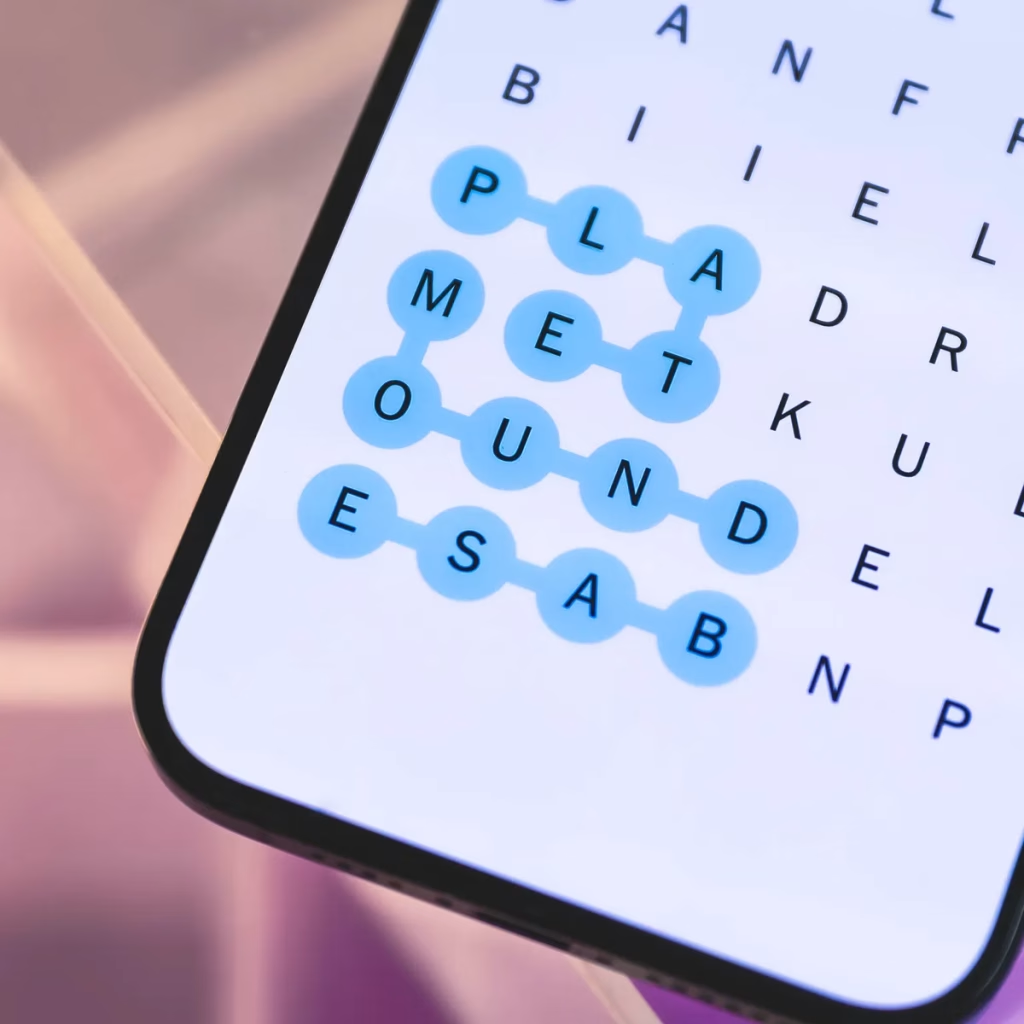
Each puzzle presents a 6×8 grid containing 48 letters. Your mission: find all theme-related words by connecting adjacent letters in any direction (horizontal, vertical, or diagonal). Every single letter gets used exactly once. The spangram—the most important word—spans the entire board from one side to the opposite, defining the overall theme that connects everything together.
Play daily at the official NYT Games website where new puzzles drop at midnight in your time zone.
FAQs
What happens if I use all my mistakes in Strands?
Unlike Wordle, Strands doesn’t penalize you with game-overs for incorrect attempts. You can keep trying different word combinations until you solve the puzzle. However, your final score does reflect how many hints you used, so there’s incentive to solve independently when possible.
How is the spangram different from regular theme words?
The spangram is a special word or phrase that touches two opposite sides of the grid (top-bottom or left-right) and describes the overarching theme connecting all the other words. In today’s puzzle, PARTSOFSPEECH is the spangram because it literally encompasses what all six theme words represent—they’re all types within that classification system.