Google announced the expansion of games on Android Auto on Tuesday, September 22, 2026, moving compatible in-car titles beyond their beta phase.
The change matters because passengers can get more entertainment while a vehicle is parked, while drivers remain blocked from launching games during travel. Details about the reported hardware requirements, $0.00 software rollout and October 15 initial release are based on leaks and supply-chain reports, not yet officially confirmed.
What Is Changing For Android Auto Gaming?
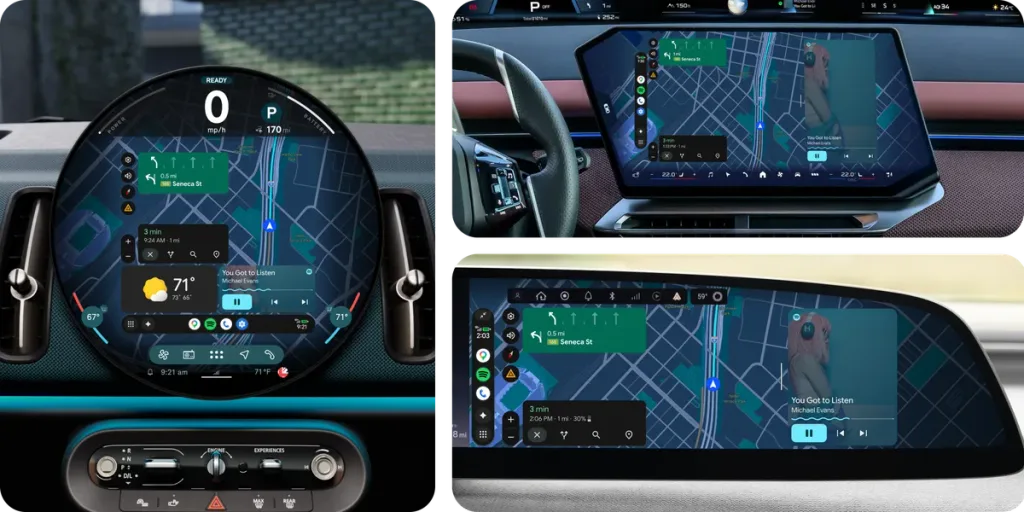
Google has made games for Android Auto and Android Automotive OS generally available instead of keeping the category limited to early testing. Developers can now submit compatible titles through Google Play’s open testing and production tracks, widening the pipeline beyond Google’s own curated collection. The safety boundary remains firm.
Games are intended for use when the vehicle is parked, and the software blocks gameplay while driving to prevent interactive content from competing with the road. That restriction also means the expansion targets waiting time at charging points, pickup zones and parked cars rather than travel entertainment for drivers. As first reported by Android Authority, users can already browse Google’s collection of supported games through compatible vehicle displays. The larger shift is for developers, who now have a clearer route to publish titles rather than treating in-car gaming as a closed experiment.
Key Details: Hardware And Rollout
The reported baseline includes 4GB of RAM, a processor equivalent to the Qualcomm Snapdragon 8 Gen 1 or newer, and 64GB of internal storage for cached game files. A vehicle display resolution beginning at 1920 × 1080 pixels is also listed, while USB power delivery during gameplay is described as 15W.
These figures should be treated as planning requirements until Google publishes a final compatibility document. The initial wave is listed for October 15, 2026, with the feature update carrying a reported rollout $0.00 as part of the system software. Neither figure should be treated as a confirmed retail promise for every car, phone or market. Indian users should also wait for Google and vehicle manufacturers to clarify regional availability before assuming that compatible games will appear automatically.
| Reported detail | Figure | Practical implication |
|---|---|---|
| Minimum RAM | 4GB | Affects supported devices |
| Processor | Snapdragon 8 Gen 1 or newer | Sets a performance baseline |
| Cached game storage | 64GB | May favour higher-storage systems |
| USB power delivery | 15W | Helps sustain parked gameplay |
| Display resolution | 1920 × 1080 pixels | Targets modern infotainment screens |
Developers publishing through Google Play will still face a narrower audience than mobile gaming. A title must account for vehicle display controls, parked-only access and varying infotainment hardware, which can increase development work. The upside is visibility through the same Play ecosystem that users already recognise, while the downside is that a game designed for touch-first phones may not translate cleanly to a dashboard.
Which Option Makes Sense For Users And Developers?
For users, the simplest option is Google’s existing collection because it avoids searching through incompatible titles. The trade-off is limited choice while the catalogue grows, and availability can still depend on the phone, car and software combination. Readers tracking Google’s wider platform changes can also see our GrapheneOS Android Google coverage for related Android software context.
The second option is to choose titles entering open testing or production through Google Play. This should create more variety, but early releases may offer uneven controls or inconsistent support across dashboards. Developers gain a publishing route, yet they must design for parked use and hardware differences rather than simply mirror a standard mobile build. A third option is to ignore in-car gaming and use the display only for navigation, calls and media. That remains the safest and most predictable approach, but it leaves parked waiting periods without the new entertainment layer. Google’s broader Play ecosystem, including BEST Google Play, will matter only if developers deliver titles that feel suitable for a vehicle screen.
What Happens Next?
Google’s general-availability move gives developers a formal route, but the quality of the category will depend on how many studios support vehicle layouts. The October 15 initial wave could show whether the feature becomes a useful parked-car extra or remains a small catalogue for curious users. Vehicle manufacturers will also influence adoption because Android Automotive OS and phone-based Android Auto do not provide identical experiences.
Buyers should check their carmaker’s software support, phone compatibility and display requirements before expecting the reported specifications to apply universally. The strongest near-term use case is a short parked session, not a replacement for a console or phone. If Google keeps the driving lock active and developers respect dashboard limitations, the expansion can add choice without weakening the basic safety model. Readers following wider Google disputes can also review our Lawsuit Alleges Google report for broader company context. Google has opened the door, but the first useful test will be whether parked-car games offer dependable controls across India and global vehicle systems.
FAQs
Can drivers play games while moving?
No. Supported games are blocked while the vehicle is being driven and are intended for parked use.
When is the first wave expected?
The supplied rollout information lists October 15, 2026, but that date requires final confirmation from Google.
Does the update cost extra?
The reported rollout
What hardware is listed?
The reported baseline includes 4GB of RAM, a Qualcomm Snapdragon 8 Gen 1 or newer processor, 64GB of storage, 15W USB power delivery and a 1920 × 1080 display.
Was this article helpful?
Your feedback directly improves future articles on this site.